Showing posts with label Criterion. Show all posts

Monday, 3 March 2025

My 2700th Post - 31 Best Boutique Blu Ray labels

Blu-tique Fashion

My 2700th Post -
31 Best Boutique
Blu Ray labels


This listing, or something probably very much different to it, was originally due to have come to this blog a few years ago, as one in an occasional series of articles exploring the best boutique labels for DVD and Blu Ray. However, when I started researching it and trying to figure out who I wanted to include this time around, I came to the realisation that independent physical media labels are not just easily surviving in this so called age of the digital revolution... they’re thriving. This made it very difficult to properly do that article justice, I would have to include around 60 labels, many of them only a few years old.

It’s seems strange to me that the big companies like Warner Brothers, Disney, Universal, MGM and the like are releasing less and less product on physical media, preferring instead to capture the digital streaming market which, as fans of physical media know, is a very shaky proposition and, as more stuff gets deleted from the servers, I think people are realising their only salvation a lot of the time is in Blu Ray and UHD for the significant, near future.

So, yeah, that left me with a dilemma of who do I include when, half of these labels I don’t have any examples of myself. So the project stayed in limbo for a few years until now, a few weeks before this is to go live. I realised nobody is really going to do justice to it all... so I thought I’d just do a top ten labels list and leave it at that. And, of course, it quite quickly got to the point where ten seemed like a poultry amount as I tried to whittle it down to that small number. So, yeah, here we go then... here’s my look at my most essential 31 labels and, if you’re a buyer of physical media, you might find yourself pitching up in some interesting places if you read further.

Each label title has an embedded link taking you to their web site.

AGFA (American Genre Film Archive)
Okay, so to learn how AGFA started, you need to read the book Warped And Faded (reviewed here) which explains why this is a label devoted to rescuing, saving and restoring zero budget projects by people who can’t really afford to make movies... but do anyway. It’s a partner label of two of the other labels you’ll find on this list... Vinegar Syndrome in the US and 101 Films in the UK. So if you want to check out such trash as Godmonster Of India Flats (yeah, not watched it yet but it’s in the pile), the Lady Streetfighter collection, The Sword And The Claw or even the Wakaliwood Supa Action Volume 1 collection then, yeah, you know where to go.

Arrow Films (and Arrow USA and incorporating Arrow Academy)
What can one say about Arrow Films? Sometimes they get it wrong and repressed discs have to be distributed to their customers. Sometimes a release will sell out on pre-order. Sometimes they’ll miss a deadline or two. But with such heavy hitting box set releases as their three (to date) Shawscope collections delving into the abundant past of the Shaw Brothers action film catalogue (licensed to them by Celestial Pictures, naturally) and such cinematic confections as Yokai Monsters, Gamera, a definitive Bruce Lee at Golden Harvest box and J-Horror... not to mention various horror and giallo classics from the likes of Dario Argento and Lucio Fulci, then you have to cut them some slack. Bottom line is, with releases as good as these, you can’t ignore them (much as you might like to on occasion).

BFI (British Film Institute)
I always used to think of both BFI and Eureka Masters Of Cinema as being a kind of UK equivalent to America’s great label, the Criterion Collection. Now, of course, there is also a much less prolific but equally high quality UK arm of Criterion too... but BFI has some great releases in their vaults. With titles such as the inaugural release of Scala!!!, four boxes of Essential Bergman movies, some epic Kurosawa classics and their impressive Flipside range of peculiarities, not to mention modern classics like Starve Acre… they’re a much more impressive label than you may at first realise.

Blue Underground
When the once great US DVD label Anchor Bay got kind of diminished and became pretty much a shadow of its former self, Blue Underground started up to, in my opinion, carry on what Anchor Bay used to do best. And they’re still, surprisingly, at it. Maybe not all of their output is headline grabbing stuff these days but with titles like the definitive restoration of Daughters Of Darkness, The New York Ripper and Argento and Martin’s Two Evil Eyes in their listings... they’re still an essential label, in my book.

Cauldron Films
Cauldron Films ship exclusively to Canada and North America but if you want to import them to someplace like the UK, you can generally pick them up at the excellent Diabolik.com web store. Without these people we wouldn’t have had such releases as Murder In A Blue World, Crimes Of The Black Cat and the amazing 1974: La posesión de Altair to explore.

Criterion Collection (and the less prolific Criterion UK)
What can you say about Criterion? Source of the wonderful Criterion Closet episodes on YouTube and purveyors of the best in classic World Cinema since the days of Laser Disc and VHS. Including important selections from the likes of Fellini, Kurosawa, Tarkovsky, Bergman, Godard, Truffaut, Wenders, Ackerman... you name it and they’ve got all the giants. Admittedly they’re still very expensive compared to the majority of their competitors (you pay for the quality extras and restorations) but, over the last few years, some of the other UK and US labels have been matching their asking price and then some on occasion (I’m looking at you Second Run and Severin!) so, still a high quality ‘go to’ label and still with the power to surprise with some of their left of field releases, it seems to me (I never expected to own The Roaring Twenties on a decent home video format, for example). Plus they have some seriously refreshing cover artwork.

Cult Epics
If you know who people like Walerian Borowczyk, Tinto Brass, Just Jaekin and Radley Metzger are (no, don’t google them if you’re at work) then it’s nice to know this label is out there, faithfully restoring some of their classic works in a world where their particular style of cinematic excess hasn’t made a come back in the way that other genres and sub-genres have. Although, I suspect Arrow and 88 Films in the UK may start taking a crack at these at some point too, judging from some of their recent output.

Curzon
The famous chain of high brow London art cinemas have their own Blu Ray label too now. They have produced some nice box sets over the years which, while not always quite definitive (their Wim Wenders and Lar Von Trier sets have a film apiece missing, for example), are always a quality and much desired release. Such as their wonderful box dedicated to Kieslowski’s Three Colours Trilogy. Although I draw the line at a Peter Strickland set, to be honest.

Diskotek Media
This once great label was always more about Anime releases than anything else but they also have some quality product you can’t get anywhere else, including lovely Blu Ray versions of live action classics such as Uzumaki, Sex And Fury and Female Yakuza Tale... which still makes them an interesting label for sure.

88 Films
88 Films have always been a UK friend to Italian giallo movies and Italian horror films but they’re continuing to go from strength to strength. After they (and Eureka) cracked the Shaw brothers and Hong Kong action film markets in the UK (with Shout Factory in the USA and Arrow in the UK jumping onto that same band wagon) they are now releasing some pretty snazzily branded label collections devoted to Japanarchy, Nikkatsu Roman Porno, French Erotica, Hong Kong Category III titles and a beautifully branded tribute to the British Tigon Studios classics. What’s not to like?

Eureka Masters Of Cinema

This label has always had their finger on the pulse of quality film releases, embracing many of the classic silent films such as Pandora’s Box, Diary Of A Lost Girl, Nosferatu, The Cabinet Of Dr. Caligari, Metropolis and, just recently, the sold out within a few days (glad I pre-ordered my copy) box set of Louis Feuillade’s French silent serials of Fantômas, Judex, Les Vampires and Tih-Minh. But they’ve also been releasing some essential Japanese samurai movies, not to mention some much loved Hong Kong action comedies of late. And where else would you find diverse titles such as Message From Space (Japanese Star Wars), Sam Fuller movies and the silent films of Laurel And Hardy all under one brand. They continue to do essential work within the boutique Blu Ray market.

Hammer
British stalwart Hammer Films are, like the title character in their Dracula films of the 1950s through to the 1970s, back from the dead. Their inaugural release from their back catalogue was unleashed just over a month ago with an outstanding, big box presentation of the great Captain Kronos, Vampire Hunter... literally days before the actor who played him died. Not only is the packaging and extras (and wealth of accompanying printed materials) absolutely top notch but they’ve also printed various logos and quotes from the film in the sturdy cardboard packaging in which their product is sent through the post. Next up from them is a similar treatment of the classic Four Sided Triangle... which is a film I also love.

Imprint (Via Vision)
With the exchange rate on US currency, not to mention their postal charges, now officially having ‘gone through the roof’, it’s time to look at countries with much cheaper exchange rates and Australia is an especially good one because they have two really great boutique labels who are happy to send their products overseas too. Imprint particularly has my gratitude because the fourth volume in their ‘take it or leave it hodge podge’ Tales Of Adventure series of boxes features restorations of no less than seven Republic theatrical serials, comprising King of The Rocket Men, Flying Disc Man from Mars, The Invisible Monster, Radar Men From The Moon, Zombies of the Stratosphere, Mysterious Doctor Satan and Commando Cody: Sky Marshal of the Universe. Not only that but they’ve also started releasing some of the British TV shows of the 1960s and 1970s that the great Network label were releasing before they went bankrupt a few years ago in, by all accounts, some very nice editions.

Indicator (Powerhouse Films)
Wow. What a success story in the limited edition market British label Indicator have become in the nine years since they started up. With definitive boxes in numerous volumes dedicated to Ray Harryhausen, Hammer Horror, William Castle, Jean Rollin (the usual suspects admittedly but in such nice editions, some of which are uncut in the UK for the first time... don’t throw those old US editions away just yet, though), Mexploitation films and even early Columbia horror movies. A wealth of cinematic exploration just waiting for your retinas to join in the fun.

Kino Lorber
US label Kino Lorber has a really diverse mix of titles from all walks of cinema and in huge amounts, it has to be said. Now, the caveat emptor with Kino is that, in some cases, a cheaper and sometimes better version of their film can be gained in your own country… I mistakenly bought They Might Be Giants thinking it was the only version available, only to find out that Indicator had released a slightly better version on my home turf in the UK, for example. That being said, there’s a lot of stuff you just can’t, at time of writing, get anywhere else such as the trilogy of 1960s comedy/spoof versions of Fantômas, five of the OSS117 movies and two of the three Warner Oland Fu Manchu films. So with titles such as these, they’ve more than proven their essential status in the boutique Blu Ray world.

Mondo Macabro
Wow. Mondo Macabre continue to bring out the weird side of cinema, now in astonishing Blu Ray editions (although they’re usually quite expensive to import and tend to sell out and go out of print quickly, curse them). And with titles such as the Indonesian Warrior Trilogy, Café Flesh and Dr. Jekyll Meets The Wolfman, they continue to provide quality releases to connoisseurs of celluloid shenanigans.

Nucleus Films
Okay, so this British label doesn’t have a lot of publicity… so it’s easy to be in the situation where you suddenly see a title on the shelf at HMV or Fopp and had no idea that it had been released onto an unsuspecting public. Films like the unusual giallo Death Laid An Egg and other Eurosploitation fare such as Garden Of Torment, The Libertine and Jess Franco’s The Erotic Rites Of Frankenstein are among the titles they have on hand for the discerning enthusiast.

101 Films
UK label 101 Films are perhaps seen as nothing special with a true hodge podge of different titles, until you realise that there are a fair few gems in their catalogue such as Jack The Giant Killer, Spacehunter - Adventures In The Forbidden Zone and the Irwin Allen version of The Lost World. In recent years they’ve also become the British partner label for AGFA (see above) and I hope that’s going well for them because I somehow can’t see the British public getting behind many of the AGFA releases but, hey, it’s cheaper than importing certain titles.

Possible Films
Possible Films is owned and run by the great US independent film maker Hal Hartley and this is his way of taking back control of his own films and putting them out in the best possible editions (apart from No Such Thing, which I am assuming is being strangle-held by MGM and which definitely needs a Blu Ray version soonest). The downside is that the pricing is way beyond Criterion levels (my acid test for such things) but, if you want high quality releases from the greatest living American director… stuff like The Unbelievable Truth, Trust, Simple Men, The Girl From Monday etc… then you have to splash the cash.

Pulse Films
Pulse Films is a French label (although you can also get a few of their English friendly titles from Vinegar Syndrome and their new sister label Melusine) who specialise in movies of… an erotic nature (often hard core and uncut). They lionise some of the actresses in their films (and rightly so) with some nice supporting merchandise such as, in the case of the great Brigitte Lahaie and Marilyn Jess, beautifully designed hardback books detailing their careers. Also, depictions of their naked figures adorning skateboards (yeah, don’t ask, it’s a part of modern day culture that escapes me).

Radiance
British label Radiance has already cast a big shadow on the Blu Ray market here in the UK in just two years since its first releases. Beautifully handled, limited edition releases such as Black Tight Killers, Mario Bava’s sublime Planet Of The Vampires and a Daiei Gothic box set are among their many treasures. The downside is that the releases, especially the first wave limited edition versions, tend to sell out really quickly, sometimes just on pre-order, because so many people want them.

Second Run
Second Run are an often overlooked DVD and Blu Ray label based in the UK who specialise in World Cinema releases (especially Czechoslovakian it seems to me). A large and varied range of titles have been released by them such as the wonderful Valerie And Her Week Of Wonders, Morgiana and, of course, Daisies. There’s a whole lot of stuff I’ve never even heard of from this label and so, that gives them a special value to me as a lover of the occasional film to watch.

Second Sight
Second Sight films are known for ‘bells and whistles’ editions of film that have usually already been out on home video in some format but they have reissued definitive editions of films like The Blair Witch Project, Possessor, Inside (the original French version, naturally) and a very chunky box with many versions of Romero’s Dawn Of The Dead on it. Fair warning though, their editions are often very expensive, for some reason I’ve never been able to quite figure out (other than greed, maybe?).

Severin Films
Well, if I had to choose who is the best boutique label in the world right now it would be a tough call between this label and Vinegar Syndrome but, if pushed, I think Severin would just snag it. With essential box set editions such as The Sensual World Of Black Emanuelle, Al Adamson - The Masterpiece Collection (which reaffirmed my faith in film during the pandemic), the All The Haunts Be Ours boxes, the House Of Psychotic Women boxes, the Game Of Clones - Brucesploitation collections and some amazing stand alone releases such as Jodorosky’s Santa Sangre and Franco’s Vampyros Lesbos, this label just gets better every month (and causes my wallet severe and irreparable damage). They also have a wonderful, joyful podcast highlighting their upcoming releases when they’ve been announced and, of course, their Severin Cellar videos via YouTube.

Shameless Films
Shameless Films were a small British, yellow branded company specialising in Italian giallo, horror and exploitation films on DVD. Contrary to popular belief, they didn’t vanish overnight but are still with us, they’re just not that prolific as in days of old but have started getting maybe 5 or 6 great Blu Ray releases a year out (many of them upgraded versions of thier previous DVD titles). Don’t buy their UK editions of films like The New York Ripper and Cannibal Holocaust though… they’re still censored over here (no matter what language you couch that censorship in).

Shout Factory (including Scream Factory)
Shout Factory (and their sub label Scream Factory) have been around for years in the US, putting out a range of interesting products. Some of their recent and more interesting work being the various volumes of boxed collections of Shaw Brothers Classics and a wonderful steel-book edition of Battle Beyond The Stars bundled with an amazing action figure of Sybil Danning as Saint-Exmin the Valkyrie from that film. However, you might have to go the third party root for some of these great releases as they will only ship some of their titles to North America, directly. Which makes it a pain to get hold of certain editions.

Synapse
Yep, US label Synapse films are still going and they’re now releasing in the blu ray market too. And with titles like Radley Metzger’s S&M odyssey The Image (sorry, that’s BDSM to the kiddies these days) and some Dario Argento classics on their books… they’re still worth a look.

Third Window Films
Purveyors of cinema from the Far East (and I believe partnered/swallowed by Arrow during the pandemic), Third Window Films have some of the more unusual titles from places like Japan on their listings and they have a large number of them, too. Recent releases from them are Mermaid Legend, A Samurai In Time and the wonderful New Religion.

Treasured Films
Treasured Films have only been going for maybe just over a year but with films such as a definitive version of Mausoleum on their books, it won’t be long before they’re a much respected label, it seems to me. They also run a wonderful boutique Blu Ray shop in the UK, selling titles from many of the labels listed here, called Film Treasures (which you can find here). Be aware though, the prices don’t always come out as cheaper than ordering from the US so, do your research.

Umbrella
Umbrella is the other big Australian label and I’ve only got one of their releases to date, that being The Man From Hong Kong (which I hope to watch sooner or later) but, when they also include a CD of that film’s soundtrack, you know the label cares about the product they are putting out. I’ll be keeping my eye on this label, for sure.

Vinegar Syndrome (and Melusine)
Dedicated to rescuing exploitation and also films of a mainly adult nature (porn films from the 70s and 80s, okay?), Vinegar Syndrome are as prolific as their biggest rivals at Severin but they do manage to sometimes even release something complementary to what that label are putting out. For instance, one label did Blood For Dracula while the other issued Flesh For Frankenstein at more or less the same time. They’ve recently moved their straight porn films over to a sub-brand sister label called Melusine (who are also aligned with Pulse, see above) and they have put some essential releases out over the years but, as importantly, saved many films (that most other companies wouldn’t choose to touch) from extinction due to the state of celluloid degradation from which their company takes it’s name. From Curse Of The Devil and The Terrornauts to Michael Mann’s The Keep (finally) and their amazing series of Forgotten Gialli boxes, this company has something for everyone. 

One last honourable mention must go to Mubi but, trying to find a part of their website dedicated to their rich history of Blu Ray releases proved impossible for me so... just go in Fopp and have a look at their Mubi section, for sure.

Monday, 26 August 2024

Boutique - To Preserve And Collect


Label Legacy

Boutique -
To Preserve And Collect

Directed by Ryan Bruce Levey
USA/Canada 2024
Orama Filmworks
World Premiere FrightFest 2024 screening


I’ve never really understood the collector mentality myself but, I do buy an awful lot of Blu Rays (enough to keep me busy well into retirement before I get a chance to watch them) from various US Boutique labels (and more than a few of our own, home grown boutique labels here in the UK too), so it was a no brainer for me to make this movie the third of my four choices at this year’s FrightFest.

Boutique - To Preserve And Collect starts off with a look at the birth of the home video boom of the 1980s (although, curiously, the earlier bootlace cinema boom is not covered in this documentary) and how things developed over time with a special emphasis on the preservation of film. So we have stalwarts of the industry such as Severin Films co-founder David Gregory and Vinegar Syndrome co-founder Joe Rubin alongside many of their contemporaries, talking about how they started (there’s even an appearance from the great Kier-La Janisse and people like Samm Deighan).

Often this involves booting and then selling VHS cassettes to their friends for cash including the age old misdemeanour of filming cinema screenings and then putting them on tape. It was almost heart warming to hear one of the many talking heads in this picture explaining that the early films you purchased might have people standing up in front of the screen and walking across the picture... something that I remember happening more than a few times on the odd pirate copy during the 1980s and, actually, something I’ve seen happen when certain cinema films on ‘certain internet channels’ have somehow not managed to get their own HD transfer of a modern film (yeah, I know it’s charming but, I don’t watch pirates unless they’re full HD these days... I’m obviously a snob in this regard).

And, of course, the irony is not lost that a lot of these people who started off this way are now saving the films and preserving them for future generations... in admittedly high priced Blu Ray editions but, that’s the way it is and, when you think about the amount of work which goes into finding, scanning and restoring these lost treasures (some of which, it’s very clear, would not have been expected to have been brought back from the dead) well... maybe those are not such high price tags after all. When the director went on stage for the Q and A at this premiere screening, he was very respectful of the customers who buy these things, I think... making the point that without the likes of people like me and our willingness to buy and explore films we’ve never heard of before, then the funding to rescue these disappearing treasures would not be there.

A couple of criticisms because, as you know, even with a great movie like this, I like to throw in a few things. So number one, the music is almost constant. It’s obviously needle dropped from a music library (I believe) and it does play over a lot of the talking heads. Sometimes this works okay but, on occasion it’s maybe just a little distracting and mixed just a little too high (remember, bass notes and percussion can sometimes be overwhelming at the wrong levels) but, to be fair, the director did mention it was a little ‘hot’ in some places and that he was going to fix it.

My only other criticism is that this was not quite, yet, the documentary I would personally have wanted. It would have been nice to see a project such as The Sensual World Of Black Emanuelle or All The Haunts Be Ours followed and taken through from initial meetings, tracking down scannable prints, combining different sources and scanning etc through to the finished product. That being said, though, this documentary does nod to those projects and there’s enough here to make it an important talking point... especially when it comes to the rescue and restoration of films which the likes of Criterion and Scorcese, perhaps, would not consider trying to rescue alongside the other great work they are already doing themselves in the world of film preservation.

So, yeah, Ryan Bruce Levey’s documentary Boutique - To Preserve And Collect is definitely one for the fans of those wonderful Blu Ray releases from the likes of Severin, Vinegar Syndrome, Altered Innocence, Criterion, Arrow, Second Sight and all the others I don’t have room to mention. If that’s your thing, one can only hope a Blu Ray release (alongside some hopefully fabulous extras) will be coming along at some point soon.

Sunday, 24 May 2020

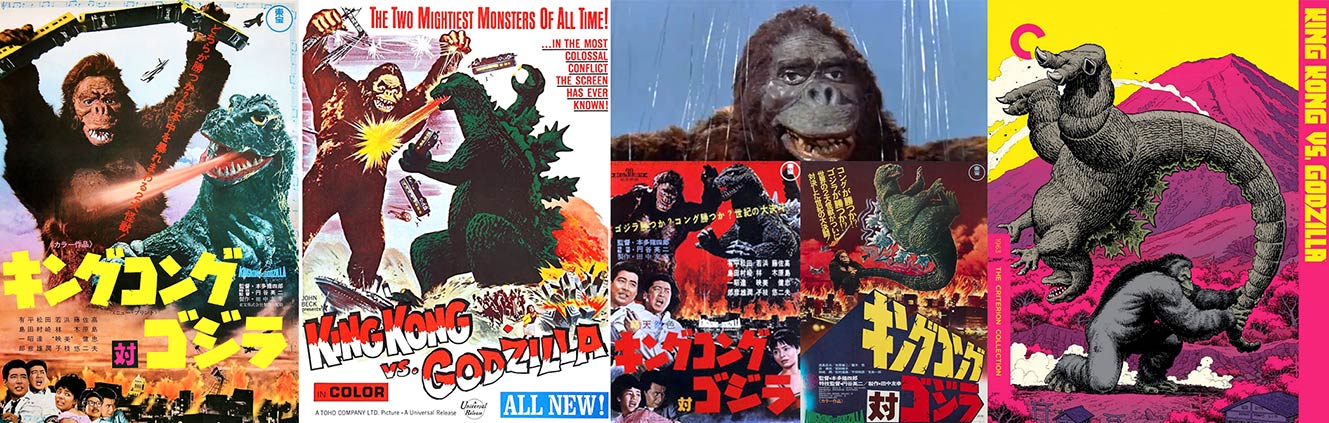
King Kong Vs Godzilla


Crouching Eiga,
Hidden Dragging


King Kong Vs Godzilla

(aka Kingu Kongu tai Gojira)
Japan/USA 1962 Directed by Ishirô Honda
Toho/Criterion Collection Blu Ray Zone B


So seven years after Godzilla Raids Again (reviewed here) had, presumably, ended Gojira’s onslaught on the Japanese and US box office, there was still a lot of interest in King Kong and Toho Studios wanted to celebrate their own 30th anniversary with a slate of big films including something with the much loved giant ape in it (Kurosawa was also coaxed, grudgingly, into making the second and final sequel movie in his career with Sanjuro, his follow up to Yojimbo). So the Japanese did a rights deal with US studio RKO, who still held the rights to King Kong and... wondered who he could fight in his film. The answer was, of course, Godzilla so... in a way, King Kong saved Godzilla because the Godzilla cycle really took off after this movie and hasn’t really stopped for any great length of time since.

When I took out the next disc of this epic Criterion set, I was dismayed to find that the version of King Kong VS Godzilla was the butchered, re-edited version with loads of stuff missing and some terrible fake TV broadcast news sections inserted all the way through to try and explain the story. It’s a truly awful version of the movie and, until now, the only one I’d ever been able to see, alas. Once the film finished... and the American version truly is a dreadful way to experience this movie... I was all ready to ‘tweet angry’ at Criterion to complain about their bad judgement in only including the stupid US version.

However, just before I did this, I came upon an article which explained that the original Japanese cut of the movie is, indeed on this set... it’s just ‘hidden in plain sight’ on the eighth disc as an extra. It seems weird to me that the one film which is, I suspect, the main draw for a set like this for a lot of people, is kinda tucked away at the back of the set like it’s somehow not the most important movie on here. However, it’s not been treated that well either in that, the scenes on this version of the film that are in the American version are proper Blu Ray quality while the scenes which are unique to the Japanese version are, in a lot of cases, only in DVD quality and, in some instances, the change over from one source to another can be quite jarring. So... yeah, a little disappointed but at least it’s on here (unlike the US version of Godzilla Raids Again... yeah, thanks Criterion).

The film in summary is very simple. Godzilla emerges from the ice in the form of an iceberg... presumably that’s what the island he was frozen on has become in the seven years since the last movie... pulling himself out of his deep freeze due to shear strength of will it seems to me. Meanwhile, two TV reporters go to Faro Island (not Skull Island as in the original Kong movies) to get some unique red berry juice and also look into the local legend of a legendary evil God-like presence living on the island. It is, of course, King Kong who, after fighting a giant octopus, falls asleep while drinking some of the berry juice and so is towed back to Japan in time to fight against Godzilla. There’s also a sub-plot about one of the reporter’s brother, who has invented an unbreakable steel wire which dovetails into the main plot towards the end of the film when the authorities lift Kong by helium balloons attached to this wire to get the slumbering beast closer to Godzilla. It’s all very silly in both cuts of the movie but the US version renders it completely ridiculous with bad dubbing changing the actual dialogue and, also, turning into a bizarre ‘selected highlights’ edition by cutting in and out of scenes for more explanatory exposition by the added American and Japanese news teams. The US version also includes terrible dialogue choices like “King Kong can’t make a monkey out of us.” They leave out a lot of the ‘TV ratings war’ satirical edge that Honda has in his version too, with all the re-dubbing.

Another thing the Americans really overdo on their cut of the movie is keep mentioning the atomic bomb. Every time the authoritarian Japanese scientist turns up and everyone is overdubbed with completely different dialogue, people just keep asking him if they’re going to drop an atomic bomb on The Big G. Really weird and almost a subconscious but punishing reminder of the horrific US triumph over the Japanese during the Second World War. On the Japanese version, the Hydrogen Bomb is only mentioned once and very briefly. This could be so that, as every Japanese person will remember, Gojira was woken and reborn from the atomic bomb tests so... well, it’s not going to do any damage to it at all if they use such devastating force. So it’s a bit of a weird and persistent inclusion on the US cut.

One thing the Japanese version also seems to forget though, especially since it’s the director of the original Gojira movie at the helm here, is that electricity didn’t stop Gojira either. Indeed, in this movie, this actually works on the monster, contrary to everything we already know about it. That being said, the electricity only makes King Kong stronger... he’s seen literally eating it from wires at one point... and, towards the end of the movie, lightning strikes fix it so that Kong can actually channel electricity through his fingers. So, yeah, not a lot of continuity with the original Kong in this one then. Although, to be fair, this idea might have been inspired by a famous, 1930s publicity still montage which pictures Kong with a load of lightning behind him in the sky.

The fights are entertaining in this movie. They are more comical and a bit like a wrestling match... much to the dismay of director Honda, who wanted to keep the monster elements more serious than the rest of the movie... but they are quite watchable and this is pretty much the direction that the majority of the Showa Era films would go when depicting their epic battle sequences. That being said, the fight scenes in the Japanese cut seem just a little bit longer and more consistent somehow than the US version, which seems to chop and change and then leave the action very quickly at the first chance. Not sure why this is, to be honest. They do both include a beautifully silly moment, though, where Kong uproots a tree and shoves it down Godzilla’s/Gojira’s throat... only for The Big G to fire it up and then spit it out at Kong as a flaming projectile. Nice stuff. Also, the effects work on the giant octopus which fights Kong at the start, apart from a comical moment where it sits on Kongs head and engulfs it, is actually pretty realistic and probably the most interesting effect in the whole movie.

Both cuts feature some very colourful scenes on Faro Island with the indigenous population there, although, all the of the islanders appear to be Japanese actors wearing black face so, yeah, they wouldn’t get away with this kind of approach today. They also show the influence of the US producers in some places, like the inclusion of the vinyl album cover of Hollywood Love Themes one of the Japanese characters has on the wall of her house.

A huge difference between the Japanese and American cuts is the score. The Japanese version has a proper score by famous Gojira composer Akira Ifikube, which brings back themes from his first one and is generally appropriate and well spotted. For example, when Godzilla is finally identified emerging from the ice, the famous, ponderous Gojira sub-theme swells up on the soundtrack and has a lot  more impact than the throw away attitude of the American cut of the same scene. The US version’s treatment of the music is just preposterous. Hardly any of Ifikube’s score is retained and there’s generally a lot less music in this version of the movie anyway. Instead, when they feel it is called for, the Americans needle drop old 1950s sci-fi B-movie scores in instead and it can be very jarring, I can tell you, when King Kong takes on either a giant octopus or Godzilla himself when all you can hear on the soundtrack is the famous three note sting based music from Creature From The Black Lagoon (which I reviewed here). It just pulls you out of the movie completely. Of course, Ifikube kinda got his revenge on the US decades later in the first of McG’s Charlie's Angels movies when, all of a sudden on the soundtrack, the Godzilla sub-theme swells up... which caused me and, I assume, many others, into believing there would be some kind of visual Godzilla reference making its way into the shot. It’s kind of disappointing it didn’t and, since it completely pops you out of the movie because the soundtrack is telling you ‘Godzilla is here!’, I have no idea why it turns up in that first Charlie’s Angels movie at all, truth be told.

And there you have it. King Kong VS Godzilla had and, I believe, still has the highest Japanese box office gross of any of the other Gojira films. It’s an important movie and well done to Criterion for including it, no matter how well hidden and only partially restored in terms of quality, on their big Godzilla box set. I was hoping the obvious Blu Rays of Mothra, Rodan and King Kong Escapes would also make their way into this box due to their obvious connections to these films, many of which are sequels or prequels to these three films but, alas, Criterion didn’t quite push the boat out as far as they could when they put this impressive set together.

Tuesday, 16 April 2019

My 1600th Post


Bride of DVD/Blu Ray Couture


My 1600th Post

It’s almost 9 years since I published my DVD Couture Remixed - Multiregion In The Boudoir listing (which you can read here) and, honestly, I really didn’t think I’d have to revisit it quite so soon. It was intended to be a helpful listing of some of the best boutique labels on the market for discerning multiregion DVD player owners (and now, multizone Blu Ray player owners) and of the labels I picked out, literally less than a handful are still in existence or, at least, not that relevant to the list anymore. And, much to my surprise, there has been a wealth of UK DVD/Blu Ray distributors that have hit the ground running over the last half a decade or more that more than challenge the US  labels that used to make up the majority of that list. So once great labels like Anchor Bay are no longer to be found here, although some of their old DVD editions are still very cool and are superseded only by Blu Ray transfers of more or less the same product on different labels.

And talking of Blu Ray... I guess I was wrong about it in some respects... or at least wrong as to the direction it’s taken. I no longer see it as just another con to get more money out of the same product from repeat custom. Early on that was probably very much the case but now the transfers that some companies are putting out, especially the smaller boutique labels like the ones that make up the majority of this list, are actually... well... not only better than the DVD versions but, in the case of some movies, better than the original cinema release versions (check out the restoration feature on MGM's big Bond box set from a few years ago for more information on how and why that can be the case with the right materials and the right people on the job).

So, yeah, I figured it was high time this list was updated so, here you go. Caveat Emptor time though... nobody is ever going to agree with anybody else’s list but, if there’s a cracking good label that isn’t a mainstream company that you know of (I’ve left Warner Archives off, even though they gave the world Blu Rays of Doc Savage and Dracula AD 1972), then please mention it in the comments section below and I can check them out when it comes time to write Son of DVD/Blu Ray Couture in 5 to 10 years. Anyway, if you’re a connoisseur of home cinema, I hope you enjoy this list. 

Alpha Video
www.oldies.com
I was in two minds as to whether I should leave Alpha Video on this list as they primarily deal with just DVD and streaming but, looking at their website, they are still very active and, frankly, you’re going to be hard put to find a lot of the films and serials they have on here anywhere else. Invisible Avenger, for instance, which is a TV pilot film based on the adventures of The Shadow. Or the 1950s Fu Manchu TV series. Or the, admittedly quite terrible and not a patch on the old 1930s serials, Flash Gordon German/US co-production TV show from the 50s. There are a lot of gems at this site and lovers of old movies and TV shows from the past would do well to check them out.

Arrow
https://www.arrowfilms.com
For a while now I’ve been referring to Arrow Films as the UK equivalent to Criterion in terms of pushing the boat out and getting a slew of quality extras to put with some beautiful Blu Ray and DVD restorations. True, they have made a few mistakes which irate fans have caught over the years and, yes, their Cult Films book project was a really badly designed product. I will get around to putting my review up for that at some point... I just hope they aren’t going to be reading it (to be fair, it does seem to be a generally well complained about tome elsewhere, it has to be said). However, these people obviously have a love for film and some brilliant product over the years. Recent releases which have stood out are things like the initial Ringu trilogy boxed edition or the boxed set of Blood Hunger: The Films of José Larraz. They also have several sub labels to their name such as Arrow Academy, where you can get a lovely Blu Ray set of the five films The Marx Brothers made at Paramount (basically, their best five movies). A couple of their acquisitions I’ve singled out here as separate labels (because I believe they once were) but I’ll mention their connection to Arrow when I talk about them. They seem dedicated to giallo, horror and slasher films... not to mention an increasing interest in the spaghetti western genre, with some stellar releases like their Sartana box set from last year enriching Western fans lives. I continue to reserve the right to say bad things about them when they make silly decisions or mistakes on the occasional release but, honestly, I think they really are probably second only to Criterion now, with the amount of care and love they put in to their titles. Hopefully the drain of streaming media culture won’t be slowing down their output anytime soon.

Artsploitation
http://www.artsploitationfilms.com
Artsploitation is a relatively new label to me and I only have two of their titles. I found out about them when they were pretty much my only source to buying a subtitled Blu Ray of last year’s amazing ‘sexorcist’ movie Luciferina (reviewed by me here) and as I looked over their product listings I realised this was quite a unique label. They seem to be the place to go for sexual kink and horror dressed as high art and, of course, that middle ground where those two things merge so well together. It’s a label I definitely need to explore more because these are very specialised films which, it seems to me, aren’t being given a chance to survive on any of the other labels. And looking at the plots and premises of some of these things... that would be a great shame if these shiny movies were not given the chance to project their twisted light out into the world. Check them out if you want to see something a little different.

BFI
https://shop.bfi.org.uk/dvd-blu-ray/bfi-dvd-blu-ray.html
The British Film Institute have their own label and, as you would expect, it’s full of classic cinema from the silent period up to the contemporary scene. As well as all the usual, very welcome suspects they also have a sub label called BFI Flipside which has a lot of rare gems you wouldn’t necessarily expect to see released in a Blu Ray format... especially not by them, at any rate. So you have José Larraz’ Symptoms available there and also stuff like Deep End, London In The Raw and Primitive London. Lots to look out for.

Blue Underground
http://www.blue-underground.com
Blue Underground are still on this list because they are still around and, if you check out their website, they are still releasing important genre works on US Blu Ray. I guess they are much less a blip on my radar these days because some of the UK labels on this list are also putting out a lot of the same product and, more often as not, they’re doing it at least as well as Blue Underground, if not better. Once the natural successor to the once legendary and... now not even on this list, Anchor Bay, they can still come up with the odd surprise and for US readers they are probably still a fairly essential label. So, yeah, they made the list again.

Criterion Collection
www.criterion.com
Well what can you say about the Criterion Collection. Since the days of laserdisc they’ve been the gold standard against which all other movie releases on home video are released. Yes, they’re usually a fair bit pricier than the others but they go out of their way to give you the absolute best, restored transfer of their titles and try to sprinkle as many interesting and informative extras as they can. Also, check out some of the cool video articles they run on their website such as their brilliant ‘Criterion Closet’ videos, where famous names from the world of film are allowed into their stock cupboard to greedily grab free DVDs and Blu Rays and to say exactly why they are picking out certain titles. They also seem to have swallowed some territory from one of their sister labels which used to be on this list the last time I had a label roundup... so HVC titles like the Zatoichi and Lone Wolf & Cub series of movies are now in beautiful, restored Blu Ray boxed collections. Criterion are still the best label out there and I don’t think anyone would disagree with that.

Criterion UK
Okay, so I’ll include the new UK arm of Criterion here, even though I’d recommend their US label more. They don’t have anything like the titles the US have yet but they do have some cool ones like the box sets mentioned above (damn, I could have waited a few years for the cheaper, UK versions!) and some nice alternatives to the UK Tarkovsky releases put out by Artificial Eye. Speaking of Tarkovsky.... here’s why I trust the Criterion label a lot more than some of the more interesting labels which didn’t make this list. Last year they were due to release their full, uncut version of the great director Andrei Tarkovsky’s masterpiece Andrei Rublyev on Criterion UK. It’s about an hour longer than any version released in the UK and I own their old US DVD of this because, well, why the heck would you want a heavily truncated movie in your collection. So I own no UK versions on Blu Ray and was chomping at the bit to get this thing uncut on the UK region. But here’s the thing... it got pulled and only released in the US (yeah, I’ll be getting that one at some point, for sure). Why it got pulled was not made known but I suspect it would be because the BBFC were bound to want Criterion to cut out the horse fall sequences in the movie. Why? Because British movies are not supposed to be allowed to have horse falls in them (don’t get me started). My theory is that, instead of cutting this incredible artist’s great work, not to mention shelling out more time and money to get a print the BBFC were happy with, Criterion must have done the honourable thing and refused to cut it. Good for them. Who wants vandalised art? If my theory is correct then shame on the BBFC for even existing and censoring any art ever! The BBFC are truly adversaries of cinematic and artistic expression, there’s no question about that. Meanwhile, the result is that if a UK inhabitant wants to see a copy of this incredible film and they don’t have a multi-zone player, well... it’s going to be about an hour shorter than it should be. So while the BBFC should be hanging their heads in shame, I have to congratulate Criterion on doing the right thing here. Plus, on Criterion UK you can get a really nice copy of The Lure on Blu Ray so, you know, not a label to be sniffed at.

Cult Films
https://cultfilms.co.uk
Okay... I have absolutely no time for anyone or thing that continues the myth that there is such a thing as a ‘cult film’ but, while this label’s name is a huge turn off for me, you have to admire them for what they are starting to do over here in the UK. They’ve only been a blip on my radar for maybe less than a year but when they start putting out restored, uncut UK editions of films like Dario Argento’s Opera (and also one of the better transfers of Suspiria) then I am definitely sitting up and taking notice. I think their star is definitely in the ascendant so keep an eye on these people.

88 Films
https://88-films.myshopify.com
A nice label very much in the Arrow style with a wide range of genre and exploitation classics including some amazing, uncut UK Blu Ray editions of various gialli such as A Black Veil For Lisa, Eyeball and The Bloodstained Shadow. Also very good if you like Hong Kong martial arts and Shaw Brothers classics. They also are more than reasonably priced if the titles you want aren’t limited or slip case editions. A good label which you can use to fill up your shelves nicely.

Eureka - Masters of Cinema
https://eurekavideo.co.uk/
Eureka, much to my surprise when I started researching this list, are still going strong. A nice label which has given us some invaluable films over the years such as a much recommended Buster Keaton boxed set and a truly beautiful looking 90th Anniversary print and full restoration (yes, full in every sense of the word... they’ve more or less got the whole, full length cut now) of Fritz Lang’s classic gift to cinema, Metropolis.

Fright Fest
http://www.frightfest.co.uk/frightfest-presents--films.html
FrightFest used to have a really good label not so long ago bringing us quirky, independent horror movies on DVD (and occasionally Blu Ray) that were possibly the only way a lot of these films were ever going to see a home video release in this country. And some of them were truly great, such as Aaaaaaaah! (which I reviewed here) and Night Of The Living Deb (which I reviewed here). Then they kinda disappeared for a bit but now they’re back, rebranded as... um... no just repeat branded it seems but with a completely different slew of new and upcoming releases replacing their old catalogue such as the truly excellent Videoman (which I reviewed here). Definitely a very useful label for getting to watch some interesting films which other companies might not be willing to take a chance on.

Indicator
https://www.powerhousefilms.co.uk/
I first became aware of Indicator, a British label, a couple of years ago when they released their limited edition Blu Ray box of the Harryhausen Sinbad trilogy. Since then they’ve had some amazing releases including box sets devoted to some of the more obscure Hammer Films, a couple of Ray Harryhausen boxes, a couple of William Castle boxes and even a Sam Fuller boxed edition. They also have old treasures like the John Carpenter scripted Eyes Of Laura Mars on their books... and all of these released in immaculate, restored Blu Ray or dual format editions with some ‘above and beyond the call of duty’ extras. A really great little label, again putting out stuff that’s much better presented than what other labels who have had some of this material in the past have done with the content.

Mondo Macabro
https://mondomacabro.bigcartel.com/
Yes, US label Mondo Macabro is one of the few labels hanging on from the last version I did of this listing, although a lot of their old titles are no longer in print. However, they still have some really cool movies on their books and if you want Blu Rays of things like Lizard In A Woman’s Skin, The Fan or Perversion Story (aka One On Top Of The Other) then these are the people you need to get them from. Definitely still a vital label in the war against mediocrity.

101 Films
https://101-films-store.myshopify.com/
I only discovered 101 films when they had a sale earlier on in the year but, wow, what a sale. Again, these people have some cool movies in Blu Ray editions that you might not get anywhere else in the UK. Films like Truck Turner, The Mole People, Tarantula, The Alligator People... they’re all here.

Redemption US (Salvation)
http://www.salvation-films.com
Well, the old UK Redemption label was a dead loss in the end with a load of their film releases being sliced and diced at the whim of the BBFC. However, their US Blu Ray label has some really great little gems which are worth picking up, including a lot of uncut Jean Rollin, Mario Bava and Jess Franco titles along with British movies like Burke & Hare and Zeta One.

Severin
https://severin-films.com/
US label Severin are still, very much a vital label and they’ve been releasing some extraordinary, if expensive, Blu Ray titles lately such as their wonderful Blood Island box, All The Colours Of The Dark, All The Colours Of Giallo and a groovy Hemisphere Films set out this month. They also produce some beautiful looking t-shirts and pin badges to accompany some of their releases nowadays. Definitely a very hot label right now and one to keep an eye on.

Shameless Films
http://www.shameless-films.com/
I ummed and ahhhd about whether to keep Shameless on the list. The fact that a few of their films are cut and that there’s no warning on the boxes works against them but the majority of their stuff is uncut and, frankly, they are still here for outstanding services to giallo and horror in the UK. They have some really great titles on their books and their new partnership with Arrow should yield some interesting results.

Shout Factory
https://www.shoutfactory.com/
Still a force to be reckoned with in US Blu Ray stakes... Shout Factory continue to put out some nice looking genre films, loaded with extras such as Star Crash, Someone’s Watching Me and Humanoids From The Deep. It’ always worth checking if there’s a Shout Factory version of a film before deciding on your purchase.

Vinegar Syndrome
https://vinegarsyndrome.com/
I’ve talked about Vinegar Syndrome before on here in reference to the owner actually rescuing a lot of the films that are released and saving them from... well... the state of film decay the label takes its name from. I only have one film by them, Vixens Of Kung Fu (reviewed here) and a lot of their stuff is sleazy porn or bottom of the barrel exploitation but nobody else is going to touch this stuff. Nor indeed save the final existing prints from oblivion. Which is exactly what makes this such a great label worthy of your support. Check out their catalogue if this sounds like your kind of thing.

Wild East
https://www.wildeast.net
I wasn’t sure about still including Wild East on here as they’re not that active these days. However, my friend @cultofthecinema really wanted me to so I’m grudgingly leaving them here with the one positive thing in that Spaghetti Western fans around the world do owe them a lot of gratitude for a number of their past releases... some of which are still available from their website. I’m not sure how long they will still be relevant, however, with labels like Arrow beginning to get into the Spaghetti Western market.

And that’s my 1600th Blog Post done. If you have any other cool, boutique labels you want to bring to my attention, please leave them in the comments section below and I will check them out. All the best and thanks for reading.

Friday, 13 March 2015

Goke, Body Snatcher from Hell (Kyuketsuki Gokemidoro)


Snatch Processing

Goke, Body Snatcher from Hell 
(Kyuketsuki Gokemidoro)
1968 Japan 
Directed by Hajime Satô
Shôchiku via Criterion Eclipse 
USA DVD Region 1

Warning: I’ll be honest, there are some spoilers here, 
including the wild ending, but they are such glorious 
ones that they’ll probably just make you want to grab 
a copy of this movie and have a look for yourself.

Goke, Body Snatcher from Hell, is the second of the four films which make up the Criterion Eclipse boxed set When Horror Came To Shôchiku and, frankly, it’s more than made up for my slight disappointment with the first film in the series, The X From Outer Space (reviewed here) and is easily worth the price of the box set on its own merits.

This one is kind of a mix of styles and genres and has a heck of a lot going for it. One of my more pleasing discoveries of last year, to be sure. That being said, the film is full of terrible dialogue and bad acting, in keeping with a lot of the Japanese mini fantasy epics of the time. Even so, the fact is that this film rises above being more than the sum of it’s cheesy parts by a clear mile and, like the blurb in the liner notes, I’d have to say that it’s not quite like anything I’ve seen before... at least not in terms of this particular blend of elements coming together in one venue.

The film starts off with quite a lengthy pre-credits sequence inside a plane. The discussion among the passengers is about the ‘violence of today’, with acts of terrorism creating a new world of fear which nobody wants to live in. During this pre-credit’s sequence we are introduced to all the stereotypes you would normally get in an airplane disaster movie and, that’s pretty much where the plot seems to be going for a while. You have the boss and his humble employee trying to impress him, the humble employee’s wife who is blatantly having an affair with her husband’s boss, the nervous passenger (who, of course, turns out to be a mad, suicide bomber), the terrorist (no, a different terrorist), the American lady who is flying to pick up her dead husband from the Vietnam war (one of the many aspects of the political issues being pushed throughout the course of the movie) and so on. You also have a couple of scientists or professor types on hand... one who makes himself known when he is needed for expositional dialogue in the plot and another one who only seems to make himself known when the first scientist is dead and is also needed to do the same job. Yeah, I know, it’s full of genuinely sloppy and unintentionally comical writing but, like I said, the film rises above this.

The plane is flying through a red sky like “a sea of blood”, as one character puts it, which is really beautiful and brings to mind the apocalyptic sky effects used in the opening of the 1980 version of Flash Gordon. It has to be said, however, it’s rendered much more beautifully here and it’s at this point that I became aware that the models used (the plane, for example) are made and shot to an absolutely first class degree. This is made even more evident when the plane crashes a little later and is easily the match for some of the better model work used on various kaiju eiga at the time.

As the passengers talk, there are schock punctuations to the discussions as the occasional bloody, flapping bird is seen hurling itself at the windows from inside the plane creating, at least once, a genuine jump scare moment. Another thing used to punctuate this sequence, and the film in general for that matter, is when a flashback to inform a character or idea is introduced. Black and red shots of an assassination which took place before the narrative has started and various shots of war (many of them archival shots) are edited in quick staccato, both visually and on the soundtrack, to create ultra-fast slide shows to help push the points being raised. These are genuinely skillfully done and add another layer of interest to the movie.

At this point, the pilot and his crew are alerted that there is a suspected suicide bomber on the plane.. so they go through everyones luggage with the usual arguments ensuing until they come across a sniper’s rifle in a briefcase. The assassin makes himself known (although he has nothing to do with the suicide bomber, who is undetected at this point) and hijacks the plane, forcing the pilot to change route to Okinawa. After he does this, however, a UFO flies over the nose of the aircraft and the aircraft is left damaged in its wake as an engine bursts into flame. Thus, the plane crashes and the film then becomes a survival movie, with the surviving passengers bickering amongst themselves as tensions increase. This is where the film turns into a less pro-active version of Flight Of the Phoenix for the duration... except a version of it where an alien vampire is on the loose.

Yeah, okay, I was getting to that...

The sniper splits away from the group, gets drawn into a landed spaceship and his head is split open in front, to reveal a make up effect like the opening of a vagina on his face throughout the rest of the film. A blobby rock creature slides into the cavity and controls his brain. As we will find out from a similarly possessed lady passenger later in the film (for some reasons the ladies don’t grow a slot on the front of their heads like the male passengers who are ‘possessed’ do), the aliens have landed and they plan to destroy all humanity. However, the way they plan to do this seems to be for the guy they have taken over to get as close as he can to people and bite them in the necks like a vampire, in order to kill them.

This, of course, makes absolutely no sense as an invasion plan but, by this point in the proceedings, I was having way too much fun with this movie to care. Not only does it have a bizarre mix of shoddy B-movie plots and characters so stereotypical that you know what they’re going to say before they do... it does it all in such style. The cinematography, shot design, set design (with some spectacular colours in the alien spaceship, for example, which are like organic shapes forced to adhere to straight angles) and editing are all way too good for what you would normally expect from a film of this calibre and it’s just like sitting down in front of a screen and eating dessert for the duration of the piece. For instance, when the pilot is forced to turn the wheel of the aircraft and change route on the instructions of the hijacker, the camera is tilted so the frame changes to an angle and speed matching the wheel turn. Phenomenal and inventive work going on here.

As the bad aliens make good on their highly impractical invasion plan, going through the passenger manifest one neck at a time and replacing their injured host with a new one as needed, we are treated to one of the most mesmeric B-movies I’ve seen in a long time. Not only that... the special effects are both very effective and highly resourceful, beating out what a lot of American and British studios (such as AIP and Hammer, for example) were doing at the time. For example, when a human host is dead and required to disintegrate, it looks like the special effects team have actually sculptured extremely life-like versions of them out of sand and, as the floor not shown “in camera” is slowly dragged out from under, they crumble and dissolve before your very eyes. This is great stuff and when it looks this good, I can’t work out why this technique hasn’t been used in other films I’ve seen.

As a pièce de résistance, just to top off the film and leave you with a truly apocalyptic finale, the surviving pilot and his air hostess/love interest escape the clutches of the aliens and walk across the desert, not knowing where they are... until they find themselves to be crash landed near a Japanese city after all. As they walk into the city they find that everyone is dead and that the aliens have landed everywhere and killed off, presumably, the entire rest of the population of the planet except for these last two. We pan out from them as we ponder this bleak realisation... out and out and zooming right out until we are left with a shot of the earth. As a final sucker punch, loads of UFOs arrive in space (much like the opening credits sequence of Tim Burton’s Mars Attacks) and then scorch the Earth to a cinder. This is definitely an overkill situation we are in now, in terms of general pessimism, and it’s like the writer wants to make up for man’s inhumanity to fellow man through war and strife by wiping us all off the face of the planet in this movie.

This is all great but it’s also highly questionable, of course, Frankly, why would you want to go to all that trouble of finding human hosts and then biting all their necks like some kind of cosmic vampire if all you needed to do in the first place was to park your fleet in orbit and laser us all to death in a few seconds. This makes no sense people!

It makes no sense, has no logic and is, frankly, one of the most rewarding and unmissable B-movies I have ever seen. I don’t understand why this one is not more well known in this country (nor why it took 11 years after it’s initial Japanese release to get a release in American cinemas, apparently). Goke, Body Snatcher From Hell... who isn’t a body snatcher and is definitely not from hell... is easily one of my most enjoyable movie experiences of last year. A real treat for these jaded eyes and definitely a major reason to splash the cash on the Criterion Eclipse When Horror Came To Shôchiku boxed set of DVDs... I just wish they’d released a Blu Ray edition. I’ll definitely be upgrading to a higher resolution format if one ever becomes available. Truly... miss this one at your vagina-headed peril.

Monday, 24 November 2014

The X From Outer Space


Guilala Land

The X From Outer Space
1967 Japan 
Directed by Kazui Nihonmatsu
Shôchiku/Criterion US DVD Region 1
As part of “When Horror Came To Shôchiku” box set.

Wow. What can I say to start off this review other than, from a film which is part of a boxed set of Criterion films called When Horror Came To Shôchiku... I was expecting more of a scary movie to be honest. At least in intent, if not in the final presentation. However, sitting through what, for a Japanese movie of this nature, is an unexpectedly silly and almost intolerable cheesy opening credits song, made me wonder just what it was I was letting myself in for here.

As I started watching, signs were good that this would be some kind of IT! The Terror From Beyond Space/Alien kind of variant... with a smallish monster at loose on a rocket ship eating its way through various crew members. Right from the start of the movie, the plot seems to be going in that kind of direction, to be sure. It starts off dealing with a Japanese rocket crew, plus token American babe (you always have a few American or British actors in your cast at this point in time if you want to try and distribute your product overseas), who are launched into space towards Mars. They even have a second ship which flies out of their initial rocket via a front opening into four pieces, just like the one in the previous year’s box office smash You Only Live Twice (reviewed here), which also owed a lot to the designer of the clutch pencil. The hope for our crew here is that their mission will finally be the one that will, this time, get past the pesky UFOs which patrol the route to Mars and which have caused all the Earth’s previous rockets to crash or fail in their missions.

No, I’m not making that bit up and, it has to be mentioned here that Japanese films of this kind at the time were always making assumptions that their audience would not find a casual belief in space aliens from their highest scientific minds and intrepid heroes in any way... credibility straining. It’s just something everybody seemed to accept back then... like, it’s no big deal. I guess if you’re not familiar with these kinds of kaiju eiga films, for that’s what this eventually turns out to be, then you may find this open admission of common UFO activity a little strange, to say the least. But I’m getting a little ahead of myself again.

Our intrepid crew do actually meet the dreaded UFO on the way to Mars and one of their number is injured. So they postpone their trip to Mars and spend a night at a handy, well populated space station on the Moon. Here they chat and meet up with various colleagues and friends and then, the next day, set off with a replacement crew member on their mission again. This time they fail more spectacularly when attacked by a UFO but are rescued by their friends on the moon who send out a rescue rocket. During the process they collect some kind of weird space fluff sample, taking it with them back to Earth for further analysis.

Now so far we are something like a third to a half of the way through the movie and the majority of the scenes that make up the running time have been scored with the most ludicrous and unbelievably inappropriate music I’ve possibly ever heard for a film score. It’s deliriously upbeat and loungy, even when it’s being used to score scenes of suspense. I honestly can’t find the words to explain just how ham fisted and clumsy the scoring sounds on this one. Very strange.

However, it’s at this point that the film shows its true colours for, when it’s left improperly supervised, the furry sample of space flotsam grows itself into what is, it has to be said, a quite improbably looking giant monster which then goes off on a giant Gojira-like stomping tour of Tokyo. And it’s a pretty tough, if silly looking beast, it has to be said. It’s in the scenes of common or garden monster stomping that the film’s soundtrack cuts to a much more  appropriate, if not particularly complex or changeable, stomp style ostinato, which is definitely inspired from similar melodies and rhythms found in the best kaiju eiga movies by the likes of Akira Ifikube and Masaru Sato. This musical phrasing is then repeated ad infinitum whenever the monster is on and doing typically monster-like things. However, when our heroes find a purpose once more, it’s crosscut between cues scored like the first half of the movie and then back again to the plodding, monster stomp motifs... so it does get a bit jarring in those transitions, it has to be said.

That purpose being to go up into space yet again (what is this, a serial?) and use the special equipment they have on the moon to make something to combat the monster in question... known as Guilala, for some unknown reason. However, although he looks quite silly, we know he must be the real deal because he has a grumbling signature sound when he’s out on a decent night’s stomping and he also has special, kaiju powers. One of those powers being that he can absorb energy and, when he has enough of it, he turns himself into some kind of floaty, flying egg of destruction before crashing into a body of water and reverting to the former of his three forms... a less floating, non flying, stomp monster of destruction.

It goes without saying that our heroes are going to win out and reduce Guilala into something which resembles an actor in monster suit who accidentally filled his costume with an abundance of shaving foam but, it has to be said, the situations our team of lively scientists put themselves through in this movie just keep getting sillier and sillier... almost as silly as the opening title song, in fact.

And that’s about all I’ve got to say about The X From Outer Space, I’m afraid. A short review I know but I’m a big lover of these kinds of giant monster movies and, while this is not among the most boring or the worst of them it’s... well... it’s not among the best of them either, to be completely honest with you. Give me Invasion Of The Astro Monsters or King Kong Escapes any day of the week as far as I’m concerned. However, if you are as gung ho about your Japanese giant monster movies as I am then you’d probably have to count this as one of, I’m sure, many reasons for purchasing Criterion Eclipse’s When Horror Came To Shochiku DVD set. When all is said and done, though I’d not recommend this particular movie to the casual fan, I am very glad to have seen it, you can be sure of that.

Sunday, 29 June 2014

New Tale Of Zatoichi (Shin Zatôichi Monogatari)


Love Is Blind

New Tale Of Zatoichi 
(Shin Zatôichi Monogatari)
1963 Japan
Directed by Tokuzô Tanaka
Daiei/Criterion Collection 
DVD Region 1/BluRay Region A

The third in this series, The New Tale Of Zatoichi was the first of these movies to be shot in colour. Despite the title implying that the film is a brand new adventure for Zatoichi, there are still lingering elements from the story arc in the previous two movies which are brought back into play alongside any new ingredients in the plotting.

After a brief and, curiously, irrelevant pre-credits sequence leading into the titles, the film begins with three armed goons coming after Zatoichi. They have ties to Kambei (one of them being his brother), who Zatoichi killed at the end of the last movie, presumably following on from that abrupt cut (both physically and in terms of the editing) which provided the movie with an extra denouement after the typical end battle sequence was already over. Zatoichi kills one of these antagonists and the other two run off.

The other main story  element of this movie involves trouble when Zatoichi returns home to the original village where he grew up... he even gets to stay with his grandma for a few nights. However, when he becomes the guest of the sensei who taught him his skills with the sword, and the sensei’s sister, things take on a sinister turn. It seems that his former tutor is involved with a group of fugitives called the Tengu Gang, and is helping him work a scam by kidnapping a particular student of his school where he knows he can get a large ransom. He’s also trying to marry his sister off to an “appropriate” partner, but she is resistant of his choice, which seems to be mostly based on wealth and good standing in the community.

This is a movie which shows Shintarô Katsu’s Zatoichi like we rarely see him in the series. For example, for a good deal of this film, he doesn’t bother using his cane sword to get around, instead keeping it holstered on his back, ready for a quick underhand draw when required... the sword cane comes back in use as an actual cane for a little while about half way through the movie but it’s a curious absence through most of it and I wonder if certain people in the studios were trying to lose it as a character prop... which would have been a shame since it’s such a notably iconic artefact of the Zatoichi movies. Obviously, though, this idea didn’t stick... thankfully.

Another way in which this title differs a little to the other films shows itself in a scene where Zatoichi roughhouses a villain, with his hands, to confirm information... never once drawing his sword in the encounter. This is an unusual move for a cunning fox like Zatoichi and it seems totally out of character for him. I don’t remember him doing this in any of the other movies but I may be proved wrong in time as I go through them again... watch this space.

Once again, Zatoichi is asked by a girl to marry her in this one. This seems to be happening a lot in the very early films for some reason. Zatoichi finally agrees and vows to give up his yakuza lifestyle, at exactly the wrong moment as he is once again caught up by Yasuhiko, the brother of Kanbei from the previous films. Zatoichi throws down his sword but Yasuhiko doesn’t want to kill an unarmed man, so they have a wager in front of Zatoichi’s bride to be. On a roll of the dice, Zatoichi will either be left alone or give Kanbei’s brother his arm. When Zatoichi loses, Kanbei’s brother has been so moved by the plight of Zatoichi and his bride to be that he lies to Zatoichi about the roll and pretends to lose, leaving our hero to his fate. When Zatoichi’s new love confirms the suspicion that Yasuhiko let him live, he goes to thank him and talk to him to make things right... too late though because his former sensei has already killed Yasuhiko. Now Zatoichi realises what’s going on and leaps to the rescue of the kidnapped student, with a series of incidents which will have repercussions for him as he realises his ultimate fate is as a wandering yakuza, and not with his suitor.

As usual with these movies, the direction and cinematography is really great.

This one has a fair few static shots of Zatoichi in long shot wandering the landscape, walking from one side of frame to the next and occasionally encountering people along the way. This would become a kind of staple shot to emphasise the character’s travelling/wandering status as the series progressed, of course.

The director works hard to include diagonal lines in the compositions, using them to separate various elements on the screen and sometimes introduces details composed of such angles within cuts of shots. For example, a cut from Zatoichi and some fellow travellers forming three uprights to a closer, mid shot of the same grouping from a different angle, shows the director utilising the heights of the characters to make a diagonal composition running down from the right to the left of the screen. To do this, he has to have one half of a married couple go past Zatoichi on the road before the cut, and then using that character being closer to the camera from the alternate angle to make sure this person is higher than Shintarô Katsu on the frame. This is all good stuff but never seems laboured... things just happen seemingly naturally, although this is obviously not the case.

This director, like Kenji Misumi in The Tale Of Zatoichi (reviewed here), also makes good use of verticals to split the screen. This is obviously evident with the interior architecture of the period being depicted, as you would expect, but he also manages to carry this on, as he does his diagonals, in some of the exterior locations too.  One way he does this, for instance, is by having the faces of two characters having a conversation in close up at the extreme edges of the scope frame, with diagonal vertical trees of a forest taking up the dead centre space between the two. Another sequence where this kind of compositional bent is nicely displayed is in an early fight scene in long shot, where almost all of the action takes place on the left half of the screen, the design only broken when one foe stumbles from the left hand into the right of the centre. Really interesting use of space throughout this film... and in a fair few of these particular movies, to be sure.

Other points of note for Zatoichi afficionados are as follows...

This is the first of the films to show off Shintaru Katsu’s aspirational musical skills... as he starts playing a borrowed shamisen and begins singing along with it, the lyrics echoing the plight and strife of his lowly character. A few of the films have similar scenes written in for Katsu to display his prowess with the instrument, but this is not as elabourate as some of those scenes get in later films.

This films also has a repeat of Zatoichi’s “candle trick”, which he demonstrated in the first film. This time there are four candles in question, with Zatoichi sitting in the middle of the four which are arranged as the corners of a square. A fast flick around him with his sword which he instantly sheaths gives us another jokey replay of the old “fastest draw in the West joke” (“Wanna see it again) in that, over a period of ten seconds or so, the heads of each candle slowly drop to the floor to give the impression Zatoichi has sliced through them at speed without knocking them over... one fallen candle on the floor left curiously alight... to allow lighting for the camera, of course. I never get tired of these kinds of gags as they come up throughout the series.

Legendary composer Akira Ifikube returns for his second of many outings with the character (he had previously scored the first movie in the sequence too) and he once again uses the four note Zatoichi theme he created in that first one as leitmotif for the character, being a kind of downbeat parody, almost, of the opening of Beethoven’s Fifth Symphony. There are some nice organ solos of this main theme present in one or two of the scenes too. The Ifikube scores in this particular film series aren’t my favourite ones for the Zatoichi character but they are solid and give the character a consistency with previous installments that the music doesn’t give him in the ones composed by other people.

And that’s about all I’ve got to say about this one. Once again, the film ends of a note of tragedy with the foes vanquished but at a moral cost to the characters who are left behind to watch the dust settle. So far the films series has been consistently good and it’s no wonder that they became so popular, so quickly. However, if memory serves me right, the best is yet to come. Stay tuned in to this blog for more Zatoichi goodness soon.