Showing posts with label comics. Show all posts

Monday, 17 January 2022

Wonder Woman


Bullets & Bracelets

Wonder Woman/
The New Adventures
Of Wonder Woman

USA 1975 - 1979
Three Seasons
Blu Ray Zone B


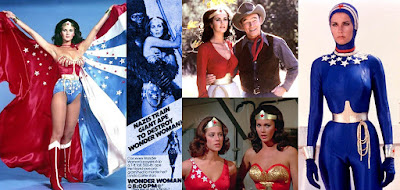
Following a somewhat muted attempt at a Wonder Woman TV show with a pilot starring Cathy Lee Crosby, in a much toned down version of the role (similar to a run on the DC comics around that time, when the character had lost her powers and become a kind of secret agent, I suspect) a new attempt was made to capture the lightning of the character (DCs top female superhero character, pretty much since her first appearances in Sensation Comics in 1942). A new pilot starring Miss World 1972, the great Lynda Carter, was commissioned... along with a couple of episodes. Then a gap as this first series proved good with the ratings and another load of episodes were commissioned, giving a total of 14 episodes in total made by Warner Brothers for ABC. Despite the popularity, ABC didn’t renew the contract but two more seasons were created for CBS, under the slightly revised title The New Adventures Of Wonder Woman.

Now, I didn’t really watch these as a kid. I saw a few episodes and liked what I saw at the time but couldn’t get over the fact that I’d managed to miss the Cathy Lee Crosby TV movie from the year before (it aired on the week I was away on holiday) and I found it hard to get invested in something if I couldn’t see all the episodes (even when I was six). By the time I was eight, though, I was very much interested in her as a pin up girl and I treasured any issues of Starburst, Starlog and the like which had photos of Lynda in her sexy costume.

However, visiting them properly now for the first time on Blu Ray (I’ll get to the 1974 TV movie when I finally get around to purchasing it), I can see just how great this must have been for young female viewers in the 1970s. Shows like Wonder Woman, The Bionic Woman and Charlie’s Angels, all of which had relatively strong female characters (while still operating with highly sexist values, it has to be said) must have had a considerable impact on women of the time and I’m so glad these were made. I came to Wonder Woman as an interesting character very late (asides from seeing her regularly on the old Super Friends cartoon show), when I grudgingly went to the first Gal Gadot movie... which completely blew me away and forced me to re-examine this character.

All I can say is, wow, this was a really great show. Especially the first series where you had Lynda as Diana Prince/Wonder Woman, Lyle Waggoner (who was just pipped at the post by Adam West for the role of Batman in 1966) as Steve Trevor and Beatrice Colen as Etta Candy (all characters from the comic books). These first season episodes were set in the 1940s during the war (as were the original comics penned by William Moulton Marston, although the TV show continues using his literary pen name, Charles Moulton, on the credits). This debut season was amazing in that it used a brilliant series of animated comic book panels for the opening credits (pitched against a rollicking song which was toned down more and more each season) and the comic book style would continue into the story so you’d have comic book drawings become photos and the constant use of captions superimposed on the live action footage such as ‘Meanwhile’ and so on. One minor problem in the writing, perhaps, was that the villains were always the ‘Nazi of the week’ during the first year but, heck, the entertainment value was high and she also had her ‘invisible jet’ in this season. I don’t recall if it was used more than maybe only once more from Season 2 onwards... which is strange because I can remember that invisible jet being a hugely popular thing when I was a kid and the recent Wonder Woman 84 movie (reviewed here) also features an homage to it.

Like later seasons, the show was peppered with guest stars, many of them big names and one of the fun things about watching the various incarnations of the show now is spotting the various people who were either nearing the end of their careers or just starting out. There were people like Frank Gorshin, Roddy McDowell, John Saxon, Ron Ely and Ann Francis turning up in various shows. Even Roy Rogers was in one, although he refused to work with Carter until they got her some Western style clothes... so Wonder Woman has a new cowboy themed look to her costume for that episode (which actually works quite well, it has to be said). Also, a young Debra Winger was in a few episodes as Diana’s sister, Wonder Girl for the first season, although she bought herself out of the contract and turned down offers for episodes in a future season and her own spin off series (I’m currently reading Elvira’s wonderful autobiography and I now know why that particular piece of casting came to be).

For the second season, the show was updated to contemporary times... which was fine with the Wonder Woman character, as she’s not supposed to age. However, Lyle Waggoner also returned, this time playing the son of the character he'd played in the first season, also called Steve Trevor. This version of Trevor works for the Inter-Agency Defence Command (IADC) and, following an opening episode which half plays as a repeat of the first season pilot, Diana becomes an agent working under him. However, the revamped show lost its ‘comic book’ visual connections and, although the villains in the stories were more varied in their motivations, it did kind of lose a little in the updating. Especially when a ‘funny computer’ and a ‘funny robot’ were thrown into the mix.

In the third from last episode of Season 3, the show’s producers went for another reboot and Diana moves to LA, to work for a different branch of the IADC... introducing a whole host of new regular characters including a streetwise, Gary Colemanesque kid, a chimpanzee and an invincible man. This must have been made after the last two episodes (which were aired a little later as specials) because, in those two (which make up a single story), Diana is back in Washington and working for Steve Trevor Jr again. So yeah... I would have liked to have seen it continue but, honestly, not in the new format they were steering towards for an LA version of the show so... perhaps it’s best it ended when it did, with 60 episodes under its belt.

Still it’s a really interesting series but I did notice it always kept reinventing itself a little more than I would have liked... which is my polite way of saying it kept changing the rules. For example, the famous spin created for the TV show, where Diana Prince transforms into Wonder Woman, is shown as it should be for the first three episodes. It’s slowed down and shows Diana moving at super speed and throwing off her outer clothes to change costume. But it was time consuming (and therefore expensive) to keep doing that and locking off the camera before a 45 minute make-up and costume change so... pretty soon they developed a magical woosh superimposed over the two parts of the spin to bridge the footage and, it looks fine and is a staple of TV nostalgia now (again, there are even a couple of very subtle references to them in the Gal Gadot movies) but it’s also problematic. And the reason it’s problematic and the reason I say it’s reinventing itself is because the rules of Diana’s powers change over time due to this. When she’s tied up or imprisoned as Diana, she no longer has her powers unless she’s completed her spin in later episodes. So she becomes more like a Billy Batson changing to Captain Marvel style character, when he used to have to shout SHAZAM! to change and gain his powers. She is vulnerable when she’s Diana Prince which, obviously, is total rubbish and not the way the character is supposed to work at all. Not how she did work in the earlier episodes, where she had various other powers such as the ability to mimic any voice, many of which were dropped for the post-season one incarnations of the show. There seems to be a definite lack of consistency as the show develops as to what she can and can’t do and, if you’re watching them back to back in a compressed time slot as I just did, you’ll notice these little changes more.

And there’s a heck of a lot more I could write about this show, actually. I wrote a lot of notes as I watched but, honestly, I don’t want to write a book on the subject (although, if anyone wants to commission me to write a book on the first of the Gal Gadot movies, I’d be happy to oblige). Unless you want to read about me getting annoyed about how every corporation depicted in Season Three having exactly the same bizarrely shaped coffee mugs and things like that. Suffice it to say that Lynda Carter totally nails it in the role and is an amazing hero who, I guess, happened to hit at the right time when she was needed by an audience that appreciated her. The only thing which occasionally grates is the big, cheesy, freeze frame grin she gives at the end of pretty much every story but, honestly, she’s absolutely brilliant in this and I’m surprised she didn’t go on to do more higher profile things in Hollywood once the show had ended. 

 If you are interested in the character then this show, despite its differences to the comic, does not let the character down too much and the title role is a strong, positive role model for people, as far as I’m concerned. Or if you don’t want to go the long haul, maybe give Season One a spin, where the visual style of the comic book source material is played up  in a really nice way... something which should never have been dropped in my opinion. Anyway, the recent Warner Brother Blu Ray set of the entire three seasons of Wonder Woman is definitely worth a twirl, whichever way you look at it.

Sunday, 19 December 2021

Rudolph The Red-Nosed Reindeer - DC Limited Collector's Edition


Deer Pressure

Rudolph
The Red-Nosed Reindeer

DC Limited Collector's Edition
Issues C20 (1972), C24 (1973),
C33 (1975), C42 (1976) & C50 (1976)


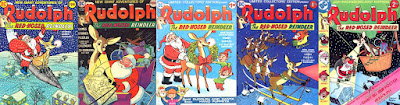
For a couple of years now for the blog I’ve been wanting to read through the annual Rudolph The Red-Nosed Reindeer comics published once a year by DC between 1950 and 1962, specifically to review those issues for this blog at Christmas. Alas, this is not... quite... that review. Once again, with Christmas blog deadlines fast approaching, I realised there wasn’t a way I’d be able to make myself read through all those issues in time but, I did think I would manage to read the five, giant sized DC Limited Collection Editions of the title put out by the company between 1972 and 1976.

The DC Limited Collectors Editions, of which there were many, was that companies rival to Marvel Comics famous Treasury Editions. Being a tabloid size with card covers and a much bigger page count. Because of their size and the fact that they would get folded to travel through the post etc, a lot less of these larger format comic books survived the 1970s and early 80s... the time in which they were most prevalent. These five specific ones contained a mixture of mostly reprints of the earlier, regular DC issues mentioned above plus, it would seem, a smattering of new material on occasion (which look like they were handled by the same artists and writers who were drawing the strip in the 1950s... it’s a pretty consistent tone throughout, it has to be said).

Asides from the majority of Rudolph’s fellow reindeer, who are not in these specifically selected stories as much other than as supporting roles, the strips seem to have had six regular characters. There was Rudolph himself, of course... and, as importantly, his best friend who would continually get him in or out of trouble, Grover the Groundhog. Then, of course, there was their boss, Santa Claus. There were also two chief elves who helped run Santa’s workshop where the toys for all the children of the world would be manufactured... Winky and Blinky. And lastly, there was a sometimes villainous but never too mean spirited or unhelpful bad guy... err... bad bear character, succinctly named... Baddy Bear.

Okay, so each of these contains either two very long stories or one long story and two shorter ones, in addition to the various puzzles and games pages and the cut out diorama found on the back covers (which was often the case with these things) and all but one story would deal with how that year’s Christmas trip by Santa would be placed in peril by some kind of accident or intervention and then the rest of the story would be how to solve the problem and fix things so Christmas could go ahead after all...usually with Rudolph applying the powers of his famous nose to good effect in some capacity or another. Which is one of a couple of small problems I had with the strip...

In total these treasuries have 13 stories, 12 of which are all set on Christmas Eve... but it’s also clear that none of them are set on the same Christmas Eve as the previous story. Which makes no sense because, nobody in the strip seems to have aged over the years... let alone Rudolph. I looked it up and the average lifespan of a reindeer is just 15 years (20 if they’re in captivity)... so I either read the whole of his lifespan in these stories, more or less, or... something else is going on here. Santa Claus or no... Red Nose or no... these characters should at least show some kind of entropic deterioration over the years, it just makes no sense. So, yeah, the characters in this are suffering from the same bizarre disease of fiction that has also plagued characters like James Bond over the years. There’s no science to this at all.

The other minor quibble I have is that... okay, the stories are a bit formulaic and you kind of expect that to an extent... but they do seem to be hitting exactly the same spots in most stories. For example, Winky and Blinky will always bump into each other and have a blame game argument for a panel. Now you could argue that’s just re-enforcing the characterisation but it’s almost the same thing every time. The thing is, I remember reading a lot of Harvey Comics when I was a kid, probably intended for the same kind of audience as these and, the Harvey Comics were way superior in the writing department, as far as I can remember.

Okay, another common thing to the formula, though, is also a very interesting approach. For a kids comic about Rudolph and his pal helping out Santa, it gets very experimental with the format. For instance, one common thing is that, at some point in about half the stories here, the plot relies on Rudolph and Grover taking an alternate form of transport to try and get to their destination, as opposed to the standard ‘Santa sleigh’. So this can be anything from a new experimental plane to a rocket ship but, usually once their journey begins, we are then treated to a splash page where the favoured mode of transport goes all over the place, shown in different positions and in all orientations on the page along with a visual trail marking out that journey. This is augmented by continual comments from Rudolph and Grover in speech bubbles which match whatever the orientation of the craft is at that time... so you will have a load of speech bubbles on the page also, at varying angles, meaning you will be doing a lot of sideways and upside down reading. So, yeah, a common element but at least it’s a fun one.

The other thing is that the fourth wall gets broken occasionally by one character or another... which I found strange for a kids comic. So when the characters are looking for something in the bottom panels of a page, for instance, one of them says “Let’s look on the next page! I bet that’s where they are!” Or, when a plan is coming to fruition in one issue, Grover peers out of the panel and says “Ha! Didja hear that, reader - - my trick is working!” Or in another one... “I saw this trick work in a TV cartoon.”, followed quickly by “Well whaddaya know? - - It works in Comic-Books too!”, literally drawing attention to the media format in a bit of mind bending metatextual shenanigans. And in another panel in a different strip, after Rudolph makes a ‘floor yo-yo’ for Baddy Bear, Santa even calls Rudolph's attention to the presence of the audience by saying to him... “Rudy, look at our readers out there! - - See their faces? They’re dying to know how you made that yo-yo!” So, yeah, even though the stories are a bit one note, there is a certain degree of sophistication in the writing on occasion. Rudolph is even aware he’s a famous reindeer on account of the song which inspired this comic book rendering.

And that cleverness in concept (if not dialogue or set up) extends to Rudolph’s nose. They obviously wanted to broaden the range of things a Reindeer with a glowing nose can bring to the table to open up their story possibilities... so at various points Rudolph can be seen utilising his most famous asset in new ways such as melting snow, generating an electric current as required, using it as a backlight to reveal the message on ruined, paint covered letters and even picking up a shard of glass to hone the glow of his nose through the makeshift lens into a laser beam.

But, for every innovation, there’s a heck of a lot of bizarrely silly stuff happening in the comic too. For instance, when Baddy Bear hitches a ride from a passing eagle, you have to ask yourself how a small bird can possibly carry the weight of a large bear. Or how Rudolph’s mum is possibly dextrous enough with her hooves that she is seen knitting.

However, all that aside, I did find these treasury sized editions of Rudolph The Red-Nosed Reindeer a refreshing brain cleanser alternative to some of the other stuff I’ve been reading lately and it’s certainly something that can’t help you catch the Christmas spirit at least a little. Not exactly a recommendation for the majority of my readers, perhaps... but I certainly had a good time with it, in spite of the various scientific holes in the stories. I think I still need to go back and read the original 1950s/60s run at some point now. 

Tuesday, 23 February 2021

Marvel Comics - The Untold Story


Treasury Edition

Marvel Comics - The Untold Story
by Sean Howe
Harper Perennial
ISBN: 9780061992117


Around about a year ago, I read and reviewed (right here) a book called Slugfest - Inside the Epic 50 Year Battle Between Marvel and DC by Reed Tucker. It was a pretty good read and I wanted to follow it up with another look at something about one of the comic book companies. Marvel Comics - The Untold Story by Sean Howe more than fits the bill. In fact, there’s not a lot of crossover at all between this and the earlier book I’d read. I mean, sure, there’s mention of DC but, when it comes to professional rivalry, Howe’s book looks as much at some of the more threatening independent labels like Image and Malibu as it does at DC.

So, as I started to read with a certain amount of trepidation, it soon became clear that I wasn’t just going to be reading a load of legendary and well told anecdotes about the long history of Marvel Comics. I mean, sure, they’re there but, at well over 400 pages, this book really gathers a lot of first hand research and the writer weaves it into a rich tapestry of many things I didn’t know about the comic book company (some of which I may have been happier not knowing, truth be told).

He does, however, start off with a revisitation of a famous point in Marvel Comics history, that of the day in 1961 when the lonesome Stan Lee, having been ordered to fire most of his staff and now working almost alone, decided to make one last grab at the market by publishing some superhero characters his own way while, at the behest of publisher Martin Goodman, coming up with something that could compete with the new Justice League Of America super group book that DC were cleaning up with. Thus, with Jack Kirby and also Steve Ditko on board, we had the birth of the Fantastic Four followed by The Amazing Spider-Man, The Incredible Hulk and The Mighty Thor. At least that’s the way Lee tells it... the way Kirby remembered it was a lot different, as I’m sure long term fans of the comic world would know and, yeah, this book certainly addresses all that stuff later on too.

And it was at this point where I began to question things and say to myself... why the heck is this guy starting so late in the game? After all, Marvel started out as Timely (among others) with the 1939 issue which introduced characters such as The Human Torch (the original), Namor - The Sub Mariner and The Vision (the original) etc. Not to mention Jack Kirby and Joe Simon working on a Captain America comic during the war. And then I realised, like a typical Marvel Comic from a certain era of my youth, Howe was playing the game of starting off on a major action scene and then flashing back to the beginning of the adventure before catching back up with the tale and then moving forwards from there. So already I could tell he was really thinking about the way he structured this thing to resemble the subject matter he was exploring but, also, it turns out he’s a really great writer of this kind of stuff.

I mean, it’s one thing to do the research, organise all the facts into some kind of timeline and then diligently report them to the reader in as accurate and fair a manner as possible (I won’t say unbiased because, no piece of writing ever truly is but, you know, he probably comes close to that too). What the writer does here, though, is to go that one step further and takes you right into the details and action of the true life incidents like you’re reading a fictional tale come to life. Okay, it does get a bit more listy as the tome wears on when everything gets to be about deals and legality and office politics but, Howe impressed me with his knack of taking all those facts he’s had to crunch through and putting me right into the heart of the story with people like Bill Everett and the aforementioned Kirby.

And, because space and economics played against me for the last 30 years, he also goes into what is, for me, totally unknown territory and explores the changes and challenges of the company right through to around about ten years ago when this book was written. So, Stan Lee was still alive and, it would seem, available for comment (along with a whole host of creators and executives, many of whom have passed on now and it took this book to let me know about the deaths of the names behind the comics I used to see printed on pages regularly in the 1970s and 80s) and the Marvel Cinematic Universe had just started to get really successful with the first Avengers movie.

So, yeah, you’ll get stuff like that legendary, infamous weekend in the 1940s where all the artists and writers holed up together for a 48 hour period in a hotel room, working through the night and not sleeping (or sleeping in shifts) with the radio blaring as they quickly put together a 60 paged length Human Torch VS Sub Mariner tale which would rack up huge sales. But then, some 200 or more pages later, he’ll come up with an echo of that exact same behaviour in the 1990s or 2000s which was the equivalent, almost, of the same burst of creative energy from the early days in the 1940s.

He’ll highlight the things which made Lee and Kirby’s heroes different and appealing - the teenage angst, the insecurity, the fact that the Fantastic Four didn’t have secret identities - and he’ll also deal with the little things which would lead to injured parties having inflated negative feelings as the decades grew... such as Kirby assuming Lee got him fired from Timely at one point (while Kirby was moonlighting for DC as a kind of therapy for not being given proper profits shares for the amounts of money Captain America was raking in).

So yeah, there’s a lot of stuff which was new to me here and the writer takes you by the hand and leads you through Marvel history - Claremont’s X-Men, the arrival of John Byrne and Frank Miller, the split with Todd McFarlane, the issues with Steve Gerber - as well as all the politics and office wars along the way which resulted in many people walking away from the ‘house of ideas’ and into either a rival company or to start up a new one. And I have to say, it gets a lot darker than I thought it would.

Marvel and, even the likes of Stan Lee, are not painted in the best light here and you have to question a lot of the unbelievable stupidity on the part of the different management teams over the years who really, it seems to me, knew little about comics and were more concerned with the money than actually being true or even sensible to the characters in the Marvel stable. There are grudges aired, friends and colleagues betrayed by one another and even a few deaths, most likely from the stress of the situation that various managers made, that fill these pages and sometimes make the policies of the famed comic book company seem a little like a road accident. You know, those times when you pass a particularly bad one and curiosity compels you to look.

But you’ll also get insights into a lot of things such as the way in which Stan Lee wrote the stories... I still think writing using ‘the Marvel method’ is certainly still a topsy turvy way of doing things but it seems a lot less loose and random now that I think I understand the process a little better, for sure. I can also see how Stan’s ‘method’ could easily imbue everyone working on a title, including himself, with a sense of ownership which was much more of a team situation than various people might like to imagine.

So yeah, that’s me done dwelling on this stuff for a while, I think. Marvel Comics - The Untold Story is a dark but honest and, perhaps more importantly as far as the reader is concerned, hugely entertaining and fascinating insight into the behemoth that is the legendary comic book company. Not quite modern Marvel because, well, they weren’t owned by Disney then but, even then, there were some insights the author conveys about the idea of Disney looking into buying Marvel which, perhaps, he’d be less able to get away with now. But don’t take my word for that, read the book. It’s a great thing. My only real complaint, at least for the one I was gifted, is that there are pages of fascinating notes relating to each chapter in the back but, somehow, the numbers are left off the actual pages in the chapters so you’ve got no idea which note hooks up with which piece of text. Apart from this bizarre oversight though (I think this is the first time I’ve ever seen that particular mistake in a publication), it’s a stupendously interesting book and if you’re into comics and the state of the various environments behind them (art, writing, publishing, printing and, very importantly, distribution), then you will get a lot out of this one.

Tuesday, 1 September 2020

Coronavirus At The Movies

 
The Movies Have Got It Covid

Warning: This article gives away the endings to Wonder Woman, Inglourious Basterds and Once Upon A Time In Hollywood.

Over the last six months of pseudo lockdown, I’ve been writing and editing a monthly Pandemic newsletter which I send to a small circle of friends to help keep them occupied and smiling through these trying times. Normally I don’t repeat content from here that I’ve included there and vice versa but, I thought the following article which I wrote for inclusion in the final issue (volume 2 starts up when we hit the second wave of Covid), number 6, last week might interest some of my blog readers too so, here’s the article I wrote speculating how cinema content might be shaped in the Covid and post-Covid world. I hope you like it.

It’s been suggested to me recently that, once movie production gets going again properly, it’s doubtful that the future of film will be reflective of the 2020 Coronavirus pandemic. The argument is that people will not want to see depictions of social distancing on screen and, instead, will want to see a world untouched by the disease that has been, err, plaguing us these last six months or more. Audiences go to the cinema for escape, after all.

I'd have to say that... I think it’s probably quite dependent on how long this ‘new normal’ will be with us but I don’t think that people who are working on any form of art... be it film, fiction or music (to name but three), will be necessarily falling over themselves to provide people with a Covid-free environment in their work. Also, the fact that it seems people can get reinfected just a few months after having the symptoms, possibly prompting four times a year vaccines* if, indeed, an effective one can be found, is also going to be a factor in this. I think we could be stuck in this for a while and I fully expect our films to represent this. Even those set in alternate fantasy versions of our current reality such as the DC and Marvel universes, for example.

One of the things you need to remember is that a lot of fictional creators tend to base their stories in a world of historical accuracy. Unless they’re set in the past or in some remote fantasy land such as Middle Earth or Cimmeria, they’re going to want to base their story in the real world as much as possible. Why? Well simply because conforming to a facsimile of the real world helps make the fantasy they are weaving... be it superheroes, spy stories or even romantic comedies... more believable. If the audience can buy into the physical, psychological and sociological environment in which certain characters are interacting with each other, then it makes the story they are telling more credible.

Historically there are plenty of things which buy into the time period of when they are set and in which great pains are taken to explain certain historical inaccuracies conjured up by the subject of their stories.

Take the comics of DC published during the Second World War, for example. The DC characters were so powerful that kids would wonder why they didn’t just go over to Germany and stop the war. A good point... Superman would have finished the war in one afternoon.  So the writers came up with (or is that fell back on?) the artefact which Hitler himself listed among his occult obsessions. In the DC comics, Hitler absolutely had possession of the Spear Of Destiny (the spear that allegedly pierced the body of Christ on the cross), an artefact which has been used over and over again in genre fiction and movies since... well, for a long time. Because of the strange properties of the Spear Of Destiny, the readers were told, the superheroes couldn’t go near Hitler because the Spear would negate their super powers. And so, the comics could go on publishing superhero tales without the question of quickly ending the war ever coming up. A useful side step.

And we’ve seen things using historical context time and time again at the cinema. Take the recent Wonder Woman movie, for example. This was set in the First World War and, because it was Diana’s mission to end that war by destroying her war god brother, the film-makers brilliantly made sure that the day that she does this also coincided with the day the armistice was signed. So in the real world about her, the war was over but... we flies on the wall know how it really ended... right? Wink. A nice solution to what could have been a huge fantasy versus reality problem. One which allowed the fantasy world of the character to play out in a relatively accurate historical backdrop without the two elements ever fighting one another. Nice work.

Of course, some writers and directors don’t care about historical accuracy... or so it seems at first. Look at the two Quentin Tarantino movies Inglourious Basterds and Once Upon A Time In Hollywood, for example...

I work in an educational establishment and I can’t even begin to tell you the horror stories of the genuine historical ignorance of a large number of the students making their way through colleges and universities across the country. It’s astonishing and I can tell you now that there are a lot of people of a certain age (and younger, now) who believe that Adolf Hitler met his death by being machine gunned down in an exploding cinema and... that’s how the Second World War ended, didn’t it? Because that’s what happens at the end of Inglourious Basterds so, it must be true, right? That was set in World War II. Now, I’m absolutely all for artists doing what they want in movies but, when something presents itself as historically accurate then I think they should just have a little warning put in at the beginning of the film saying that the outcomes of this film are in no way representative of real life. Because, you know, a lot of people think these things actually are.

Similarly, even though the ending Tarantino was going to go for was obvious even before I took my seat at the cinema to see Once Upon A Time In Hollywood, there are a fair few people of, again, a certain age, who think Sharon Tate went on to have a long, prosperous career as a Hollywood actress. I guess at least some of the people who go on to explore her post-Manson body of work will hit a wall of truth when it comes to the IMDB, at least.

The thing is, though, even these flights of fancy on the parts of Tarantino are taking a lot of time to paint that fantasy into a world which is backed up by the time in which they are set. Sure, the outcome is different but all the window dressing of 1940s Germany and 1960s Hollywood is brought into play to make his fantasies credible. So, really, he’s doing exactly the same as most filmmakers do these days... setting the story in a historically accurate environment.

Which brings me back to Covid in the movies (and other art forms). If this thing truly does last less than a year then I think the virus and the distancing will, at the very least, be used to have a scene or two with ‘light hearted social distancing’ scenes used to show, say, a development through time for a romantic relationship. “Oh, look guys, now they’re in the 2020s and they’ve got that kooky social distancing going on!”

At the worst... which I’m guessing is where we are at (the news hasn’t been very encouraging of late), I think we’ll be seeing the long term effects of social distancing and coronavirus in movies for a long time to come. Because, for one thing, it demonstrates what the audience are living themselves and thus adds credibility to the story line (whether you want to see it or not) and two... because if you’re forced to film scenes in a socially distant manner then, surely, it will be easier to do that if the scenes you are doing that with are having socially distant content?

So yeah, I’m sorry to say that, in terms of the virus and its more visible side effects, I think art will be imitating life just as much as it always does in the future and, since coronavirus is such an important part of our everyday lives currently, I don’t see us escaping that anytime soon.

*has been suggested at time of writing

Tuesday, 21 July 2020

Magnus Robot Fighter 4000AD


Raw Steel

Magnus Robot Fighter 4000AD
(The Gold Key and Whitman Years)

Gold Key Issues 1 - 46 USA 1963 - 1977
Whitman Issues Doctor Solar - Man Of The Atom
Back Up Strip 28 - 31 1981 - 1982


I never read or, I think, even saw these Magnus Robot Fighter 4000AD comics when I was a kid. We certainly had a few of the Gold Key titles on the UK news stands back in the early 1970s but they were mostly titles like Lost In Space, Boris Karloff Presents or Star Trek and, even those were fairly scarce among the gazillions of DC, Marvel and Harvey comics which dominated the racks here. The few Gold Key titles which were here did tend to stand out, though, because the fully painted covers were absolutely brilliant compared to any of the rival companies mentioned above.

That being said, I did read at least one Magnus comic strip and I was interested in the character because of that. The strip in question was from a second hand TV Tornado annual I had somehow acquired in the 1970s. TV Tornado was a comic that I didn’t get or know about but I somehow had an annual and the Magnus strip I read when I was a nipper would have been, like all the Magnus strips included as part of that comic, a reprint from one of these Gold Key issues. The look and feel of the character, from what little I saw, really appealed to me but, obviously, those were the decades before the internet so any information about the character was really not forthcoming like it would be today.

But now I’ve read these, I am a little more clued up on him... at least from his original Gold Key era. Like a couple of other of the ‘original’ Gold Key characters, Magnus has had a longer life after the company folded in various other comic companies over the years and, I guess I’ll get around to reading those ones too at some point. These ones though are... kinda interesting but a very simplistic presentation of a complex issue, it seems to me.

The strip was created by famous comic artist Russ Manning, who would also work on titles like Tarzan and who would be also well known in the US in his later years, just before he lost his battle with cancer, for drawing the Star Wars newspaper strip. He drew the first 21 issues of the Gold Key title until other artists took over for issues 23 - 28 and also the short lived revival as a back up strip in the revived Doctor Solar - Man Of The Atom (which I reviewed here). Manning’s art is pretty clean and you can tell from his storyline that he was obviously interested by the challenge of Isaac Asimov’s famous Three Laws of Robotics. So much so that he even quotes it in the first issue. Another sign of a good artist is the fact that the page layouts don’t ‘strictly’ follow the Gold Key style of panel counts with more dynamic layouts and splash panels/pages which Manning throws into the mix.

Issues 29 - 46 are all, regrettably, reprints of earlier issues... I’ve got no idea how Gold Key got away with pulling stuff like this off but I think they got rid of the letters page around about the same time so there was nobody complaining about it. At least not visibly.

The first issue tells of Magnus’ first day in North Am, a vast city which unites all of the North American continent in the year 4000AD (and beyond). This is an origin story and tells how he was rescued as an orphaned baby by the robot 1A, who took him to his ocean lair and trained him, as a toddler, in the arts of robot fighting... allowing young Magnus to hone his body like steel so he can smash robots with his bare hands. On this day in the first issue, Magnus must be in his early 20s and he returns to North Am to enlighten mankind that they have come to rely on robots too heavily... turning them into a weak race. So he fights any evil or malfunctioning robots, falls in love with a senator’s daughter who is a regular on the strip, never lets anyone know that he has a receiver implanted in his head so he can pick up transmissions between robots and get a jump on any alarming activity... and is somehow welcomed into the hearts of the people and the upper echelons of North Am, without having much of an actual job to sustain him other than being, it would seem, a permanent ‘live in guest’ of the senator and smashing bad robots.

So, yeah, interesting premise of a world gone weak through over reliance on robots but brushed away in a simplistic strip which, I suspect, Russ Manning probably left because he’d realised it had run its course in such a short time. After all, how many evil robots can there be?

There are recurring villains from time to time, mostly humans controlling robots of death... but things get fairly ridiculous quite quickly with not much to add to the initial concept, I felt. Not that the writers didn’t give it a try. For instance, exploring the concept of highly intelligent, telepathic animals to try and expand out the narrative or even... and this is a bit fraught with peril... having a group of what amount to a fan club of teenage sidekicks called The Outsiders to get into trouble and, just occasionally, get Magnus out of harm’s way.

But then you also get stuff like the mental consciousness of a robot planet that Magnus destroyed in an earlier issue coming back to take over two of the title character’s human enemies by thought control and having them harnessing robots through the power of black magic... it just gets a bit silly. There’s even a hollow reference or two in that particular issue to H. P. Lovecraft’s Cthulhu mythos if you look carefully at the spells they are chanting.

The comic also had a back up strip called The Aliens which was fairly unfocused and tried to preach on the subject of racial tensions dressed up as a kind of aliens/human exchange programme.. but with lots of ‘problem solving’ action. However, the strip wasn’t that great and it kinda gets cancelled half way through the run on a cliff hanger so... I guess I’ll never know (not too worried about that, to be honest).

So yeah, when it does have good things to explore, such as the anti-robot sentiment operating through a robotic society or the different classes and status of the inhabitants of North Am, it does kind of throw them away so we can see more things involving Magnus smashing robots but, to be fair, it is entertaining enough and I am wondering if the later incarnations of the character, written and drawn in decades which were a little more sophisticated than the comics audience was in the 1960s/70s, had time to look at some of the more interesting side effects of the main premise than the original comic did. I guess I will have to get around to reading some of those at some point in the near future but, for now, I’ll just say that I did kinda enjoy perusing the adventures of Magnus Robot Fighter 4000AD and I will come back to this character at some point, I’m sure.

Tuesday, 25 February 2020

Slugfest


Superhero Slamdown

Slugfest - Inside the Epic 50 Year
Battle Between Marvel and DC

by Reed Tucker
Sphere ISBN: 978-0751568974


Well, this is certainly a book I didn’t know I needed. The title says it all... Slugfest - Inside The Epic 50 Year Battle Between Marvel and DC. I didn’t even know there was an ‘epic battle’ and both companies have been going, in one form or another, since the 1930s so... maybe the title is a little misleading in terms of the timeframe (although I’ll get to that in a little while).

I was always a bit of a DC kid when it came to comics but then again, I also used to love both Harvey Comics and Marvel Comics too, growing up in the late 1960s/early 1970s. In fact, I learned from this very tome that Marvel, who pretty much always used to copy other people’s products, at least until the early 1960s (although a big case could be made for after too) had tried their own version of the Casper, The Friendly Ghost comic called Homer, The Happy Ghost. I’d love to see one of those. So I read more Superman, Batman, SHAZAM! and Casper than most other titles but I was always there for Marvel’s Spider-Man, Captain Britain and various others of their comics too. What did it matter who was publishing the things... isn’t there room for all the publishers in the marketplace?

As I got older and went to College, I got my first inkling that, quite ridiculously, there are people... many of them... who are either for one or the other. They lived in a world of exclusivity which meant that if they enjoyed DC, then they wouldn’t buy or support Marvel (Marvel and DC have always, until maybe very recently in terms of actually selling comics, been the dominant two of the four-colour comic book publishers on the block). And there was a wild rivalry between the fans of each... a bit like that bizarre split in fandom nowadays which means a lot of people are either Star Wars or Star Trek people. I mean, c’mon folks, really?

The thing is, I’d always assumed that this rivalry between the companies was only existent in the heads of the readers themselves. After all, grown adults working for these companies wouldn’t stoop to such shenanigans, would they? Well, as it turns out, the answer is yes and that’s why I needed this book to come along and make me realise that the constant, perceived rivalry between Marvel and DC was and, very much still is, a very real thing... and this details quite a lot of the interesting stories from 1962 onwards, when Marvel started launching their very different superheroes such as Fantastic Four and Spider-Man. Almost immediately they became a serious threat to the huge market share that DC had a grip on prior to those early days, as Stan Lee at Marvel finally hit on a winning set of ingredients for the comics that Marvel were putting out. So yeah, Marvel have been around almost as long as DC but this really looks at the early 1960s onwards.

Now, it has to be said, while writer Reed Tucker does a truly fantastic job of researching this with some of the key players and their colleagues, getting this stuff down in as entertaining a way as possible, he owns up right from the start of the book that he was pretty much a Marvel kid. Nothing wrong with that of course, one of my best friends is similarly blinkered in that respect but... I did feel that the book is definitely written with a not so hard to detect bias towards Marvel comics. So what we have, for the most part here, is a catalogue of errors as DC start to slide and continue to lose more of their place in the market, with the occasional period of upturn every now and again where they are holding their own against Marvel. Now, I’m pretty sure it’s all true and that, from the stories indicated here, DC weren’t always doing things right... and a lot of that came from the head people who were, quite often, fairly distanced from the product they turned out. They are the classy, distinguished, ‘olde worlde’ comic book company (not that Marvel were any less old) who ran their line of comics like a well oiled machine... Marvel were the upstart pranksters who were mixing it up and outselling them (proportionately, based on the sale or return model of comic book distribution... so they were selling less comics but pretty much most of their print run as opposed to DC who were putting out loads of comics with huge print runs, technically outselling Marvel but with a huge amount of their comics returned unsold).

It’s a fascinating story and there are lots of hugely serious Marketing mistakes made along the way in a desperate bid to gain dominance of the four colour market, many of them by DC but occasionally by Marvel also. So you get the industrial spies, the defection of major creative names to one side or the other and a lot of grim stuff happening... like the time Marvel were printing special versions of their issues which they knew their distributors could charge higher prices for in return for pulling 10 covers off the DC product for each copy and sending it to them so they knew the competition’s comics were not getting to the shop floor. So yeah, underhanded stuff like that.

A favourite story detailed here is where there was a big board meeting held at DC in the early sixties, with a big stack of Marvel comics on the table, so that everybody could figure out why Marvel had gained such a significant share of the market and work out how to combat it. The ‘kids’ in the room knew exactly why Marvel were winning but the executives and managers would not ever deign to actually read one of their competitors comics. They saw the art as crude and bad compared to theirs and they focused on things like... well Marvel have been using ‘more red on the covers’ or using ‘more speech balloons on the covers’, so that’s what needs to be done. They didn’t once think to stoop to reading what was actually between those covers and twigging just why the Marvel superheroes were so different from theirs. And this was going on for a huge amount of years.

And when they did manage to score a major, famous Marvel talent to defect to DC, such as the time they got Jack ‘King’ Kirby, who was pretty much the co-creator, along with Stan Lee, of the Marvel Universe (which was always a more coherent universe than the Distinguished Competition’s comics), the people at the top didn’t know why they needed him, thought he was a terrible artist and treated him badly. For instance, the young executive who managed to get him hired gave him Superman to work on but, the people at the top didn’t like the way Kirby drew him (which was the reason you would hire Kirby in the first place, frankly)... and so they ordered other artists to retouch the artwork by drawing new faces and hands on the character. Seriously? This is not how you treat a legend like Jack Kirby!

There’s a lot of stuff not covered in this book obviously... probably because it showed nothing of the rivalry between the two companies... such as highlighting the coming of the brilliant Jeanette Khan to DC without actually talking about, or perhaps even mentioning, the DC Vertigo line.

It does, however, cover some amazing stuff such as how some of the company crossovers like the original Superman VS Spider-Man Treasury from the mid-1970s (yep, still got mine) came to be. One of the things I either learned from this or had probably just forgotten was that the first crossover project between the two companies was another Treasury Adaptation of the 1970s, The Wizard Of Oz... so there’s a lot of these things covered in this tome. Not to mention... secret company crossovers that even the editors didn’t know about... but I won’t spoil that for you here, read the book. I especially liked the inclusion of the whole Captain Marvel/SHAZAM! legal issues which have dogged the original Fawcett Comics character since he was owned by DC too.

And yeah, not going to say much more about this book because the writer does manage to cover a lot of stuff and he does so in a very entertaining manner... even if Marvel almost consistently come acrosss as ‘the winners’ from decade to decade. Especially when it comes to the chapter talking about the movies and TV shows of the two companies. This book, however, came out before the release of Wonder Woman in cinemas and so the author didn’t know yet that, despite the Justice League movie, DC have made three truly great movies that are easily as good as the Marvel films... since this book was written we’ve had the aforementioned Wonder Woman (easily better than anything Marvel has ever done, cinematically speaking), the pretty great Aquaman movie and, of course, the truly brilliant Captain Marvel movie which DC were forced to call SHAZAM! due to the legal wranglings you’ll find detailed in this book. So maybe the author will update those chapters and give DC a better time in the movie section in future years, assuming they can keep up their winning streak at the cinema and it’s not short lived.

Either way, Slugfest - Inside the Epic 50 Year Battle Between Marvel and DC is an interesting and satisfying read, not just for fans of comic books but also, I suspect, for people who want to see how Marketing can just go wrong and backfire on companies (Can I hear you say Variant Enhanced Cover?). Much to be recommended in this book and I’m certainly glad I have this one on my shelf.

Monday, 23 July 2018

Green Lantern/Green Arrow


Green Titans

Green Lantern/Green Arrow -
Hard-Travelling Heroes

By Dennis O’Neil and Neal Adams
DC ISBN: 9781401280420


“In brightest day, in blackest night, no evil shall escape my sight.
Let those who worship evil’s might, beware my power… Green Lantern’s light.”
Green Lantern


One of those fragmented, early childhood memories I have is from the very early seventies. I would have been maybe two or three years old but I was already into comics, especially the American superhero stuff which was a lot more intriguing than some of the British comics at the time (unless you were really into Disney). Note to parents: if you want to start your kids reading early so they are way more advanced than the other readers in class, give them comics like Superman and Batman and they’ll soon want to know what’s being said when these characters take on monsters from space and such like in the colourful drawings.

I remember I used to regularly stay with my nan and uncle for a few hours one evening a week in the early 1970s and my uncle would always be reading at least three science fiction novels at any one time plus there would be one or two comics laying around. These were mostly DC comics (although I remember those non-coded drug issues of Spider-Man turning up) which he would either pick up with the novels from a cornucopia of sci-fi, crime and sleazy novels called Comyn’s Books* in Tottenham (if I remember the name correctly... now sadly long gone) or from one of the nearby news stands or possibly the only other news stand I knew that sold American comics at The Angel, Edmonton (that news stand is also now, alas, long deceased).

Anyway, I remember one of the titles he used to read was definitely this Green Lantern/Green Arrow run of comics from 1970 and I can just about remember flicking through the first issue, number 76, and taking in the pictures. Of course, I didn’t know how important this run would become in the history of comics at the time, nor how influential but, I did love the artwork by Neal Adams (who didn’t) and I kinda knew it was very different to a lot of the other DC comics at the time because the two heroes featured on that classic cover of Green Arrow destroying Green Lantern’s power charger (yeah, like a lot of comic covers in the day, that didn't actually happen in the issue itself) were to be found inside constantly at loggerheads with each other in this and later issues. I knew something was going down here but I was too young to know what.

Of course I’ve caught up with the odd back issue of this relatively small run of about 13 issues (and short story appearances in The Flash) in the intervening decades but, somehow, not most of them and this beautiful deluxe edition hardback from DC (also available now in paperback) finally allowed me to catch up with these guys in a complete reprint of this important run of comics. Why is it important? Well… at the time it was…

The Silver Age Green Lantern, despite being mentioned in Donovan’s groovy hit song Sunshine Superman, was a failing character by this time in that sales had really hit a dip and cancellation was looming. So editor Julius Schwartz gave the character to comic book writer extraordinaire (as he would certainly be known by some after this take on the character) Dennis O’Neil, who writes not one but two introductions to this collected edition, to see if he could do something to turn around the fortunes of this ailing character. And he certainly did… taking on the political and social issues of the day and giving Hal Jordan (Green Lantern) a counter balance in the form of Oliver Queen (Green Arrow… who somehow seems to be known as just Arrow these days in TV land). The whole point was to keep away from the cosmic adventures (that didn’t quite happen but even the stories set on other worlds were metaphors for what was going on in the then and now, such as overpopulation) and to send the two emerald avengers on a road trip around America to argue out and find compromise on the issues of the day. This was no longer going to be a world of black and white problems with easy solutions… this was going to be a world of barely discernible greys when one or the other of the two title characters, sometimes both, would end up being shown that they were making bad judgements and, sometimes, they would fail to get the happy resolution they might be expected to get in any other DC superhero title at the time.

So the banner with the distinctive masthead I loved as a toddler came into being on the first issue of this legendary run, Issue 76, for the first story No Evil Shall Escape My Sight. This one starts off with an absolutely beautiful Neal Adams splash page of Green Lantern flying towards the reader over the top of some traffic in a busy New York City street while various credits are rendered in funky lettering and integrated onto the side and back of a truck. This is gorgeous stuff and demonstrated why Neal Adams was so highly regarded as an artist in his day and is still considered as very influential with his mix of realistic drawing style combined with dynamic layout design.

O’Neil’s story quickly sets the tone for what was to come as, instead of a super villain, we have Green Lantern rescuing a villainous slum landlord who is being ‘attacked’ by some kids. After he tries to do what’s right in the eyes of the law the people in the street throw cans and bricks at him to suggest their displeasure at Green Lantern’s intervention and neighbour Green Arrow gives Hal Jordan a quick lesson in the issue of Law Vs Justice. After dealing with the strips villain under circumstances written to ensure the two are still seen by readers as the ‘heroes’ of the strip, it’s proposed that Green Lantern and Green Arrow (accompanied by one of the Galactic Guardians, for a while) go on a road trip of America to explore the dark underbelly of a nation still labouring under the horrors of the war in Vietnam and turning their hand at trying, not always successfully, to find some kind of a solution or compromise to the social injustices of the day.

And that’s more or less what this run of issues did… until it finally got cancelled but, not after it got itself noticed by the rest of the comics world, for sure. This handsome tome faithfully reproduces (sadly, sans the adverts of the day) the entire run and, even now, I found myself surprised at the direction some of these issues go as the two heroes take on pollution, racial intolerance, drug dealers, political corruption and even handle religious imagery in what must have been a very risky way for the day.

In their adventures, they are often accompanied by Oliver’s on/off girlfriend Black Canary, who is very much a feminist icon, I reckon (even at three years old I was a big fan of her costume incorporating fishnet stockings). I love the way that she’s described and drawn in action here as a total powerhouse who hates violence but is forced to use it to keep the bad guys at bay. Love the pained expression on her face as she is obliged to make short work of her adversaries.

Another impressive thing is the running continuity between issues, which take place in the same real time as the issues were published (so after a few issues the guys have been on the road for six months, for instance). As the characters get injured during their various confrontations, their wounds (not to mention their emotional scars such as when Green Arrow discovers that his perpetually young sidekick Speedy has turned into a junkie), stay with them over a number of issues. Another example is when Green Arrow gets shot in the arm, for instance. He’s still complaining about that bad arm and it becomes a major plot point even in the last story in the series. This is good stuff.

I also appreciated some of the pop cultural references in the strip too. Such as when the characters are attacked by birds under the influence of a mind controlling child and Black Canary compares the incident to the Alfred Hitchcock movie version of Daphne Du Maurier’s The Birds. Sure enough, there’s a wordless cameo of Hitchcock himself in the left foreground of the panel. Wonderful stuff.

This was a great and important comic and, comparing the social issues described within the pages, you’ll soon realise that many, possibly all, of these problems are still with us today… some in an even more magnified form. So, yeah, great comic and a truly lovely and respectful reprint of them can be yours to read now. Green Lantern/Green Arrow - Hard-Travelling Heroes is an absolutely excellent book and a must read for anyone who considers themselves interested in the history of the form. Grab this one while it’s still relatively easy to get hold of. You really won’t want to miss it.


*If anyone remembers this bookshop or has photos of it, please share with me on Twitter.

Sunday, 24 June 2018

Batman - Gotham By Gaslight


Gas Expectations

Batman - Gotham By Gaslight
USA 2018 Directed by Sam Liu
Warner Brothers Blu Ray Zone B


Well... my blood is still boiling after watching this new, animated feature which purports to be an ‘adaptation’ of the brilliant one-shot comic Gotham By Gaslight. I can’t imagine what the creators of the original, Brian Augustyn and Mike Mignola, think of this travesty but I do feel for them.

That original comic was one of the first, possibly even the first, Elseworlds comic by DC. I’m not sure if my old copy from 1989 even has the Elseworlds logo included on the cover but it was a popular imprint (with me at least) and DC’s answer, or so I assume, to what Marvel were doing with their What If? comics.

Okay, so people who know me have probably figured out that I find it quite interesting when characters and situations from different sources or universes come together and are cross pollinated to give an alternate feeling to the familiar elements of their individual stories. There have always been comics where some of the characters 'separated by time', for example, have come together in a single story. I might mention The Shadow debuting for DC in the pages of one of the Batman stories (Batman Issue 253) or my favourite of the Marvel Two-In-One comics featuring The Thing from The Fantastic Four alongside Doc Savage (kind of). One of the more interesting titles that Marvel used to put out was What If?... which literally took famous moments or characters in Marvel history and said... well hang on, what if that hadn’t panned out that way at all? So you had some great issues like What If Conan Had Walked The Earth Today? and What If Elektra Had Lived? Of course, Elektra did live... or she got really confusingly reincarnated at any rate... but at the time they brought that issue out she was still very much dead in the comics.

Anyway, as good as this long running comic book series was, when DC finally decided to get in on the act, they came up with the Elseworlds series of one shot comics (and occasional mini series). Their explanatory blurb on the front or back covers was always pretty much the same... “... where DC Comics heroes are taken out of their usual setting and put into alternate timelines or realities.”

So I have some great comics like Metropolis, where the idea of Superman was literally displaced into a version of the famous Fritz Lang movie of the same name. Or Batman: Red Rain.... where Batman goes toe to toe... or is that fang to fang... with Dracula. Or Amazonia... where a Victorian era version of Wonder Woman takes on Jack The Ripper etc. There were quite a few of these things published in one format or another and Gotham By Gaslight was where a Victorian version of Batman took on Jack The Ripper, who had journeyed to America. It was a great little tale and even inspired a sequel, Batman: Master Of The Future, which the makers of this hideous mis-step of a cartoon have also slightly plundered for their own take on this story.

Frankly, as I was watching this new animated version, Batman - Gotham By Gaslight, I could barely remember any of the events, characters or situations I was seeing portrayed on screen as being in the comic. I had to go back and check that I didn’t imagine the original incorrectly but, there you have it, there are so many liberties taken with this one it’s pointless calling it by this title. I know a movie adaptation has specific demands that make it essential, in most cases, to change a few things to help the flow of the film but this one goes way beyond the old and dubious scapegoat of artistic licence. In fact, it feels like ‘artistic licence’ met ‘art’ down a back alley sometime and anally raped said masterpiece before slicing it up with a chainsaw and then jumping up and down on the bloody remains of what was, in this case, a once great story.

I can barely write these words without being enraged as to what they have done to this, in all honesty. There is a slight similarity in the costume that the Batman variation wears in this (which was my favourite costume variation in the comics, to be honest) and the killer is still Jack The Ripper... but even that is not as it seems because the person who ‘was’ Jack The Ripper in the comic is not who it turns out to be in this travesty of a cartoon version. Seriously, it’s like what the producers and writers of the James Bond franchise of movies used to do more often than not... just buy the title and then come up with their own story, characters and situations with absolutely no regard or, as in this particular case it seems to me, no respect for the original material.

Honestly, I can’t stress how different from the original source material this movie is. In this version, Selina Kyle (aka Catwoman) is one of the main players and... yeah, you guessed it, she’s not even in the comic. The Joker was referred to in the comic but... oh, right... makes no appearance here. Instead you have throwaway versions of characters like Poison Ivy, Harvey Dent and Adam Strange. This really has got nothing to do with Gotham By Gaslight people! And there were so many other things from the source they could have thrown into the mix, like Sigmund Freud but... no... we have something far less interesting here.

I remember the artwork in the original comic being fairly gritty and very ‘Victorian’ish and it all worked really well. In this cartoon, however, everything seems so 'xerox smooth' and flat and it just seems like the most simplified, child-like version of 'Batman Victoriana' you would ever hope to stumble upon in your worst opium nightmare. They’ve managed to take what was an impressive story and not only completely change it so it’s barely relatable... they’ve also managed to make it look as bland as possible. I just don’t understand this approach. All the animation looks kinda slow and somehow cheap. Like a 1970s/80s Filmation cartoon.

Also... why the heck is this a 15 rating? There’s a modicum of blood in it and the occasional ‘slightly naughty word’. This is not worthy of an adult certificate... especially since it seems like it was made by a kid. Honestly, it’s like a bunch of stuffy old conservatives got around a table and put their hands over their mouths while grinning as they put in a swear word or two. This is beyond childish and not anything close to adult oriented entertainment.

Okay, so good things?

Well... the fist fight choreography was kinda okay. It was mildly entertaining although, it has to be said, Batman never actually wins any fist fight in this thing and even in the last one, he only escapes fiery death by using a trick he learned from Houdini. 

Okay, so other good things...

No, wait. That’s it.

There are no other good things and don’t let me get started on that awful song which is desperately failing to sound like the period its trying for. I bought this Blu Ray because I loved the original comic book and now I feel like I’ve been completely hoodwinked by Warner Brothers. I thought I was buying a version of Gotham By Gaslight but it turns out this is in name only. There should be a huge disclaimer on the front cover of this thing telling people that any event or characters portrayed in this movie are completely incidental and in no way meant to resemble the one thing it’s supposed to be an adaptation of. After seeing two amazing Batman animations (reviewed here and here) by the same company putting this one out, I’d have to say they should hang their heads in shame at committing this atrocious misrepresentation of a great Augustyn/Mignola work. Don’t bother with this one... go read the comic instead.

Saturday, 26 March 2016

Batman Vs Superman: Dawn Of Justice


Diana’ther Day

Batman Vs Superman: Dawn Of Justice
(aka Batman V Superman: Dawn Of Justice)
2016 USA
Directed by Zack Snyder
UK cinema release print.


I had it all worked out that I’d deliver a scathing critical blow by calling this review The Brave And The Dulled when I came to write up this movie. However, after having seen said movie, I realised that was impossible because, contrary to both my own expectations based on the awful previous movie, Man Of Steel (reviewed here), and the negative reactions by the press... not to mention terrible word of mouth online... it turns out that Batman Vs Superman: Dawn Of Justice is actually a pretty good little movie. It has a few problems, for sure, and you can bet I’ll be pointing them out in a minute, but...  ultimately, it’s both a vast improvement over director Snyder’s former Superman movie and it delivers a nice spin, although not an original one, on some of DCs flagship characters. I’ll fess up and say I’ve seen almost all of the director’s previous movies and Man Of Steel is the only one I didn’t like... so I’m happy that this movie sees a certain ‘return to form’ for the director. At least as far as I’m concerned.

So the good stuff here is that the film doesn’t change or in any way pervert the characters like the previous film did... and fans of Batman who are saying it does, really need to look back to both the character’s origins and, also, the history of comic books, for a little enlightenment there. I count myself as an ardent admirer of the character over the years and this certainly does him justice. Also, the problems in the last film of Superman making the decision to kill General Zod and also not being able to stop gazillions of innocent people being killed are used as a motivator on the plot point on this movie’s ‘bout of the century’ and the weight it’s given in the script does make amends, somewhat, for Snyder’s choices on Man Of Steel. Although Superman still doesn’t wear his underpants on the outside here and that’s a detail that definitely needs some correcting.

Okay, so I can guess that some non-comic book fans or, more, people who don’t know the rich legacy of multi-character cross-overs, don’t understand the politics of character ‘team ups’ and I can imagine a lot of the movie going feeling short changed on this movie over what is, frankly, a little punch up towards the end of the story between the two title characters. But it is a greatly misleading title and one which, I’m sure, a lot of comic book fans discounted as being in any way truthful very early on in the marketing of this movie... especially when the subtitle Dawn Of Justice was added. Now, personally, I think they should have stuck to the legacy of the two characters crossing over because, after the first few times they did it in one or other of their comics, back in the 1940s I seem to remember, they were doing it a lot under the title World's Finest... and that was a comic that ran for many decades, if memory serves me correctly. I wish the studio had been more honest and less ‘marketing monded’ with the general public and called it that. Perhaps, then, there’d be a few less disappointed audiences out there on this one.

Either way, this is how a comic book cross-over works in both the DC and Marvel Universes... and you already saw a little bit about how this plays on film in Marvel’s The Avengers (reviewed here). So the characters would meet and they’d basically start fighting each other over a disagreement or because they’ve been duped by one or more villains. This is even how it happened in the famous, first 'cross-company' oversized comic book in the 1970s... Spider-Man Vs Spiderman. The heroes will fight for a short while and then find the error of their ways and spend the rest of the time teamed up against their common villain/s. And that’s pretty much the way this movie works too... except the prelude to the fight takes most of the movie and leads up to a kind of prelude to the final act. But getting their is entertaining enough, even if the showdown is a bit of a damp squib of a battle.

Okay, so no surprises in this film and lots of nicely shot, nicely edited and well acted drama. It’s a cool piece of work with Henry Cavill still being a good fit for Superman... and with a script that helps him do that, this time around. Ben Affleck was always going to be a perfect fit for Bruce Wayne and he decides to play him very cynically here but it still works pretty well. Jeremy Iron’s Alfred is pretty cool too, and I prefer him to Michael Caine’s recent take on the character in some ways... although neither of these versions are in any way faithful to the original Alfred Pennyworth in the comics, it seems to me. Gal Godot as Diana Prince aka Wonder Woman is pretty great in this movie and... yeah, she kind of steals it by the final act, that’s for sure. Looking forward to seeing her in action in cinemas next year which presumably tells the story of her exploits in World War One, referenced in a photograph in this movie. Jesse Eisenberg as Lex Luthor is a little off with his ‘madness’ it seems to me.... although he does have an interesting quirk where he invades the space of other characters regularly by touching them, which was interesting. Amy Adams is pretty cool and Holly Hunter is wasted but certainly knocks her role out of the park. All pretty good.

Okay... there are a couple of problems.

Right from the start the writers wisely gets through the whole Batman origin story by cross-cutting the death of Thomas and Martha Wayne with the discovery of the bat-cave, during the credits. Good. This saves time in the rest of the film and the director can hit the ground running. However, there’s a point in that opening which had me growling my head off until I realised that it had been mixed into a dream sequence (for the record, Batman can’t levitate) and this sets up the fact that Bruce Wayne has a lot of ‘dream state’ visions in this movie and it’s a way over-relied on ploy by the film-makers to access some beautiful scenes (at least one of which owes a very strong debt to Frank Miller’s classic Batman tale, The Dark Knight Returns) but it really is a ‘have your cake and eat it’ kind of scenario and the problem is that you can never tell if you’ve suddenly gone into a ‘dream moment’ or not. Which means a scene which seems like a foreshadowing of disaster, and may or may not return in a future movie, is not to be trusted and seems like a nonsense at the moment. So that’s a bit of a shame.

Another problem is the physics of this universe, which seem to have changed since the last movie. In that movie Superman warned Lois to move further back and then further still so he wouldn’t hurt her with the aftermath of him taking off to flight from standing still. Fair enough but in this movie, he can do it standing right next to her on a balcony with no warning and no consequences... doesn’t make sense, does it?

Okay, now four other members of the Justic League of America make appearances in this film, three of them small, and a larger role for Wonder Woman. The problem is that the sequence where the other three are shown means that in a scene set in water, later on in the film, you assume a certain other character will make a return appearance and, when he doesn’t, it leaves you a bit disappointed. Secondly, if the whole thing seems shoehorned in to give the DC cinematic universe something to quickly combat the slowly earned and built up Marvel Avengers movies to rake in the cash... well, yeah, it does seem like it and it does kinda hurt the film, to be honest. The exception being Wonder Woman who is carefully worked into the story right from the start and who appears naturally in a scene which shouldn’t have been used in the trailers because it’s such a great entrance.

Another problem is that there’s another very famous character, and I’m not talking about Wonder Woman, featured in the last trailer for the movie and as soon as comic book fans see that character, they’ll have another pretty good idea of just where the producers are going with this movie. Yes, they do make it a partial adaptation of a very famous Superman comic and yes, we are left with an ending to the film that none of us really believe, and with good reason. There’s no post credits scene in this movie but viewers would be advised not to blink as they get to the end of the very obvious final shot of the film.

Okay, what else? Well, for a two and a half hour movie, the action is flat and minimal. Personally I don’t mind that but I think some audiences are going to be disappointed with that. It’s not great fun, nor probable when you think of the way Batman’s ‘gun’ works, that Superman can be taken down so easily in certain scenes. The physics seems slightly ‘off’ but it’s okay, I guess... just not very interesting. A bit dull. But it serves the story so, what the heck.

Hans Zimmer and Junkie XL’s score (plus a load of others if you read the fine print at the end of the movie credits) is not terrible in that it at least builds upon the leitmotif that Zimmer used in the previous film and their are definitely some thematic elements for the other characters. Wonder Woman’s one is kinda interesting. I haven’t listened to it as a stand alone score as yet but am hoping to give the CD a spin once I’m done writing this. I need to revisit the original score again too, after it started growing on me when I rewatched Man Of Steel last week in preparation for this movie. It doesn’t hurt the film and seems appropriate, pretty much. So that’s all cool. I’m seeing Zimmer in concert next month so it’ll be interesting to see if he does any of this score then.

Okay, that’s about it. There are some nice references for comic book fans such as the nod to The Mark Of Zorro (augmented here with Excalibur) as the film playing before Bruce Wayne loses his parents and a nice dig to audience members such as myself who prefer the Superman character rooted in the values of his origins in 1938. This kind of thing is always good and doesn’t hurt the film either. Other than that... not much else to say. Batman Vs Superman: Dawn Of Justice is a far better movie than I was expecting and certainly helps fill in the crater left by Man Of Steel. There’s a scene where a character from the first film returns which might annoy some people but I’m trying hard not to put spoilers in here so won't address that now. All in all, though, I think some people will like this a lot more than most of the critics and I reckon its something you just need to take a chance on, truth be told. I’m glad I didn’t get putt off seeing it... although I really wasn’t looking forward to it. Pleasantly surprised, though, so that’s good.

Friday, 24 April 2015

Avengers - Age Of Ultron


Stark They Were 
And Golden Eyed

Avengers - Age Of Ultron
2015  USA
Directed by Joss Whedon
UK cinema release print

Warning: Really quite huge spoilers implied in the text here... 
don’t read before watching if you really don’t want to know.

Okay. Where to start on this big beast of a movie?

There’s been a lot of pre-hype to this next Avengers movie, as can be expected. Clips started being released maybe a year ago? I think in the case of this movie that was maybe a bit of a mistake because, honestly, the clips released are probably some of the best parts of the film and I could have done with, especially the Hulk-Buster armour, being a bit more of a surprise. Maybe I would have responded to the film a little better if it had been.

Now, I have to say that this is certainly not a bad film and neither, despite first impressions, is it a mess of a movie. It’s actually quite a good, solid little entertainment. However, it’s also not a great movie and, if I totted up some kind of personal ranking for the Marvel Phase 1 and Phase 2 movies, I guess, for me, it would come about halfway down the list.

Just so you know where I’m coming from, I actually gave the original Avengers movie a not so hot review (read it here) and I have to say I was kinda disappointed with that one at the time. However, I rewatched it on Blu Ray about a year later and, it has to be said, it grew on me quite a bit and I really enjoyed it a lot more the second time around. This new film isn’t half as good, in my opinion, and it’s certainly not up to the standards of, say, more recent Marvel movies like Iron Man 3 (reviewed here) and Captain America: The Winter Soldier (reviewed here)... although I liked it a hell of a lot more than the Marvel Universe Phase 2 movie that preceded it (and you can read that review here).

But, like I’ve said before, this particular set of Marvel universe films have been put together by producers who have an uncanny knack of both getting perfect casting (there’s not a bad or inappropriate performance in this film) and picking just the right directors for the job. Following up on this we have writer/director Joss Whedon, who directed the first Avengers movie and was presumably chosen, at least partially, because of his proven ability to work wonders with films and TV shows which require a strong, unifying story arc involving interaction with a large ensemble of characters... such as Firefly, Serenity and Buffy the Vampire Slayer. Once again he manages to skillfully wield this army of ever increasing characters that the producers are throwing at him to get something that, while not always gold, is at least very serviceable and satisfying in parts.

The movie once again features Robert Downey Jr as Tony Stark (Iron Man), Mark Ruffalo as Bruce Banner (Hulk), Chris Evans as Steve Rogers (Captain America), Chris Hemsworth as Thor (you know... The Mighty), Scarlett Johansson as Natasha Romanoff (Black Widow), Jeremy Renner as Clint Barton (Hawkeye) and an impressive roster of other regular characters from the Phase Marvel Universe popping up in places where you’d like to see them... the only noticeable absences being Downey Jr’s and Chris Hemsworth’s leading ladies from their stand alone films. Added to this cast are four new characters including the titular character Ultron, a bad guy voiced and motion captured by James Spader. We also have the Iron Man series regular Paul Bettany back as both his usual “voice of Jarvis” and the first live action movie incarnation of “The Vision”, although this character’s origins are terribly messed around with. One good thing about that, though, is the fact that the actor having also voiced Jarvis is absolutely accounted for in the course of the story at an almost metatextual level.

Two other new characters on board are “the twins” Pietro and Wanda Maximoff, aka Quicksilver and the Scarlet Witch as played by Aaron Taylor-Johnson and Elizabeth Olson respectively. Now this is an interesting thing because, as I mentioned in my review of Captain America: The Winter Soldier, Pietro is also in 20th Century Fox’s X-Men franchise now, played by a different actor and with different origins. In the original comics he was a mutant (as he presumably is in X-Men: Days Of Future Past - reviewed here) and both he and The Scarlet Witch started out as villains in the 1960s, part of Magneto’s mutant army, before switching sides and joining The Avengers. In Avengers: Age Of Ultron they are, instead, genetically enhanced humans who have been modified by agents of H.Y.D.R.A. So it will be interesting to see if audiences get confused with Quicksilver’s inclusion, in two completely different guises, in both franchises.

Asides from the company politics which allowed for stuff like this to happen, however, I’m happy to report that Spader, Bettany, Taylor-Johnson and Olson all do a great job and more than hold their own against the regular cast members in this movie... which can’t be an easy task when there’s so much talent in the room, so to speak.

So there’s bad things and there’s good with this movie.

For starters, while Banner/Hulk is more integrated into the plot in this one, not to mention a romantic sub-plot with one of the other characters, he also has less impact. In the first movie, they held back on Hulk a little and when he did get a couple of moments, they really counted and were extremely funny. The humour of all the characters is still in here but, especially with Hulk, its quite toned down.

Another problem for me is the structure. This kind of tent peg movie usually builds to a spectacular climax and, though it certainly has a lot of money up there on the screen and has an epic feel to the way it’s been shot and edited... it still feels like there’s a heck of a lot less going on than in the previous collective outing. I think one of the reasons for that is that there’s no real surprise in terms of opposition at the end. In the first film, Loki was the bad guy and it wasn’t until the last hour that he brought on thousands of aliens and even some bigger alien flying slug thingies... the stakes kept getting bigger, at least on a visual level. In this one, although the stakes get bigger in terms of what’s actually going on, on an eye candy level with the antagonist it’s just... more of the same. We have loads of multiple variants of Ultron and he’s everywhere at once. When he’s killed or seems near defeat he brings on... more Ultrons. Yeah, okay, we’ve seen that trick more than once throughout the movie... we didn’t really need to see it again. Now my regular readers know I’m not one for going with a standard, cause and effect, build to a big finale structure and usually revel in films which are brave enough to take a less obvious approach... but in the case of this film I think it does kinda hurt the picture a little, if I’m being honest. I also don’t think it’s anyones fault because, until you get this stuff in an editing room, you’re kind of rolling the dice as to how what you’ve captured and created digitally comes across and so... I think it’s just one of those things. Saying that, I think most people will be more than satisfied with the structure and spectacle in this one... so I’m probably in a minority on this point.

There are some truly nice moments in this too, though.

For instance, there’s an extended version of the pre-release clip Hammer scene, where The Avengers are having a party and everybody, or almost everybody, tries to lift Thor’s hammer off the table. It’s quite fun but... Joss Whedon’s genius doesn’t stop there... it’s actually a really nice set up for a punch line which comes into play for the last act of the movie. So if you do get fed up with this early sequence, remember that it’s all an elaborate set up for a great and humorous moment later on in the movie which also, I should add, tells you everything you need to know about the calibre of one of the new characters and is pretty great movie shorthand for getting a feeling of trust and bonding with the core group of Avengers going. It’s a really nice moment when it happens and, judging from the gasps of glee from the audience I was with... you’ll probably know just what I’m talking about if you’ve seen this film.

Another great thing here is that none of the new characters are skimped on. Sure we get less coverage than maybe most of the regulars do but, the new characters aren’t just treated like add ons here... they have a sense of history and identity, even The Vision, and because of this there’s a great moment towards the end of the film where... oh wait... that really would be a spoiler too far but... well... lets just say, I didn’t see that coming. So that was kinda unexpected which, with modern movies, can only be a good thing.

Another great moment is where we realise that, as much as we think we know these characters from the previous films, there’s always something new up their sleeve. Take Hawkeye, for example. Not only does he very quickly and efficiently, temporarily take care of a character who has pretty much knocked out the entire team at one point, but when the chips are down he fleas with his team to his safe house where we, and most of the team (only Natasha Romanoff knows this fact about Hawkeye which, given their history, is no surprise), get to meet Hawkeye's best kept secret... his wife and kids. So this is all good stuff and it’s in moments like this that we see Joss Whedon’s beating heart breathing life into these four colour creations and bringing the humanity, along with his cast and crew, to these famous creations.

And then there’s the music...

I’ve commented before on the dire lack of musical continuity within the Marvel Phase One and Two movies and have tried to justify it to myself by comparing it to a comic drawn by the same artist but with different inkers each issue. However, this film has two music credits which, surprisingly, come up separately... Music by Brian Tyler and Music by Danny Elfman. The credits don’t share the same screen and, with an album release towards the end of next month which seems to have different cues by each of the two artists, I’m guessing this was not a collaboration. So what happened here? Was Brian Tyler busy because his time on the project over ran and Elfman was called in to score the rest? Or did the producers just reject part of Tyler’s score and instead of having Elfman replace it all, just had him rewrite the bits they didn’t like. I’m sure it’ll be a while before the truth of that situation is revealed to enquiring minds but, it has to be said, the real surprise here is how well this patchwork approach works in the final movie. Both composers seem to have made themselves subservient to certain films in the history of some of the characters and are happily quoting from various themes throughout the series. This gives it a nice musical continuity which really, and puzzlingly, seems to be quite successful...although it has to be said that it’s a noisy movie and a lot still gets lost in the sound design.

So there’s that.

There’s only a mid credits end scene in this one and, if truth be told, it really feels like a retread of an end credits scene from one of the previous movies. However, the film leaves the movie in a spot where it’s quite clear where the characters can go from here and this thing seems to be leading directly into the next Thor and Captain America/Iron Man movies. It’s also getting clearer how the second Guardians Of The Galaxy movie, when it gets made, will jigsaw nicely into proceedings when it comes time for the big two part Avengers Infinity War movies which will signal the end of Phase Three... as this one signals the end of what the Marvel people call Phase Two. Meanwhile, we’ve got the first Phase Three movie, Ant Man, being released in a few months and, since that character and his many later incarnations also has such a strong history with The Avengers in the 1960s and 1970s comics, it will be interesting to see just how many characters they can try and cram into Infinity Wars when it finally hits our screens a few years from now.

But for now we have this film, Avengers: Age Of Ultron and, though I was a little disappointed in places, it’s really not a bad movie and I reckon if I take another look at it at some point soon, I might enjoy it better. My experience with films of a certain type is that sometimes my brain doesn't enjoy the movie too much the first go around because it’s too busy processing all the information some directors like to cram in. So there’s no need for me to recommend this one... if you are into superhero movies which, in the mightly Marvel manner, are pretty much modern morality plays dealing with broad stroke issues then this one’s right up your street. Like I said at the start of the review, it’s certainly not a mess and it’s worth taking a look.