Showing posts with label Jude Law. Show all posts

Saturday, 3 January 2026

Fantastic Beasts - The Secrets Of Dumbledore


Dumb Or Dumbledore

Fantastic Beasts - 
The Secrets Of Dumbledore

USA 2022
Directed by David Yates
Warner Brothers Blu Ray Zone B


Warning: Spoilers ahead. And please keep in mind I wrote this one some time ago... before real life events moved on.

Fantastic Beasts - The Secrets Of Dumbledore is the third in the series of Harry Potter prequels written for the screen by the writer of the original novels, J. K. Rowling. Now, I absolutely loved the first film in this series (more so than the Harry Potter movies... I’m not exactly a fan of Potter and his fellow tykes) which I reviewed here but I thought the second movie, Fantastic Beasts - The Crimes Of Grindelwald (reviewed here), was a bit of a let down and felt like a stepping stone of a movie. This third installment in what I’m hoping will be running for the number of films originally planned, certainly works a heck of a lot better than the previous movie but, even though it’s way more entertaining, this one is a bit of a mess, to be honest. 

Once more, Grindelwald has changed his visage because of, presumably, Warner Brothers mixing up art and PR with certainly bizarre allegations made against Johnny Depp*. Why they think those audience members strangely not in the Depp camp would be unable to suspend disbelief like anyone else and not get the art mixed with the people behind it is beyond me but, whatever, he’s been replaced with Mads Mikkelsen... who, to be fair, always makes for a good bad guy. 

Among those back from the previous films are Eddie Redmayne as Newt, Dan Fogler as Jacob, Alison Sudol as Queenie and Jude Law as young Professor Dumbledore. Then there’s Ezra Miller, who seems to be on a real bender in real life with various criminal charges brought against him. Warner Brothers’ seem to be reacting to this in the same way as they have with Johnny Depp and they keep postponing The Flash*. However, he’s not got as much presence in this movie as he did in previous installments and, at the end of this one, there’s the open ended opportunity for his character to just dissappear from the films from now on (should Warner Brothers’ do the right thing and make some more of them). Since the script is credited as being written by J. K Rowling and Steve Kloves... but ‘based on’ a screenplay by J. K. Rowling, I can only assume some ‘PR idiots running scared’ studio politics forced a rewrite of the material to make some alterations to Rowling’s original intent? 

And then we have the most noticeable absence in the film... Newt’s love interest and quite strong protagonist of the previous movies, Tina, as played by Katherine Waterston, is almost entirely missing in action from this installment. She has one brief shot near the end and then a couple of minutes at the conclusion of the movie... her disappearance being ‘explained away’ as being that she’s now a very busy person. 

Really? I mean, WTF? 

She was one of the best characters in the movies and now she’s been shunted out. Now, there were the usual COVID delays on this movie, plus the politically motivated ones but I’m also hearing she disagreed with comments made by Rowling (and blown up bizarrely by social media trolls) and that she was deliberately sidelined. I don’t buy that... what have personal viewpoints got to do with making art (and the horrible box office which wags the dog, for that matter)? I suspect scheduling conflicts due to COVID may have been an issue and, again, I suspect it’s why we have the ‘based on a screenplay’ credit on this picture. 

The story itself seems a lot weaker than the previous two, with the ingenious device of making the plan of the protagonists proof against those who can see the future by not having a real plan and obfuscating it from those who are even supposed to be executing it... allowing for the convoluted stitching together of set pieces to remain unchallenged by any collective raising of eyebrows from the audience. It’s a sound concept though so... it just about works. Surprisingly, this doesn’t make the identity of the end game protagonist any less easy to see coming a mile off but, yeah, it’s not a film about surprising anybody, for sure. 

And it’s a big, dumb(ledore) Hollywood blockbuster but it looks fantastic, has a great score by regular composer James Newton Howard (occasionally referencing John Williams’ themes at certain key points... like the obvious one for scenes taking place at Hogwarts), some good staging of certain scenes and some really nice acting turns... if you want to see Eddie Redmayne scuttling sideways and dancing like a lobster as a mechanic of successfully executing a rescue operation, then this is definitely the film to see. 

All in all, I had a really great time with Fantastic Beasts - The Secrets Of Dumbledore and I think fans of the series will appreciate it. I will, however, say three things that I see as problems with it. One is the fact that, if the previous film felt like a stepping stone to something bigger... this doesn’t feel like anything bigger at all... it feels more like a compromised story with an open ended, semi-conclusion in case no more films in the series are green lit. 

Secondly, the motivations of the turncoat actions of Queenie in the previous film are almost completely not addressed. I’m still none the wiser as to why she joined up with Grindelwald at the end of the previous movie. No idea what that was about. 

Thirdly, the definite lack of presence of Katherine Waterston’s character in this really hurts the film. It just feels wrong and is very conspicuous... just not a good idea, at all. If an actor can’t fit in with your schedules and she’s essential to the movie (as I feel Waterston was) then rearrange your schedules, is my advice. Other than those three things... an enjoyable movie and I certainly hope that Warner Brothers’, despite the low box office returns on this one, get off their high horse and get on with the series without worrying about what their actors and writers are doing behind the scenes (which is, frankly, none of their’s... or the audience’s, business). 

*Yeah okay... that kinda shows the huge gap between when I wrote this review & when I’m publishing it.

Monday, 6 March 2023

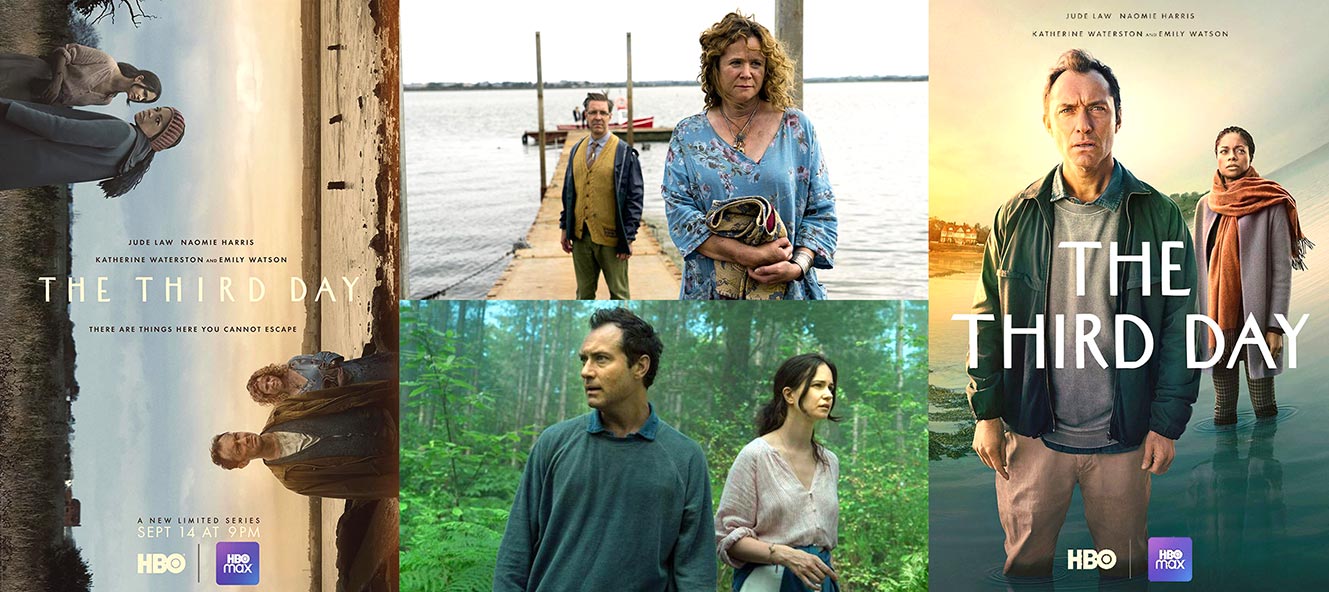
The Third Day


Sea Salt Of The Earth

The Third Day
2020 UK/USA
Episodes 1-3 - Summer (aired September 2020)
Live 12 hour event - Autumn (aired October 2020)
Episodes 4-5 - Winter (aired October 2020)


Warning: Some spoilers.

I first heard about The Third Day from listening to the Colours Of The Dark podcast during the pandemic and was looking forward to watching it for 2021’s Halloween week reviews, which were dedicated that year to folk horror, in honour of the then upcoming All The Haunts Be Ours folk horror box set from Severin. Alas, once I’d watched it I decided against that because, as far as the main parts of the show are concerned, nothing really supernatural happens which can’t also be explained away scientifically, therefore putting the series into the realm of drama or, at best, thriller. However, something in the live stream, one take, 12 hour real time broadcast bridging episode, airing between the two halves of the series and called Autumn, convinced me that something ‘out of this world’ possibly did happen and so I’m giving it the benefit of the doubt as far as the genre goes. Because, at the very least, it does use some of the tropes of the horror film and, like I said, Autumn just about lets people get away with pigeon-holing it into that genre.

Episodes 1 - 3 Summer
The basic plot set up is that Sam, played by Jude Law, is living with grief for his dead son and he is going through a yearly ritual where he throws one of the boy’s t-shirts into the stream in which his body was allegedly found. The stream is near to the small island of Osea in Essex, which is separated from the mainland by a causeway which disappears for many hours in the high tide, thus cutting off the island from the rest of the outside world... via roadworthy vehicles, at least. He has done something bad, probably criminal in his past (which you will find out all about, slowly revealed over the course of the show). He sees someone in the forest, a teenage girl, attempting to kill herself. He rescues her and drives her to her people on Osea but then gets caught up in the local politics of two warring factions on the island, many of whom see him as the new leader of the community, due to a link to the island from his past which Sam is not yet aware of.

Even though he has a wife and two surviving kids, Sam gets accidentally hooked up with Jess, played by Katherine Waterston... and ends up staying in the local inn run by a husband and wife played by Paddy Considine and Emily Watson. However, strange things are afoot on Osea, which sees itself as the heart of the world where, if harmony is lost on the island, it affects the rest of the planet negatively. Which means you get all the folk horror tropes like strange people worshipping a strange religion, unusual religious experiments and the ‘outsider’, meaning Sam in this case (although he’s not as much of an outsider as he thinks he is) not being able to get off the island during the three days he finds himself trapped there (almost like an episode of The Prisoner, in that respect).

And it’s nicely paced, by which I mean it’s slowly paced with long shots full of fluid camera movement and tremendous acting from all the main cast as the mystery of the island unfolds, culminating in a turning point at the end of episode three. For the whole time the ‘possibly supernatural’ moments are kept at arms length by the writers and directors. An example would be an absolutely astonishingly well made moment when Jess is leading Sam away from a village festival and into the forest... as they start walking you can’t help notice that various villagers have started floating in the air and, by the time Sam’s realised this, he too is being guided, floating through the night. However, for every supernatural yin there’s a possible scientific yang... in this case the fact that Sam and Jess just dropped acid before this scene and therefore what we are seeing may not be what is really happening.

Autumn
And then we get to Autumn. This special episode was broadcast live from the island in one take (although they apparently managed to sneak camera changes in there somehow... although how you could do that without using things like travelling mattes is anybody’s guess) and takes place over 12 hours from the morning to the evening. And, it’s an absolute technical marvel as the, now extremely slow moving camera, rambles in and out of various character’s lives throughout the island as Sam has to go through a set of trials similar to the Stations Of The Cross before dying, being buried in a grave (which we spent at least an hour watching Jude Law dig himself in the rain)... and then rising from the dead. And this moment is where, as far as I’m concerned, the show gives itself away as possibly being a horror show as opposed to just straight drama... the supernatural is obviously present unless there’s some way a human can survive that kind of treatment.

And watching this special event episode is a bit of a trial too, it has to be said. I like slow paced movies a lot but this one doesn’t have much in the way of plot and, frankly, it could all have been done in one hour long episode. So while some of it is absolutely gripping, quite a lot of it isn’t. Do I need to see a guy eating a sandwich for quarter of an hour, or Jude Law drag a wooden boat across the island for a couple of hours? Probably not but, while I didn’t need to be watching a close up shot of Jude Law taking a nap for half an hour, he certainly needed the rest... what’s come before this scene and what comes after it is pretty punishing and hugely demanding physically and, I’m pretty sure that’s Jude Law's actual blood seen in certain scenes and not a special effect.

Either way, I’m sure some people will love the bits that I found hard to sit through in this special episode and, vice versa but, either way, it doesn’t detract from this being an absolutely historical achievement in live television, for sure. Most of the mistakes made in it... and I’m sure there must be a fair few... are such that people wouldn’t notice but I am glad a major mistake happens in a festival scene where a guy jumps into a vat of mud, in which the villagers are all getting re-Christened in and absolutely covers the camera lens (much more than the rain does, which only obscures sections of the screen at various points). It is at this moment when we see a hand come out with a succession of cloths to wipe the lens clear so, yeah, that’s a nice moment. Fans of the pop group Florence And The Machine might also like to view this 12 hour episode as Florence Welch is one of the lead actors in this one and she even does a little bit of singing (although I’ve not heard the band myself so I don’t know if her style is at all recognisable here).

Episodes 4 - 6 Winter
And then on to Winter, which at first seems totally unconnected to the previous three episodes, focussing on a new character entering the village... Helen, played by Naomie Harris, who has some pedigree in the horror genre after her early female lead in 28 Days Later but whom most people will remember for her version of Miss Moneypenny from the Daniel Craig era of James Bond films. She turns up with her two daughters to stay in a place she has pre-booked, which she says is for a holiday to celebrate her eldest daughter’s birthday but which, in fact, turns out to be a pretext. But I won’t say why because that really would be a spoiler... admittedly one I figured out early into the fourth episode but the quick reveal at the end of the fourth installment is nicely done and I don’t want to wreck it for you. Let’s just say that the Winter episodes don’t turn out to be totally unconnected to the Summer story arc at all and leave it at that.

Again, this block of episodes uses various folk horror tropes and treats us to visions of a dead and gutted half fish/half squirrel and a crowned sheep sitting on a throne with its uterus sliced open to reveal a human baby doll... but like the first three episodes, always has an alternative explanation implied as to what is really going on. For instance, is a vision seen by Helen in the final episode a real thing or is it because her body is going into hypothermic shock at this stage... who can tell?

What I can tell you is, asides perhaps for the 12 hour single take episode, which doesn’t have too much audible dialogue and is mostly filmed in long shot, I’d have to say that the entire series, with it’s allusions to folk horror spookiness, is pretty intriguing and The Third Day is a nice piece of televisual art, for sure. Certainly one to check out if you are a fan of TV shows of this ilk but not something I could honestly say I could sit through again unless it was given a nice Blu Ray release at some point, which I somehow doubt will be coming, it’s a shame to say. 

Sunday, 5 May 2019

Vox Lux


A Vox Of Delights

Vox Lux
2018 USA
Directed by Brady Corbet
UK cinema release print.


Vox Lux is a film I wanted to see, primarily, because I’ve been following Natalie Portman’s career since I first saw her at the cinema back in 1994 in Luc Besson’s Leon (aka The Professional in the US). I remember singling her out as an astounding actress at the time, although I didn’t expect to see her in anything else because... you know... child actors. However, I was pleasantly surprised when I saw, years later, that she was given the part of Queen Amidala in Star Wars Episode I - The Phantom Menace (one of the best of the Star Wars films made outside of the original trilogy) and its subsequent sequels and, since then I’ve seen her in a fair few things. And she tends to knock things out of the park as an actress and you only have to see her in films like Closer, V For Vendetta and Jackie to realise just how brilliant she is. Her role in Vox Lux as pop music diva Celeste is another of those roles that gives her an opportunity to shine and her performance in this has received a lot of praise and, rightly so.

The other reason I was keen to see this, originally, is that I’d heard a lot of word of mouth on Twitter saying that Vox Lux is the Citizen Kane of this generation and singling out writer/director Brady Corbet as ‘the new Orson Welles’ in some respects. However, since this was only showing in a very few cinemas in London I was beginning to doubt the veracity of that claim especially when I got to the cinema and found myself almost but, not quite, alone in the auditorium. By the time the film began to play there was maybe 8 people in the cinema but, still, not the size of audience I would expect from an opening weekend... especially not with ‘review buzz’ like that.

As it happens, the film is utterly brilliant and, although I do have some problems with parts of it, which I’ll get to in a minute, I have to say I’m very glad I took some time out of my usual routine to track this down and see it on a large screen at a cinema because, frankly, it’s got a kind of power to it which I suspect may be diminished on various home viewing media. That being said, it’s no Citizen Kane either, although I can see how people might want to draw on that comparison on a purely superficial level.

The films tells the story of a meteoric rise to pop stardom of the central character Celeste and of her relationship with her sister, played by Stacy Martin and manager, played by Jude Law. However, it’s split into four sections (or three sections and a prelude) and Natalie Portman plays the Celeste character in her 30s. Celeste in her teenage years, as covered in the first two segments and taking up a sizeable part of the film, is Raffey Cassidy (who you might remember as the robot girl from Tomorrowland, reviewed here). Now, as bright as Natalie Portman is in this film... and that’s very bright... I’d have to say that Raffey Cassidy absolutely steals the movie, in a dual role too since, when she’s not playing young Celeste, she’s playing Celeste’s daughter Albertine for the final two chapters.

Another fantastic performance is Willem Dafoe as the off screen narrator of the piece, lending the film a documentary aspect and giving the story a sense of foreshadowing in a similar manner to the way Wes Anderson might use a narrator to comment on what you are about to see. Added to his performance, though, is a mixture of different styles of camerawork, movement, film speeds and aspect ratios which, coupled with a foreboding and quite striking score by Scott Walker (sadly only available as a stupid download as opposed to a proper CD, so I am doomed never to hear it away from the images) lends the film a certain sense of both gravitas and a very sinister quality. After the prelude, which I’ll get to in a moment, this narrative and mise en scene takes away any form of comfort blanket from the audience, who is now primed that absolutely anything could happen. So it would be true to say that, in the words of a young Martin Scorcese, the film is ‘fraught with peril’.

Okay, so, the prelude. Something happens here which was somehow telegraphed, I feel. I suspect I wasn’t supposed to be expecting anything from it and the naturalistic style of the acting and lack of scoring at these points maintains the sense of cinéma vérité. However, I kind of knew what was coming a good minute or three before it happened and, well, I hope it’s not giving anything away by saying that part of the exploration of this Celeste character is a way of looking at how violence and tragedy can affect the course of a life and pull and tear at it from different directions (including as a catalyst for success and inspiration) as that life plays out.

However, just because I was expecting certain things to happen doesn’t mean to say that the prelude isn’t effective. It is and, even though we’ve seen these kinds of scenes played out before (no, really, I’m not going to tell you what happens here, go see it yourself) the director manages to render it in such a way that you still feel a certain amount of tension and suspense as to how things are going to play out. The opening credits sequence which leads us out of the scene after this also, in a single moving camera shot with a little twist in the middle, somehow, seems to exert a certain pressure on the audience that similar sequences in other movies have not been able to achieve. It also starts a series of almost morbid obsessions from the director with point of view camera shots speeding down tunnels and, I have to say, even though they’re nothing like as long or daring, I can’t help but wonder if Corbet was somehow influenced by Andrei Tarkovsky’s version of Solaris and also whether these shots are standing in for something else... perhaps a metaphor for growth points in Celeste’s life? Possibly not but... I can wonder.

The pop songs in this film are not too shabby either... which helps maintain a sense of artistry behind the main character. The songs are actually provided by pop music artist Sia, who I only really know from her end credits song on the Wonder Woman soundtrack (that movie is reviewed by me here) and, again, they’d be pretty good as a stand alone listen if only they would release this thing on CD instead of their cheaply mixed electronic shenanigans (see my review of The New Analog here for more details on modern practices in regard to finance over quality of the art in terms of sound mixing for downloads).

Now, I did have one problem with what was, it has to be said, a very powerful and gripping movie and it was this... it doesn’t have an ending. It just kind of stops. Now, I’m pretty sure I know how this was supposed to end or, rather, how I would have ended it. I have to say I felt the whole film had been building to a certain point and that this expected conclusion, and narrative aftermath, would have been the best way to end the film and use that final moment as a call of judgement of the main protagonist. In fact, if I was to bet money on it, I’d say that the film may have had a different ending which was probably even shot but, out of sheer bloody mindedness, Corbet deliberately went for a lack of closure and culmination of the story arc, probably because he didn’t want audiences second guessing him. However, I did feel like this was a kind of ‘cop out’ in this respect and that it does damage the picture somewhat and make everything we’ve seen come before feel a little hollow.

So, no, it’s no modern Citizen Kane, that’s for sure. Having said that, though... I would urge anyone with a love of film to go and seek this out while it’s playing on a big screen because, frankly, slightly flawed as it might at first appear, it is a bit of a masterpiece and it does feel like one is watching something put together by a cinematic genius. Whether this label is maintained throughout this writer/director’s career (he’s already acted in a number of films too) is something which remains to be seen but I can’t wait until we can get a Blu Ray release of this thing so I can study just why the film, in an entirely unrelated genre, unsettled me a lot more than most modern horror films do. Make no mistake, Vox Lux is a great work of art with some truly arresting sequences and a sense of ‘reading between the frames’ level mystery which makes you want to come back to it again. Absolutely spectacular and something which I think a lot of budding young film makers might find themselves quite inspired by.

Sunday, 10 March 2019

Captain Marvel


A Brie Variation

Captain Marvel
2019 USA
Directed by Anna Boden & Ryan Fleck
UK cinema release print.


I’ll only rant about this for a brief paragraph... Captain Marvel was always my favourite superhero but he wasn’t a Marvel comics character. When DC comics sued Fawcett due to similarities to their Superman character, the comic stopped publication and DC eventually published the character in the 1970s, under the title SHAZAM! You can read my review of the original theatrical serial based on this character here. He’s been a staple of the DC Universe ever since. However, the reason they had to call their comic SHAZAM!, although he was still called Captain Marvel on the interior pages, is because Marvel comics successfully got the rights to use the name for their own character in the 1960s.

Their Captain Marvel was a completely different character and it was a huge thing when, in the 1980s, the character died of cancer. However, by then another character called Ms Marvel, with her alter ego Carol Danvers, had been unleashed in the Marvel universe and, it’s my understanding, since I’ve never read any of the Marvel branded comics featuring this character, that she was later renamed Captain Marvel and that a different Ms. Marvel is currently also in existence at the moment. I believe it’s the Captain Marvel version of the female equivalent character (brought out originally in her Ms Marvel form at the same time as Spider-Woman, in a bid to attract more female readers to Marvel, if memory serves) that this film is based on... although I believe she also uses some of her male counterpart’s various costumes through the years during the course of this movie.

Now I will always go and see whichever Marvel movie is out and I will always go to these things thinking that, at the very least, it won’t be as dull as Black Panther (reviewed here) or Guardians Of The Galaxy 2 (reviewed here)... but there were two more reasons why I was particularly looking forward to this one. Firstly, it ties in with the post-credits scene of Avengers Infinity War (reviewed here) and tells the back story of that sequence before going full tilt into the upcoming Avengers End Game movie in one of the two post-credits scenes on this one. The other reason was that the title role in this one is played by Brie Larson, who I’ve not seen in much but, I have to say, I really enjoyed her performance in Kong- Skull Island (reviewed here) opposite Samuel L. Jackson, who returns here as a digitally de-aged, pre-’Avengers Initiative’ Nick Fury. Also joining him is a de-aged Clark Gregg as S.H.I.E.L.D regular Agent Coulson, Annette Benign, Ben Mendelsohn and Jude Law.

And... it’s not a terrible movie by any means... although there seems to be some bizarre, online backlash at the moment for reasons I can’t quite discern (and which I’m sure won’t matter once the box office results are in). It’s also not one of the best of the Marvel movies but I did quite enjoy it and I suspect it’s one of those slow burn Marvel flicks like Avengers - Age Of Ultron that get much better on the second viewing. It has nice performances by the central actors and some okay special effects work.

It’s also very confusing.

Not in terms of the deliberately non-linear flashback stuff which is actually quite nice and somewhat brave of Marvel in terms of the normal flow of their superhero films... but actually in explaining what the character is about, what she can do and why she can do it given how, without giving too much away, we see a typical 1960s Marvel comics style ‘transforming accident’ by way of an origins incident. So, yeah, I totally didn’t understand the character, although I did very much enjoy her breezy personality and Larson’s portrayal of her. However, for me, despite having a 'Mar Vell' character in the film (who isn’t Carol Danvers), the real weak point of the movie is... why the heck is this character actually called Captain Marvel? She’s not once referred to as it in the film (nor is anyone) and there’s no reason why she would be, truth be told. We just have the title card at the end of the film, before the big mid-credits scene which I can only assume is directly lifted from Avengers End Game. It makes no sense to me and I’m hoping this is just a cool tactic by Marvel so they can give a reason and character reveal in that next movie (like coming up with a hastily thought out name after meeting Captain America, for example). Fingers crossed they’ve got this all sorted.

Okay, so it was big on action and, although I did find some of the heavily laden special effects scenes a little dull, it was refreshing to have a fully formed hero from the opening of the movie (a few of these kinds of films are beginning to get back into this pre-1950s ‘get them on quick without a long, movie length origin sequence’ aesthetic and I think that’s a good thing) and the way in which the storyline did develop was not as formulaic as many of the superhero movies have been of late... which was refreshing. Also, since the movie is obviously set in 1995, as you’ll see from this film’s Stan Lee cameo which I also won’t spoil, there are some nice pre-millennial jokes and pop culture references here (although some of them seemed to be more like something that would have fit a movie set in the 1970s than the 1990s, to be honest). There’s also a very nice, new Marvel logo animation at the start of the film which I also, really don’t want to spoil for you.

And, there’s a great feline character too which, while not quite looking like a cat all the time because CGI is still not quite good enough to render these things as accurately as we might hope, has some nice moments in the film and sets up a second post credits scene that, while it’s totally predictable, helps tie up another slightly loose thread in the long chain of Marvel Cinematic Universe movies and does it in a way which is quite humorous, even if you do see it coming.

So yeah, not much else to say about this one. Pinar Toprak’s score is pretty good with some nice electronica components coming in at key points in the action narrative but, once again, the score is not released on CD so, big shout out to Hollywood Records for only making a rubbish, compressed electronic download file commercially available so that nobody can actually appreciate the music as it should be heard. Honestly people, this throwaway attitude towards the score these days is something which has to stop. This is like constantly insulting the composers on these films.

But, anyway, asides from the shoddy and disrespectful attitude to the music in this film by the record label, Captain Marvel is really not a bad night out at the cinema and certainly not worthy of the bizarre backlash it’s getting on the internet (which I think will disappear soon anyway). A nice debut for Brie Larson in the Marvel Cinematic Universe and, I have to say, a nice moment for her in the mid-post-credit scene where, I can tell you now, the audience in my cinema let out a big cheer at the last moment of this sequence. Seriously looking forward to Avengers End Game now.

Thursday, 3 January 2019

Fantastic Beasts: The Crimes of Grindelwald


Spell Being

Fantastic Beasts: The Crimes of Grindelwald
2018 UK/USA Directed by David Yates
UK cinema release print.


Once again, I should perhaps take some time to remind my readers that I am not the biggest admirer of Harry Potter. I saw the movies once each at the cinema because my father loves the books and I went with him but, I can’t say I enjoyed them all that much... although some were better than others and they were certainly all very well put together. That being said, I loved the first spin off film from a few years ago, Fantastic Beasts And Where To Find Them (reviewed here) and I was staggered at just how cinematically subtle the handling of the script by author J. K. Rowling was on that one, especially since these Potter prequels are not actually based on any books of hers.

I was going to leave this one until I brought the Blu Ray home to my father later in the year but I figured I might as well go and catch Fantastic Beasts: The Crimes of Grindelwald at the cinema before it came out of circulation and, I have to say that this is not nearly as great a movie as the last one. I don’t know what’s happened here but this seems to me to be much more like a Harry Potter movie and much less the more subtle entertainment of the last Fantastic Beasts installment.

Now, in the last film I loved the four main characters played by Eddie Redmayne (Newt Scamander), Dan Fogler (Jacob Kowalski), Katherine Waterston (Tina Goldstein) and Alison Sudol (Queenie Goldstein)... but it has to be said that while they are all reprising their characters here and, mostly, have a chunk or two of screen time, they are not in this movie nearly as much as they perhaps could have been. After a fairly good start, this film seems less about giving these lovely characters the spotlight and more about trying to cram in as much interconnecting back story for future dramatic intrigue as the writer and director are able to shoehorn into the already impressive running time. Which is a shame because, although it does seem more like a regular Harry Potter movie (which obviously isn’t a good thing as far as I’m concerned), it does seem like nothing much happens in this installment and characters do feel like they’ve been badly neglected. Not in terms of character progression, for sure... you get a sense that both Newt Scamander and Queenie Goldstein are moving on in their mindset and that things could get quite dark and treacherous in future movies (of which I think there are roughly another five planned). However, I did feel kind of shortchanged and some sequences, like time spent highlighting certain beasts, felt blessedly less protracted but also like they were only there to remind everyone about the first film... so not too happy on that count either.

The film looks and sounds spectacular and, as usual for the series, there are some not bad, half inventive concepts being thrown around but for me, the spectacle of the thing is just another element that takes away from the true magic of the characters and the way they relate to each other in this case. Also, this film seems very steeped in Harry Potter lore, including the addition of Dumbledore as a younger man played by Jude Law and we even spend some significant time in Hogwarts at certain points in the film. So Muggles like me have no chance when it comes to all the things that might have possibly made me go “Ooh!” at certain points. I did recognise the name LeStrange but that was about it.

Also, some of those big effects sequences seemed, to me, to be a little harder on the eye and more confusing to decode than what I am usually used to dealing with. I did find myself wondering what was going on at certain points but it was still pleasant enough to look at, for the most part. And, Johnny Depp, reprising his role as villain Grindlewald was a pleasure to watch... he’s rarely dull and he tends to hold the eye when he’s on screen.

Another fine element of the film is James Newton Howard’s follow up score to his previous one and it hits the all the right notes it needs to. Once again he teases Hedwig’s Theme from the Harry Potter films before really giving it some welly for certain sequences... which is strange since Hedwig is nowhere in sight. Presumably this means that current and probably future directors are using the melody to denote the magical world itself rather than focusing on a specific character or, in the case of this theme, a specific character’s owl. Either way, it’s a nice score and I’m looking forward to giving the CD I’ve got waiting a spin sometime in the New Year.

Other than that... not much more to say on this one. I’m hoping the direction of this one is just a temporary glitch and that the next installment can get back to the smaller stories on the canvass... namely the romances between the two sets of leading characters. I can’t say I’d recommend Fantastic Beasts: The Crimes of Grindelwald to many people unless they are already heavily into the Rowlingverse... it’s certainly not a good jumping on point. I just hope things will become a little clearer in the next movie because, honestly, this one lost me a little.

Tuesday, 23 May 2017

King Arthur - Legend Of The Sword


A Mage A Day Helps
You Work, Rest and Play


King Arthur - Legend Of The Sword
USA 2017 Directed by Guy Ritchie
UK cinema release print.


Warning: Any similarities between this movie and the legend of King Arthur are purely coincidental.

Remember that famous moment in Arthurian legend where giant, armoured elephants taller than a couple of skyscrapers attack Camelot with giant, spiky clubs they hold in their trunks? Yeah, me neither. Yet... here they are.

I’m not a fan of gangster cinema but the few films by Guy Ritchie I’ve actually seen - the two Sherlock Holmes films and The Man From UNCLE reboot (reviewed here)- were pretty cool movies, as far as I’m concerned. However, when I saw a trailer for King Arthur - Legend of the Sword a month or so ago it looked absolutely horrendous and I made a decision, there and then, to trust my instincts and stay away from the movie. However, I then found out that Daniel Pemberton was re-teaming with Ritchie after his fantastic score for The Man From UNCLE and, furthermore, while King Arthur - Legend of the Sword was taking a critical drubbing, Pemberton’s score was being singled out as the best thing about the movie and was doing very well in the Amazon music charts (and not just the soundtrack part of it). Since I also knew there was already a CD release of this score... well, I had to go and see this after all. And, I must say, as far as Pemberton’s score goes, at least... I wasn’t disappointed.

To be fair to Ritchie and his excellent cast and crew... the trailer for the film makes it look much less appetizing than it actually is. King Arthur - Legend of the Sword is actually a huge slice of fun and its greatest tragedy, in my eyes, is that it looks like it had a truly great movie waiting in the wings in some alternate cut. However, it’s not without its huge problems and I think the final edit probably hinders the movie way more than it should.

The great thing about this film, the primary strength, is its cast. They’re all very good. Charlie Hunnam is very likable as Arthur, Jude Law makes an excellent villain in King Vortigern, Eric Bana is excellent as Uther Pendragon (for the few minutes he’s in it), British treasure Neil Maskell is wonderful as the likeable guy who ends up as motivation fodder at a critical point in the story and the Merlin substitute, played here as a female mage by Astrid Bergès-Frisbey, who I last saw in the unbelievably cool I Origins (reviewed here) has absolutely the most amazing screen presence in this film. Even Mr. Posh Spice gets a halfway decent moment in the proceedings.

The dialogue isn’t bad either and the opening ten minutes, pre-credits, and the credits themselves are very strong sequences. Pre-credits is the big ‘elephant’ scene I mentioned above, as Uther saves everybody from the evil attacking Camelot before heading to meet his own fate in the betrayal of a close friend and the titles themselves play out over Arthur growing up in a brothel and becoming ‘street savvy’ in Londinium. Unfortunately, this is all the strongest stuff in the movie and, as much as I admired Ritchie’s technique and the way in which he uses the syntax of splicing film to create a finished result, I really think it goes into overdrive too quickly and too long here.

Oh, and the music... as I said before, Daniel Pemberton’s score is absolutely top notch and I expect to see it listed in my top five scores at the end of the year. Truly astonishing work and this guy is definitely one to watch. I’ll probably never watch this movie again in my life but the CD soundtrack is going to be on my turntable for months, when it arrives, I’m pretty sure of that.

So, okay... lets talk about the two things I think let the film down a little.

This doesn’t stick to Arthurian legend at all. There’s no Merlin or Morgan Le Fey... although I’m sure that in the subsequent films that Ritchie was planning on releasing before this flopped big time at the box office, Astrid Bergès-Frisbey’s unnamed mage character would have taken on one of those two mantles. There’s no Guinevere, no Lancelot and other bits of legend are played with fairly hard so they almost become unrecognisable. Also, this is set in a time, according to the script, when magicians were plentiful and roamed side-by-side with normal people... so we have, to an extent, fantastical elements not uncommon in something you might expect in the heroic fantasy genre. That being said, I’ve no idea why giant snakes were so prominent unless Ritchie loved the John Milius version of Conan The Barbarian as much as I did because some of the magical sequences seem to be a little at odds with common sense or follow through here.

Another main difference is that King Arthur, once he’s learned how to wield Excalibur without fainting and lapsing into unconsciousness, can do magic stuff himself... drawing on power from his sword in a similar manner to the way Michael Moorcock’s famous character Elric Of Melnibone gains power from his black, soul sucking sword Stormbringer. So, you know... big changes to Arthurian legend there. Alfred Tennyson might be twirling poetically in his grave at this point.

The other thing is Ritchie’s cinematic language here. Remember those scenes in Soderbergh’s The Limey where he cuts between two different scenes of the same two people to make up one conversation? Well Ritchie does it all the time and while I have observed this trait in him before and while he always, here included, does it very well... using short edits of alternate situations and also just generally cross-cutting between scenes to tell the story... here he seems to be doing it without any thought as to how the abundance of such an approach affects the whole piece. Like he and the editor were on some kind of really wonderful drug while cutting this movie and... it works great as a means to an end but I wish he’d have tempered it back because, honestly, it really gets tiring after just five minutes, let alone a whole movie's worth of fast cutting. Seriously, was there any shot in this film held for more than a few seconds? This really is MTV generation editing taken to a point way farther than it maybe should have been allowed to get.

You need some pauses...

If you look at some of the most iconic action movies of all time coming from the likes of Akira Kurosawa or Sergio Leone or even Steven Spielberg, one of the things you’ll notice straight away after you’ve seen just a few is that they are all about the pausing and build up between action sequences. You make the action moments stand out by pitching them against something which anticipates and teases those sequences. In this film, however, even the long dialogue scenes, of which there are many, are cut together like hard hitting action scenes so, when the three or four action sequences do come along, quite apart from being hard to follow, they are diluted and lose literally all impact because they have nothing to be seen in contrast to. Now it’s obvious from this that Ritchie has the coverage on the various scenes because he keeps cutting back to them.... so I wish he’d have just ramped down from the ferocious editing in some of those sequences a little more and let them play out without chopping about so much because, overall, the film gradually wears you down to a point where the final battles feel like a complete anticlimax and you really do feel like the movie just needs to end soon, to be honest.

And it’s such a shame because Ritchie is so obviously a great director and I wish he would have just reeled himself in a bit because I’m sure, with the footage he already has, this could have been a truly groovy and successful movie. However, it isn’t... the people have spoken with their wallets and, alas, it’s time to move on from this somewhat unique take on King Arthur and his Merry Men. No wait, that’s not right. Although it does seem like the film is trying to be more Robin Hood with magic party tricks and less King Arthur at some points.

So... you know what. If you’ve got nothing better to do one evening, I’d still say go and have a look at King Arthur - Legend Of The Sword because, frankly, you can learn from and be somewhat entertained by a spectacular failure as you can from a film which totally gets everything right. It’s not a great film but it’s not without its moments and, over and above all the mess that this movie is, it’s still got some kick ass, killer music by Pemberton which is really worth the price of admission. The movie is a bit of a write off, to be sure but... there are things work salvaging from the wreckage if you feel you’ve got the time.

Monday, 27 May 2013

Contagion


Bugs N’ Kisses

Contagion
2011 USA/United Arab Emirates
Directed by Steven Soderbergh
Warner Brothers Blu Ray B 

Warning: Spoilers slowly mutating and spreading 
throughout this review as you read it.

Okay, so Contagion was a movie I really wanted to see when it came out in cinemas at the end of 2011 but I was already well into my 3-4 month Christmas preparations by then so I just couldn’t claw back any time to get out and see this one. I forgot about it after that, in all honesty, but when I saw a copy of the 2 disc Blu Ray/DVD edition in my local exchange shop going for a fiver, I finally remembered I’d wanted to see this one.

It’s interesting because, at the time it came out, I don’t remember this one being particularly marketed on the strength of the director and, considering it’s got a very big cast of ‘movie star’ actors like Matt Damon, Gwyneth Paltrow, Kate Winslett, Lawrence Fishburne, Marion Cotillard, Jude Law and Elliot Gould in it, it’s no wonder that the movie was kinda sold on its cast rather than any of the non-acting crew. In fact, because there are no credits at the start of the film, I managed to go all the way through the movie without knowing who directed it... although I did pick up right from the outset that the way this movie was shot was definitely something above average. I’d just assumed it was an old Hollywood director from the 60s and 70s come out of retirement to get that kind of ensemble piece going... but now that I know it’s Soderbergh and compare it to the last film I saw by him at the cinema, Side Effects (reviewed here), it all makes sense now.

Contagion is, for the most part, a quite impressive beast of a movie. It manages to look and feel epic in scope without really becoming too bloated by its own ambitions, although the second half of the movie did drag just a little in some places... but for the most part, especially in the first half, I was absolutely riveted.

Since I hadn’t known who the director was before I watched it, my main attraction for actually giving some time to this “virus movie” (yeah, it’s Outbreak without the monkey, but that’s okay) was actually Gwyneth Paltrow, who is an actress I seem to rate a lot higher than most people do. I rarely watch the kinds of films she’s in so I was looking forward to seeing what she was like in this one but, unfortunately, it turns out that she doesn’t make it through maybe even five minutes of the movie before dying from the virus she’s contracted on the day before the opening scene. There are some scenes with her later on in the movie where Soderbergh cleverly uses standard film footage and then freezes it at specific moments as a metaphor for the long distance security cam footage of this character that Kate Winslett’s character is reviewing simultaneous to this... but for the most part her quick death and the subsequent death of her son while Matt Damon is away having to deal with her dying in hospital, is merely used to make an opening point.

Matt Damon is not the main protagonist of this movie though... or, to put it another way... Matt Damon is one among many main protagonists throughout the film (as indicated by the actors playing them in the cast above) and as a result, no person stays as the focus of the film for very long. It’s also a film about the way characters can drop out of the narrative when you least want them too and it all meshes together to present an experience which is very much about a disease and the effects that disease has on every one (whether they have contracted the disease or not) and so, for instance, Kate Winslett’s World Health Organisation employee who is working for Lawrence Fishburne becomes this film’s Marion Crane character (Janet Leigh’s character in Psycho) as the story strands you are following with her character come to an end when she ends up being a customer in one of the big triage sites she has set up to deal with the onslaught of the virus. Her death works really well and, although you obviously have some warning of the end coming with her character, the slight shock value is not really deadened all that much by the inevitability of her situation.

However, in some scenes, this tactic about the film being about the effects of a disease rather than the people, backfires somewhat when the characters are maybe a little too fully explored than necessary (which is why I believe the second half of the movie loses it just a little) and while it’s very interesting and brilliant to explore just how Lawrence Fishburne’s character manages to get himself into trouble with the government just by showing a little empathy or the way in which Marion Cottilard’s character is kidnapped and used as a bargaining chip specifically because of her relationship with the World Health Organisation... or even how Jude Law’s unsympathetic (for the most part and dependent on your view of homeopathy and greed) blogger gets taken down by the CIA, I think we didn’t really need to have such closure on the ends of these mini stories because they detract from the “virus sweeping everyone along in its wake” kind of sensibility which a lot of the rest of the movie has in spades.

Actually, Lawrence Fishburne has to get an extra mention from me because he has been given some of the best lines (the dialogue is very 1970s “Hollywood crisp” in some sequences) and because his character is just so righteous and sympathetic that you would always want to be fighting in his corner. He is portrayed as a boss who actually does care about his workers and their personal physical and mental health as much as the jobs they need to carry out for him.

I said I knew right away that this movie had been directed by someone special. Well there’s at least two interesting things going on with this movie which I think I’ve got Soderbergh pegged on now. One is the way in which the colours go from very neutral to quite colourful (especially in the sequences with W.H.O workers in their more natural office environments, which are usually accompanied by some bright warm yellows and oranges) as opposed to the washed out greys and blues of the rest of the film and then switch back again from scene to scene. Even a bright green used to desaturate the feel of the shot at the start looks very drab because, as you probably know, green lighting usually kills off or neutralises flesh tones and this is used to give the usually glowing Gwyneth Paltrow a real visual sense of being someone who is feeling run down which, coupled with her excellent acting, works really well, of course.

The other great thing Soderbergh does is to have the camera lingering on little details in the shots... which is a tactic I’ve seen him use before to highlight certain details but which, in this movie, is used almost specifically to allow the audience to reflect on how something might be carrying the killer virus that is the main subject of the film. A folder left on a desk, for example, suddenly makes us think twice after the owner has walked off and we stay at the desk with a file. Or the way in which, instead of following Matt Damon and his daughter out of the hospital environment, our camera eye stays behind to linger and watch the door to the outside world slowly shutting, to make us think of the possible consequences of Matt Damon maybe being a carrier of the infection. That kind of thing is done at suitable intervals and it all raises this movie up and gives it a certain lift and entertainment value where another director might have made less of a point of it.

My only real complaint about the film, other than it trying to bring too much closure on certain scenes (the Stockholm Syndrome style reaction of Marion Cottilard towards the end after she has escaped and then goes back to warn her prior captors is something which stretched credibility just a little and which I could honestly have done without), is the score... which is quite wonderful in it’s own right as a score by Soderbergh regular Cliff Martinez but which seems to give us a little too much of a high in some scenes, where it deviates from it’s quiet, sinister tone into something more like techno dance in certain sequences. It’s a valid way of scoring the scenes in which it does this, I think,  but I kept asking myself if I should have been tapping my feet when everyone was fighting for their lives against a killer bug. It maybe works more appropriately in Italian giallo or horror movies than it did here but, still, it managed not to stretch things too far, maybe, and all in all it’s something I’d like to hear away from the movie if I get a chance. So that can’t be bad.

The ending scene was a slight disappointment, perhaps, only because you knew how this film was going to end from the first shot. The movie catalogues the number of days the virus has been active and we start the opening of the movie on Day Two and carry on from there... so it’s really not rocket science to figure out that with such an important moment remaining undisclosed, we will flash back to Day One for the finale and it certainly doesn’t play badly. Just might have been nice to be a little less predictable there, maybe.

So, anyway, my verdict for this movie is very much that it’s a film which is an impressive piece of screen art. It takes what is ostensibly a big name, Hollywood style cast and manages to pitch them against each other in the service of the story and main messages rather than use them as performances to just hang big movie moments on. This is a film which is put together as a creative and expressive piece, as much as a film like this could be, with the kinds of funding modern movies need and I was really pleased to have seen it. Definitely worth your time if you like big disaster movies or Soderbergh movies in general.

Thursday, 4 April 2013

Side Effects


Kill Pill

Side Effects
USA 2013
Directed by Steven Soderbergh
Playing at cinemas now.

Warning: This review has big spoilers right from the outset. It’s the only way I felt I could say something even remotely interesting about this film and so I would urge you, if you know absolutely nothing about this movie but are considering seeing it, to go into the movie totally blind and then maybe read my review after you’ve seen it. 

So I quite like Steven Soderbergh as a director... ever since I saw Sex, Lies and Videotape when it came out at the cinema, many years ago. He also made an absolute genius movie called The Limey, which is a bit of a cinematic masterpiece and I do generally like his stuff (I reviewed his film The Girlfriend Experience starring porn legend Sash Grey here) but, just so we’re clear, I will never forgive him for trying to remake Andrei Tarkovsky’s Solaris, which is like trying to remake Casablanca or Star Wars in terms of sheer audacity. Leave the classics alone!

Anyway, I went into Side Effects knowing absolutely nothing about the movie. I think I may have seen a trailer which was quite disjointed and, I think, didn’t really make clear the kind of movie it was... and I’m glad that was the case because about half way through the movie I realised my stupid suspicions about the main female protagonist were actually right and the movie turned into something completely different to the way it was being presented.

The film is very slow paced and well designed, as you would expect from this director. He chooses to use a mixture of different shooting styles and edit them all together very cleverly into something that works and builds a mood or “vibe” which then becomes what the film is about as much as any linear plotting... much the same, in some ways, as Danny Boyle often does these days (see my review of Boyle’s latest, Trance, here) but not going for the high energy in-your-face kind of montages that Boyle does.

Starting off with what is, in fact, a crime scene... we see pools of drying blood on the floor of an apartment and then the film flashes back three months from this point. A point it catches up to about a third of the way through the movie (much earlier than I was expecting). Because the subject matter of the film focuses on a very depressed young woman who, when her husband gets out of prison for insider trading, tries to kill herself... Soderbergh manages to misdirect his audience quite skilfully with his usual modus operandi of “fly-on-the-wall” style recording of scenes into thinking that the bloody floors seen at the opening are connected to a successful suicide attempt by the young lady in question (played really well by Rooney Mara). But, as the film slowly winds on and we get to meet some of the other principle characters, like Jude law playing the young psychiatrist who takes on Rooney Mara’s character Emily as a patient, and Catherine Zeta Jones who plays her previous doctor, Victoria Siebert, we gradually find out that people we thought were minor players are actually main characters in an actual storyline (as opposed to just a series of observations on the nature of depression) and this starts to drum home as we see the person who everyone expects is the male lead, Channing Tatum as Emily’s husband, viciously stabbed by Emily while she is in a somnambulistic trance (in a sequence not quite as extreme but certainly not unlike the classic stab mayhem sequence which marks the first killing in Brian De Palma’s original version of Sisters). Although, by now, I’d begun to pick up on the trick of the way things were going to go I still heard the audience I was sitting in the cinema with on this gasp as this scene went down... so Soderbergh really played that one right, I reckon.

My suspicions were already up by now but the movie continues to play out for a while with this sequence just being another side effect of the new drugs Jude Law’s character has prescribed for Emily... but then things started to go the way I had suspected they might and the film turns into a proper thriller of a movie with a very long lineage which traces it back at least as far as 1940s American film noir and the likes of such movies as Double Indemnity and its many retreads.

Jude Law’s character, Dr. Jonathan Banks, has been made a patsy by two of the characters and as a result is ostracised by his community, loses most of his income and even loses his wife and child as more pressure is put on him. However, this is where things get interesting as the lone, obsessive figure everyone thinks he has become (which he has) fights back using the tools of his trade and starts to play off the two antagonists together, getting something a little too much more than justice and perhaps, when his final triumph comes, acting just as badly as the two villains of the piece.

I really can’t say much more about the movie in terms of plotting in case you are still reading this and are going to go see the movie... but what we have here is a brilliantly realised film which begins by approaching the material in a less direct and more observational, “untainted-by-any-emotional-or-judgemental-agenda” kind of way, and because the director makes this choice, the film really sucker punches you (even if you are, like I was, vaguely suspicious that there is more going on here than at first meets the eye) and kicks up the tension notch after notch until it gets you to the place you’re kind of, for the most part, hoping it will go. Most of the film you will probably be rooting for Jude Law’s character but he too, leaves a nasty aftertaste in the mouth at the end and ultimately this is one of those bleak noirs where you realise that, everyone to an extent, is a bad person.

Performances by the actors and actresses, as they always are in a Soderbergh movie, are excellent and this is also to be expected with such strong leads. I think I don’t speak falsely when I say that time will probably be very kind to this movie and I would expect it to be written about ad nauseum over the years and included as a key contribution on most major studies of the thriller/noir in film on most curriculums within the next ten or fifteen years. An unexpected delight and certainly worth the time of any cinephiles with a particular bent towards that kind of cinema.

Saturday, 17 December 2011

Sherlock Holmes: A Game of Shadows


Holmes Is Where The Heart Is

Sherlock Holmes: A Game of Shadows 2011 US
Directed by Guy Ritchie
Screening at UK cinemas.

Warning: Elementary logic should lead you to deduce the presence of spoilers lurking in the shadows of this review.

Ok then. Since I’m really not a lover of gangster pictures (seen enough gangsters in my school days to ever really feel the need to watch glamourised renditions of these hooligans) I’d never seen a Guy Ritchie movie until his first take on Sherlock Holmes a few years back.

Now I’ve always loved the Basil Rathbone/Nigel Bruce versions of Holmes and Watson at the cinema (even though Bruce’s Watson is far from accurate to the original material) and so the prospect of seeing Holmes modernised into an action hero was less than appealing at the time and I was in two minds whether to see it or not until an old friend expressed an interest in going and dragged me into London with her to check it out.

As it happens, I really enjoyed myself with that first movie. Holmes hadn’t been made into the complete buffoon I’d feared and the introduction of action sequences that I’d worried about so much (forgetting that Arthur Conan Doyle’s creation actually was into bare knuckle boxing at one point in his career) was cleverly underpinned with a bullet-time like series of slow motion sequences which showcased Holmes’ keen speculative intellect in fighting intelligently before the shots were replayed at normal speed to show multiple facet’s of Holmes in what turned out to be an intriguing and hugely entertaining series of set pieces.

Added to this were the shining acting talents of Robert Downey Jr, Jude Law and their various co-stars... not to mention Hans Zimmer’s gorgeous score which still gets regular spins in my CD player. Frankly, that first Guy Ritchie Holmes’ movie was damn good.

Which is why I was, perhaps, just a little disappointed with Sherlock Holmes: A Game Of Shadows, being Ritchie’s second foray into the world of pulp fiction’s greatest super sleuth and also my second Guy Ritchie movie. But, having said that, I do find myself wondering just why I felt this one didn’t live up to the blood and thunder of the first movie.

Certainly, this one in set on a larger scale with only a small portion of it set in England and I did enjoy the sense of Victorian London that Ritchie managed to squeeze into every frame of the first film. This feels conspicuously absent in parts of this one. And it’s not like this international road-trip of a movie doesn’t hang together as well as it should either... all the threads come together and make perfect sense as the film builds up to Holmes’ famous “last stand” at the Reichenbach Falls... and we all know how that one ends. Actually, this is one sequence where I think Ritchie (or at least the suits pushing the buttons in Hollywoodland) let the movie down a bit as this movie leaves viewers in no doubt as to the final outcome of that infamous fight and it would have perhaps have been a stronger ending if the producers had been brave enough to have left Holmes for dead (as he was for a time before Doyle resurrected the character some years later) for a while and followed up in the next movie in the series... rather than bring Holmes back at the end of this one. Missed opportunity I feel... and more than a little gutless.

Hmmm... well since I can’t seem to adequately explain why this one didn’t quite pass muster with me, I can only assume that this is one of those handful of Hollywood blockbusters which actually takes a little while to grow on you and I suspect that, when the time comes to pick up the DVD (and I will), I’ll enjoy it much more on the second viewing than I did the first.

So let me tell you about the good things this movie’s got going for it.

Well, for one thing... Guy Ritchie has a marvellous, extended, slow motion escape/chase sequence about three quarters of the way through the movie and though I’m not exactly a fan of slow motion in movies (except when a true artist like Dario Argento uses it at the end of Four Flies On Grey Velvet, for example) this sequence was a bit of a tour-de-force and it was a pleasure to watch the way various actions and details had been cinematically “enhanced”, pushing at the visual language of the form in a rather attractive manner. The acting performances were, once again, all top notch although I did feel that the chemistry between Holmes and Watson was a little less brighter than in the last movie. Also, Eddie Marsden’s brilliant portrayal of Inspector Lestrade is sidelined to what amounts to a little cameo role at the end of the movie and Stephen Fry’s inclusion as Mycroft Holmes is immensely watchable but, not necessarily a very faithful rendition of the character (again, I blame that one on the writers myself).

Jared Harris’ performance as Moriarty was an absolute casting coup and I found myself very impressed by the way the high intellect of the character was combined within the animally magnetic personae of this bear of a man. Such a perfect choice and pitch perfect performance as Moriarty, culminating with a speculative slow-motion “pre-fight” fight sequence in which both the minds of Holmes and the nefarious Napoleon of crime were equally engaged... the “telepathic” communication between the two (yeah, you changed the rules there didn’t you Ritchie... I saw!) forcing Holmes to quickly tip the scales and sacrifice himself to stop Moriarty dead.

On the other hand, Noomi Rapace (who played Lisbeth Salander in the original adaptation of The Girl With The Dragon Tattoo and its sequels), while being unbelievably brilliant in her performance and also being in possession of one of the most distinctive and beautiful faces of any actresses working in her profession, was a little bit wasted in a role which tended to sideline her talents a little too much. Which is a shame and a mistake on the writers/producer’s parts because, frankly, when she’s on screen she absolutely lights it up and she’s the one you are watching when the other actors are speaking their lines. Absolutely great screen presence.

Another downer in this one is the fact that, while I appreciated the humour at Holmes expense in the original movie, the character is treated somewhat more as a joke in this one. Holmes’ fire is somewhat subdued by his treatment at the hands and attitudes of the other characters this time around and I could have done with a few more scenes of him asserting his intellectual rigor over scenes of him fannying around in ladies dresses and suffering the indignity of riding a mule instead of a horse.

Talking of which... Zimmer’s score is, once more, an excellent contribution to the movie as a whole (and I’m sure once I hear it out of the context of its place in the sound mix of the actual film I’ll appreciate it even more) but I was surprised and dismayed to hear him doing a reorchestrated cover version of Ennio Morricone’s musical score to the film Two Mules For Sister Sara during the “Holmes rides a mule” sequence instead of coming up with something of his own. A possible case of temp-trackitus I expect. That being said, of course, it was a more than competent cover (of a much better original) and does nothing to detract from the rest of his brilliant score.

And that’s about it for this one. An entertaining but somewhat less satisfying confection of a movie than the previous film, this one is still worth a watch if you’re a fan of that original outing and the spectacle of some of Guy Ritchie and his team’s mise-en-scene and editing style is surely worth a look if you get the chance. I’m not the biggest fan of this one... yet. I do, however, think it will probably strike me as a better movie when the DVD comes out and I’ve had time to let the first impressions sink in a bit better. Nevertheless, a fine film to view as part of this year’s Christmas viewing... if one has nothing better to do.

Saturday, 22 May 2010

221 b.p.m... Baker Street

Sherlock Holmes 2009 USA
Directed by Guy Ritchie
Warner Brothers DVD Region 2

I don’t know Guy Ritchie’s films. Not seen any of them apart from this one. It came as quite a surprise to me, however, that I really liked his take on Sherlock Holmes. Holmes purists might find this version of the great detective somewhat harder to swallow than a lot of his previous screen incarnations but maybe they should go back to the original, classic pulp stories by Arthur Conan Doyle.

Watson, for example, is a lot closer to the Watson than, say, the version of him portrayed by Nigel Bruce in those classic Basil Rathbone movies. And don’t get me wrong here please... I love Nigel Bruce’s portrayal and can watch it time and time again... but that’s not really much like Watson a good deal of the time. Jude Law’s portrayal of him is somewhat closer to the original... although, as with all aspects of this movie, the usual film liberties have been taken.

Downey Jr’s portrayal of Holmes is, like most of his work, entertaining and always watchable. Downey Jr is actually a brilliant comic actor and his humourous approach informs all of his characters. His Holmes is no exception and he brings a more “human” quality to the part which might not sit too well with some members of the audience... but you can’t please everyone.

This version of Sherlock Holmes is a version which is trying to compete in a market where almost the entire output of current movie-making is action oriented. The Holmes here is a bare knuckle boxer, as he had been for a while back in the original stories, and Ritchie’s brilliance with the way to adrenalise the Holmes experience is to have a couple of scenes where you see (and hear) Holmes working out the fight in his head and each blow is seen in slow motion as he calculates what he is going to do and the probable physical and psychological damage it will do to his opponent. We then get to see it all strung together at “fast speed” in one hit. This maybe a cheap trick designed to lend a certain credence to the elevation of Sherlock Holmes as a modern action here... but honesty, for me it did the trick.

And added to all this you have a, frankly, near perfect score by Hans Zimmer. I’ve reviewed the score here... http://nuts4r2.blogspot.com/2010/03/sherlock-holmes-soundtrack-by-hans.html ... but it deserves another mention because it is just so catchy and infectious. He makes use of a well worn Steinerism too... which I hadn’t noticed in my initial viewing... permeating the action scenes around the Westminster area in the last twenty or so minutes of the film, he uses two long sustained sets of four notes in the baseline of the background which, if played faster, are the chimes from Big Ben. Really nice little musical joke for those of you who appreciate such things.

Performances are all wonderful... you’ll see some familiar faces here... and the obligatory action editing is nowhere near as confusing as a lot of modern action movies. Definitely a whole hearted recommendation from this quarter. The game is afoot!