Showing posts with label Wonder Woman. Show all posts

Tuesday, 23 December 2025

Christmas With The Super-Heroes C43


Santa’s Super Helpers

Christmas With The Super-Heroes 
DC Limited Collectors Edition C43
DC
ISBN 761942387284


I recently reviewed one of the new treasury sized facsimile editions of the various DC treasuries which have ben released over this last year (my understanding is that their next two releases will be the two Spider-Man VS Superman Marvel crossovers, which I still have from the 1970s but, I look forward to getting new foil cover variants). Their December release is yet another I didn’t have as a kid although, I have talked about two of the stories here as they were reprinted in A DC Universe Christmas (reviewed here) but, it’s nice to read them at the size they were reprinted at during the 1970s (both those tales are from the 1940s).

The first of those two starts off this volume and is an untitled Superman story. This is where he shows a spoiled, rich kid those worse off than him at Christmas and also gets involved in a scheme of two villains trying to sabotage Christmas at the North Pole, coming to both Santa and Lois Lane’s rescue. And it’s a nice, positive tale which re-enforces childrens’ ideas of Santa Claus and also sees the last son of Krypton replacing the gassed and unconscious reindeer, by transporting Santa on his sled on Christmas Eve. 

The Second story here, which is a really great and moving one, is The Silent Night Of The Batman, where Batman is approached by the spirit of the season as a hallucination of Commissioner Gordon and his fellow cops. While Batman is convinced to stay with them at the police station and sing Christmas carols with them, we see various crimes and tragedies taking place, with absolutely no dialogue... and then right themselves to a series of positive resolutions, all without the intervention of The Batman. It’s actually a pretty heart warming sequence of pages, relying solely on the artwork of both the great Neal Adams and industry veteran Dick Giordano. 

Then we have a short story from House Of Mystery called Night Prowler. It’s a three page quickie which doesn’t actually contain any horror, just a sense of threat before the obvious identity of said night prowler is revealed to one of the characters... it works really well. 

Next up is the first of the usual activity pages which were the blessing/curse of the treasury editions put out by DC. It’s a double page spread of 8 circular artworks of various DC characters and a Christmas message from each entitled Christmas Greetings From The Super-Heroes. 

Then the second of those stories I’d already read comes in and it’s the brilliant, untitled  1940s Wonder Woman tale where it’s all narrated from the point of view of a friendly Christmas tree, who helps Wonder Woman out by giving her the information necessary to save the lives of a family and find a Nazi base. Luckily, Diana Prince is able to talk tree speak and, obviously, saves the day. 

After that we have Santa’s Scrambled Super List wordsearch, which invites you to find a load of super-heroes hidden in the grid, along with the names of a few of the creators too.

Then we get the last strip in theis selection, The Sandman in Santa Fronts For The Mob. This is the 1970s version of The Sandman and his sidekick, both in yellow super-hero costumes and not really remembered by many comic book readers these days (is my guess). But it’s a nice story about a bunch of criminals using a shop Santa, played by a heavy weight boxer, to cover up for their crimes... but, of course, when the boxer finds out what’s going on, he saves The Sandman’s life and helps him break up the racket. 

After that we have a two page spread highlighting the lyrics of six Christmas carols called Sing Along with the Super-Heroes and then a maze page called Santa’s Super-Deliveries… where you have to find Santa’s route to each of the characters waiting in the maze for their presents. 

On the inside back cover we have Season’s Greetings From The DC Editors, with drawings of them and a little bit of promotional blurb for each and, on the back cover we have, not a cut out diorama this time but just a nice holiday scene. 

And that’s me done with Christmas With The Super-Heroes - DC Limited Collectors Edition C43, I think. I really enjoyed reading this one and, it has to be said, none of the tales were in any way a let down. Just good, wholesome holiday reading for kids and ‘young at heart’ adults alike. And a nice addition to the treasury shelf, it has to be said. 

Saturday, 8 April 2023

Wonder Woman (1974)


Crosby, Steals and Bashed

Wonder Woman (1974)
Directed by Vincent McEveety
USA 1974
Warner Archive DVD Region 1


Wonder Woman, the 1974 TV movie (yeah, unsold pilot in sheep’s clothing), was not the first attempt at trying to put William Moulton Marston's iconic character on screen. Around the time of the hit 1960s Batman TV show, a short pilot had been made for executives to consider green lighting it, very much in the campy, comedy mode of the Adam West show. The general public never saw that attempt though, until it surfaced more than a couple of decades ago on YouTube but, this 1974 version starring Cathy Lee Crosby as the titular character was seen by the public, who largely ignored it, I think and, having now finally seen it for myself, I can fully understand why.

This was, however, the first time Warner Brothers had attempted to translate their newly acquired DC comics to the screen and, in the US, it aired as one of many weekly mystery movies on ABC television under the umbrella collective of The Wide World Of Mystery (I believe The Night Strangler, the second of the Carl Kolchak TV movies was ushered in on the same weekly show and was also part of this three year run... Kolchak reviews coming later this year).  In the UK, however, it just happened to air one Saturday afternoon when I, the writer of this blog was, alas, a six year old on holiday somewhere like Eastbourne or Bournemouth and, when we got to the flat we were staying in that week, we caught about ten minutes of it on the television there... I was very annoyed I’d missed it because we hadn’t bought the TV papers that week since, heck, we were away on holiday. Also, it’s not like I could’ve videotaped it then either. Home video recorders weren’t available on the commercial market as yet and certainly we’d never heard of them (and wouldn’t know about them for over another decade). So I’m glad to be finally catching up with what I missed all those years ago... it kind of feels like an outstanding box has been ticked. Which makes it even more of a shame that it’s really not very good.

Okay, so this was produced at a time when, in the comics, Wonder Woman had been revamped and had all her powers taken away so she was just an espionage agent. By the time this aired in the US, DC had cottoned on to how badly they’d treated their character and reinstated all her powers and original mythology. This pilot seems to be a compromise in that, apart from a special introduction to the character on Paradise Island, where she goes out into the world of men because mankind needs her, she also has no special powers... just gadgets and it makes you wonder why the world of men needed this blonde version of Wonder Woman at all.

The brief island scene acts as a kind of pointer to the character’s origins and also sets up a character called Ahnjayla (played by Anitra Ford), who is obviously going to be the heroine’s equally un-superpowered but combat skilled nemesis in the outside world. And then, quick as a flash, we cut to the fact that Wonder Woman, under the guise of Diana Prince, has somehow immediately landed a job under Steve Trevor (played by Kaz Garas, in a performance which is possibly memorable for all the wrong reasons), for a top government intelligence agency. He seems to half know Diana is Wonder Woman, looking the other way when she stays off work for the dentist to go out into the field, where she keeps him apprised of her progress on the case (obviously, this is what you always do with your secretaries). But that’s okay, because all the villains, even when she’s out of her unusual looking Wonder Woman jumpsuit, also know exactly who she is. I guess that’s why she doesn’t try to disguise herself in any way when she’s Diana... um, yeah, I was already ten minutes in and I didn’t know what the heck was going on.

The plot revolves around a villain, played quite charmingly by Ricardo Montalban... and his partner, played with no charm at all by Andrew Prine... who have stolen top secret books from five countries listing the identities of all their secret agencies, which he is trying to ransom back to the American government. Um... one has to wonder why the whole plot exists because, once somebody has those names, surely you can’t trust any villain to not tell anyone he likes. It’s a strange plot suited to more innocent times, I suspect... or at least innocent in TV land where such things made sense in the early 1970s, I guess.

And the rest of the film is just Cathy Lee Crosby using her espionage gadgets and cunning to foil the plan. She does mention her invisible plane so that was obviously, like Ahnjayla (whom she has a fight with later in this film), be something which was supposed to feature in future episodes. But her superpowers are definitely out of the running as she has to do things like get a waiter to bring a saucer of milk to her hotel room so that the deadly snake attached to her leg would be tempted to go for a drink... or try and shove her way out of a compressing room death trap (which at least looks good as it’s got red, beige and blue mud running down the walls and seems quite spectacular for a villainous device). Also, Wonder Woman does wear her bracelets but she can’t catch bullets with them... instead, they hold a wristwatch, can act as a tracker and also be set to explode as required. So, yeah, this is not Wonder Woman as she was in the 1940s, nor as she is today. The musical score is not nearly as brilliant as the 1975 TV show either... really quite unmemorable, it has to be said.

Now, Cathy Lee Crosby is actually quite good in this... or at least as charming as Ricardo Montalban and it’s a bad break for her, I think, that she was landed with such a bad script and, certainly in terms of the character’s super powers, a budget which would never do justice to them anyway. But she’s bright and efficient and has a nice smile. She looks the part, even though that part is a severely compromised ghost of the character she could have been. Apparently, a young hopeful actress called Lynda Carter auditioned for this part but was rejected... I guess she had better luck the second time round a year later, when the version of Wonder Woman which made her into a household name was set in motion (and you can read my review of the Lynda Carter show here).

And there’s really not much else to say about this one. All the logistics of the way the character interacts with those around her in this version of Wonder Woman seem hasty and ill thought out. Not too much of it holds up to any kind of scrutiny and there’s not much to offer from the show that you couldn’t see in any other espionage themed show of the 1970s, in vehicles such as Charlie’s Angels or A Man Called Sloane. If you are interested in the character of Wonder Woman and how she evolved in her TV and cinematic forms, then this is an important one to watch for sure... but you’ll probably be more than just a little disappointed in it. For everyone else, well, it’s really not got all that much going for it, it’s sad to say.

Monday, 17 January 2022

Wonder Woman


Bullets & Bracelets

Wonder Woman/
The New Adventures
Of Wonder Woman

USA 1975 - 1979
Three Seasons
Blu Ray Zone B


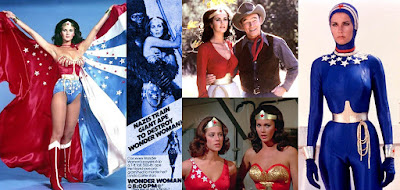
Following a somewhat muted attempt at a Wonder Woman TV show with a pilot starring Cathy Lee Crosby, in a much toned down version of the role (similar to a run on the DC comics around that time, when the character had lost her powers and become a kind of secret agent, I suspect) a new attempt was made to capture the lightning of the character (DCs top female superhero character, pretty much since her first appearances in Sensation Comics in 1942). A new pilot starring Miss World 1972, the great Lynda Carter, was commissioned... along with a couple of episodes. Then a gap as this first series proved good with the ratings and another load of episodes were commissioned, giving a total of 14 episodes in total made by Warner Brothers for ABC. Despite the popularity, ABC didn’t renew the contract but two more seasons were created for CBS, under the slightly revised title The New Adventures Of Wonder Woman.

Now, I didn’t really watch these as a kid. I saw a few episodes and liked what I saw at the time but couldn’t get over the fact that I’d managed to miss the Cathy Lee Crosby TV movie from the year before (it aired on the week I was away on holiday) and I found it hard to get invested in something if I couldn’t see all the episodes (even when I was six). By the time I was eight, though, I was very much interested in her as a pin up girl and I treasured any issues of Starburst, Starlog and the like which had photos of Lynda in her sexy costume.

However, visiting them properly now for the first time on Blu Ray (I’ll get to the 1974 TV movie when I finally get around to purchasing it), I can see just how great this must have been for young female viewers in the 1970s. Shows like Wonder Woman, The Bionic Woman and Charlie’s Angels, all of which had relatively strong female characters (while still operating with highly sexist values, it has to be said) must have had a considerable impact on women of the time and I’m so glad these were made. I came to Wonder Woman as an interesting character very late (asides from seeing her regularly on the old Super Friends cartoon show), when I grudgingly went to the first Gal Gadot movie... which completely blew me away and forced me to re-examine this character.

All I can say is, wow, this was a really great show. Especially the first series where you had Lynda as Diana Prince/Wonder Woman, Lyle Waggoner (who was just pipped at the post by Adam West for the role of Batman in 1966) as Steve Trevor and Beatrice Colen as Etta Candy (all characters from the comic books). These first season episodes were set in the 1940s during the war (as were the original comics penned by William Moulton Marston, although the TV show continues using his literary pen name, Charles Moulton, on the credits). This debut season was amazing in that it used a brilliant series of animated comic book panels for the opening credits (pitched against a rollicking song which was toned down more and more each season) and the comic book style would continue into the story so you’d have comic book drawings become photos and the constant use of captions superimposed on the live action footage such as ‘Meanwhile’ and so on. One minor problem in the writing, perhaps, was that the villains were always the ‘Nazi of the week’ during the first year but, heck, the entertainment value was high and she also had her ‘invisible jet’ in this season. I don’t recall if it was used more than maybe only once more from Season 2 onwards... which is strange because I can remember that invisible jet being a hugely popular thing when I was a kid and the recent Wonder Woman 84 movie (reviewed here) also features an homage to it.

Like later seasons, the show was peppered with guest stars, many of them big names and one of the fun things about watching the various incarnations of the show now is spotting the various people who were either nearing the end of their careers or just starting out. There were people like Frank Gorshin, Roddy McDowell, John Saxon, Ron Ely and Ann Francis turning up in various shows. Even Roy Rogers was in one, although he refused to work with Carter until they got her some Western style clothes... so Wonder Woman has a new cowboy themed look to her costume for that episode (which actually works quite well, it has to be said). Also, a young Debra Winger was in a few episodes as Diana’s sister, Wonder Girl for the first season, although she bought herself out of the contract and turned down offers for episodes in a future season and her own spin off series (I’m currently reading Elvira’s wonderful autobiography and I now know why that particular piece of casting came to be).

For the second season, the show was updated to contemporary times... which was fine with the Wonder Woman character, as she’s not supposed to age. However, Lyle Waggoner also returned, this time playing the son of the character he'd played in the first season, also called Steve Trevor. This version of Trevor works for the Inter-Agency Defence Command (IADC) and, following an opening episode which half plays as a repeat of the first season pilot, Diana becomes an agent working under him. However, the revamped show lost its ‘comic book’ visual connections and, although the villains in the stories were more varied in their motivations, it did kind of lose a little in the updating. Especially when a ‘funny computer’ and a ‘funny robot’ were thrown into the mix.

In the third from last episode of Season 3, the show’s producers went for another reboot and Diana moves to LA, to work for a different branch of the IADC... introducing a whole host of new regular characters including a streetwise, Gary Colemanesque kid, a chimpanzee and an invincible man. This must have been made after the last two episodes (which were aired a little later as specials) because, in those two (which make up a single story), Diana is back in Washington and working for Steve Trevor Jr again. So yeah... I would have liked to have seen it continue but, honestly, not in the new format they were steering towards for an LA version of the show so... perhaps it’s best it ended when it did, with 60 episodes under its belt.

Still it’s a really interesting series but I did notice it always kept reinventing itself a little more than I would have liked... which is my polite way of saying it kept changing the rules. For example, the famous spin created for the TV show, where Diana Prince transforms into Wonder Woman, is shown as it should be for the first three episodes. It’s slowed down and shows Diana moving at super speed and throwing off her outer clothes to change costume. But it was time consuming (and therefore expensive) to keep doing that and locking off the camera before a 45 minute make-up and costume change so... pretty soon they developed a magical woosh superimposed over the two parts of the spin to bridge the footage and, it looks fine and is a staple of TV nostalgia now (again, there are even a couple of very subtle references to them in the Gal Gadot movies) but it’s also problematic. And the reason it’s problematic and the reason I say it’s reinventing itself is because the rules of Diana’s powers change over time due to this. When she’s tied up or imprisoned as Diana, she no longer has her powers unless she’s completed her spin in later episodes. So she becomes more like a Billy Batson changing to Captain Marvel style character, when he used to have to shout SHAZAM! to change and gain his powers. She is vulnerable when she’s Diana Prince which, obviously, is total rubbish and not the way the character is supposed to work at all. Not how she did work in the earlier episodes, where she had various other powers such as the ability to mimic any voice, many of which were dropped for the post-season one incarnations of the show. There seems to be a definite lack of consistency as the show develops as to what she can and can’t do and, if you’re watching them back to back in a compressed time slot as I just did, you’ll notice these little changes more.

And there’s a heck of a lot more I could write about this show, actually. I wrote a lot of notes as I watched but, honestly, I don’t want to write a book on the subject (although, if anyone wants to commission me to write a book on the first of the Gal Gadot movies, I’d be happy to oblige). Unless you want to read about me getting annoyed about how every corporation depicted in Season Three having exactly the same bizarrely shaped coffee mugs and things like that. Suffice it to say that Lynda Carter totally nails it in the role and is an amazing hero who, I guess, happened to hit at the right time when she was needed by an audience that appreciated her. The only thing which occasionally grates is the big, cheesy, freeze frame grin she gives at the end of pretty much every story but, honestly, she’s absolutely brilliant in this and I’m surprised she didn’t go on to do more higher profile things in Hollywood once the show had ended. 

 If you are interested in the character then this show, despite its differences to the comic, does not let the character down too much and the title role is a strong, positive role model for people, as far as I’m concerned. Or if you don’t want to go the long haul, maybe give Season One a spin, where the visual style of the comic book source material is played up  in a really nice way... something which should never have been dropped in my opinion. Anyway, the recent Warner Brother Blu Ray set of the entire three seasons of Wonder Woman is definitely worth a twirl, whichever way you look at it.

Friday, 11 December 2020

A DC Universe Christmas


The Wonder Of Christmas

A DC Universe Christmas
by various writers and artists
DC Comics ISBN: 9781563896408


A DC Universe Christmas is a nice, festive, trade paperback reprint of a number of DC Christmas stories drawn from various decades of the company’s output... or, you know, a shameless seasonal tie in to shift old stories and repackage them for new readers. You decide.

Now, the fact that the stories come from varying time periods means that there is a complete mixture of art (not to mention writing) styles in the tome and I’d have to say, I much preferred the stories reprinted from the 1940s through to the 1960s than any of the other ones from later time periods. Also, I noticed that those ones were more likely to entertain the idea of Santa Claus as a real person rather than just an invention to keep the dreams of children alive... or to keep them quiet.

The age of various strips means there are some characters in here from recent years (up until 2000, when this was published) who I had never come across before and, also, a few second tier characters from the 1960s (but these tales they appear in date from much later), who I had no idea about. So characters like Impulse, Enemy Ace and Bat Lash were not on my radar but, can’t see that I’m missing much of anything, although the Wild West story of Bat Lash showed some promise. What’s worse is that some of the characters had changed identity from the ones I used to read as a kid. For instance, The Flash is neither Jay Garrick or Barry Allen in his story here. Instead he’s... Wally West. Seriously? Wally West was Kid Flash, the sidekick, when I was growing up. I guess he grew up too. Also, well, this seems to be the Tim Drake version of Robin in one of the stories... who I think I remember came on board as the third Robin after Jason Todd was killed by The Joker, if memory serves. Actually, the short Robin story in this, where he’s feeling lonely for the holidays and then suckered into turning up at a surprise Christmas party with his ‘superhero family’ is a nice one and worthy of something written 50 or more years before it actually debuted in 1999. Which is a pleasant surprise.

So, yeah, a bit of a mish mash of a collection but, seriously, I wouldn’t expect anything more and these kind of things are always going to be a hit and miss kind of affair. For me, though, there were some nice highlights to the book...

For instance, although it’s one I’d read before, there’s a nice Wonder Woman story reprinted from a 1943 issue of Sensation Comics called The Story Of Fir Balsam. This one is a snow bound adventure and is told from the point of view of the titular Fir tree. In it, Fir Balsam helps Wonder Woman, who is Amazonian so she can speak to Fir because she knows tree language, to both thwart a nazi racket and also restore an estranged family, bringing two kids and their father back to the mother. This one is pretty good.

Another good one is Billy Batson’s Xmas, reprinted from a 1947 issue of Captain Marvel Adventures. Nowadays he’s known as Shazam... which makes no sense whatsoever (but I’m really not going to go into that yet again). This involves Captain Marvel getting an unfairly dismissed department store Santa his job back and also has the not so brilliantly resolved question of... what did Billy Batson and his alter ego Captain Marvel (who were very much their own beings in those days, remember) get each other when they went out Christmas shopping?

Perhaps the oddest story here, A Swingin’ Christmas Carol, is a reprint from a 1968 issue of Teen Titans. This one features characters like Ebeneezer Scrounge, Jacob Farley and Tiny Tom and, as soon as the Teen Titans realise the adventure they are living is a strange parallel to Dickens’ A Christmas Carol, they try to solve the problems posed by the story by masquerading as the three ghosts from that book... with not the kind of solution they were necessarily expecting. This one is annoying because the criminals have a ray gun that can turn rubbish into valuable retail products and, at no point in the story does anyone stop to question what possible science there could be behind this... it just makes no sense. It’s also annoying when... and this kind of dates it... all the characters (including the guy writing the captions) refer to Wonder Girl as Wonder Chick. A sign of the times, I guess.

The last story in the book is a reprint of the 1940 comic Superman’s Christmas Adventure and, yeah, it’s pretty good. In this one, Clark and Lois try to bring Christmas to the poor kids of Metropolis, show a spoiled brat the error of his ways and, ultimately, thwart an evil scheme of Dr. Grouch and Mr. Meany when they try to shut down Santa’s operation at the North Pole. When they kidnap and then gas the reindeer, it’s up to Superman to work with Santa Claus to not only keep Christmas going (Superman pulls the sleigh for the sleeping reindeer) but also to reform the two killjoy criminals by showing them Christmas kindness. This kind of stuff is pretty much what Christmas is all about, as far as I’m concerned.

And that’s about it for my quick overview of this one. A DC Universe Christmas is not the best Christmas superhero comic I’ve read but it does contain a mixture of different styles and sometimes even differing views of just what the Christmas spirit is, or should be. It’s a good stocking filler for that superhero lover in your life and you should find something that will warm your heart inside. The world needs more collections like this, I think.

Tuesday, 1 September 2020

Coronavirus At The Movies

 
The Movies Have Got It Covid

Warning: This article gives away the endings to Wonder Woman, Inglourious Basterds and Once Upon A Time In Hollywood.

Over the last six months of pseudo lockdown, I’ve been writing and editing a monthly Pandemic newsletter which I send to a small circle of friends to help keep them occupied and smiling through these trying times. Normally I don’t repeat content from here that I’ve included there and vice versa but, I thought the following article which I wrote for inclusion in the final issue (volume 2 starts up when we hit the second wave of Covid), number 6, last week might interest some of my blog readers too so, here’s the article I wrote speculating how cinema content might be shaped in the Covid and post-Covid world. I hope you like it.

It’s been suggested to me recently that, once movie production gets going again properly, it’s doubtful that the future of film will be reflective of the 2020 Coronavirus pandemic. The argument is that people will not want to see depictions of social distancing on screen and, instead, will want to see a world untouched by the disease that has been, err, plaguing us these last six months or more. Audiences go to the cinema for escape, after all.

I'd have to say that... I think it’s probably quite dependent on how long this ‘new normal’ will be with us but I don’t think that people who are working on any form of art... be it film, fiction or music (to name but three), will be necessarily falling over themselves to provide people with a Covid-free environment in their work. Also, the fact that it seems people can get reinfected just a few months after having the symptoms, possibly prompting four times a year vaccines* if, indeed, an effective one can be found, is also going to be a factor in this. I think we could be stuck in this for a while and I fully expect our films to represent this. Even those set in alternate fantasy versions of our current reality such as the DC and Marvel universes, for example.

One of the things you need to remember is that a lot of fictional creators tend to base their stories in a world of historical accuracy. Unless they’re set in the past or in some remote fantasy land such as Middle Earth or Cimmeria, they’re going to want to base their story in the real world as much as possible. Why? Well simply because conforming to a facsimile of the real world helps make the fantasy they are weaving... be it superheroes, spy stories or even romantic comedies... more believable. If the audience can buy into the physical, psychological and sociological environment in which certain characters are interacting with each other, then it makes the story they are telling more credible.

Historically there are plenty of things which buy into the time period of when they are set and in which great pains are taken to explain certain historical inaccuracies conjured up by the subject of their stories.

Take the comics of DC published during the Second World War, for example. The DC characters were so powerful that kids would wonder why they didn’t just go over to Germany and stop the war. A good point... Superman would have finished the war in one afternoon.  So the writers came up with (or is that fell back on?) the artefact which Hitler himself listed among his occult obsessions. In the DC comics, Hitler absolutely had possession of the Spear Of Destiny (the spear that allegedly pierced the body of Christ on the cross), an artefact which has been used over and over again in genre fiction and movies since... well, for a long time. Because of the strange properties of the Spear Of Destiny, the readers were told, the superheroes couldn’t go near Hitler because the Spear would negate their super powers. And so, the comics could go on publishing superhero tales without the question of quickly ending the war ever coming up. A useful side step.

And we’ve seen things using historical context time and time again at the cinema. Take the recent Wonder Woman movie, for example. This was set in the First World War and, because it was Diana’s mission to end that war by destroying her war god brother, the film-makers brilliantly made sure that the day that she does this also coincided with the day the armistice was signed. So in the real world about her, the war was over but... we flies on the wall know how it really ended... right? Wink. A nice solution to what could have been a huge fantasy versus reality problem. One which allowed the fantasy world of the character to play out in a relatively accurate historical backdrop without the two elements ever fighting one another. Nice work.

Of course, some writers and directors don’t care about historical accuracy... or so it seems at first. Look at the two Quentin Tarantino movies Inglourious Basterds and Once Upon A Time In Hollywood, for example...

I work in an educational establishment and I can’t even begin to tell you the horror stories of the genuine historical ignorance of a large number of the students making their way through colleges and universities across the country. It’s astonishing and I can tell you now that there are a lot of people of a certain age (and younger, now) who believe that Adolf Hitler met his death by being machine gunned down in an exploding cinema and... that’s how the Second World War ended, didn’t it? Because that’s what happens at the end of Inglourious Basterds so, it must be true, right? That was set in World War II. Now, I’m absolutely all for artists doing what they want in movies but, when something presents itself as historically accurate then I think they should just have a little warning put in at the beginning of the film saying that the outcomes of this film are in no way representative of real life. Because, you know, a lot of people think these things actually are.

Similarly, even though the ending Tarantino was going to go for was obvious even before I took my seat at the cinema to see Once Upon A Time In Hollywood, there are a fair few people of, again, a certain age, who think Sharon Tate went on to have a long, prosperous career as a Hollywood actress. I guess at least some of the people who go on to explore her post-Manson body of work will hit a wall of truth when it comes to the IMDB, at least.

The thing is, though, even these flights of fancy on the parts of Tarantino are taking a lot of time to paint that fantasy into a world which is backed up by the time in which they are set. Sure, the outcome is different but all the window dressing of 1940s Germany and 1960s Hollywood is brought into play to make his fantasies credible. So, really, he’s doing exactly the same as most filmmakers do these days... setting the story in a historically accurate environment.

Which brings me back to Covid in the movies (and other art forms). If this thing truly does last less than a year then I think the virus and the distancing will, at the very least, be used to have a scene or two with ‘light hearted social distancing’ scenes used to show, say, a development through time for a romantic relationship. “Oh, look guys, now they’re in the 2020s and they’ve got that kooky social distancing going on!”

At the worst... which I’m guessing is where we are at (the news hasn’t been very encouraging of late), I think we’ll be seeing the long term effects of social distancing and coronavirus in movies for a long time to come. Because, for one thing, it demonstrates what the audience are living themselves and thus adds credibility to the story line (whether you want to see it or not) and two... because if you’re forced to film scenes in a socially distant manner then, surely, it will be easier to do that if the scenes you are doing that with are having socially distant content?

So yeah, I’m sorry to say that, in terms of the virus and its more visible side effects, I think art will be imitating life just as much as it always does in the future and, since coronavirus is such an important part of our everyday lives currently, I don’t see us escaping that anytime soon.

*has been suggested at time of writing

Thursday, 13 December 2018

Wonder Woman The Golden Age Vol 1

Ropes N’ Tropes

Wonder Woman
The Golden Age Vol 1

by William Moulton Marston
DC Comics 

ISBN: 978-1401274443

I’ll be the first to admit that I was never much interested in Wonder Woman as a kid growing up in, mostly, the 1970s. Sure I watched the Lynda Carter TV show from time to time, primarily because there were so very few live action superhero characters on television then that it was a huge novelty to get someone doing this kind of stuff on air (and even less so in the UK where we only got a few of the small selection of live action comic book characters that the US were putting out in shows and movies). So my primary experiences of Wonder Woman were when she used to show up in the odd issue of the 1970s Justice League of America comics, which I might find laying around at my Uncle’s place and, of course, in one of my favourite cartoon shows, The Superfriends (which was kind of an animated Justice League lite). Of course, Lynda Carter would return to my fantasy life just a few years later in the Wonder Woman costume but... err... yeah, that was purely for other reasons and perhaps it would be inappropriate to explore that here.

All that changed last year when I saw what is, to date, the greatest superhero movie of all time, Patty Jenkins’ Wonder Woman (reviewed here), starring Gal Gadot as the titular character. This film both moved me and caught my eye on almost every level and, coupled with the unbelievably brilliant biopic Professor Marston And The Wonder Women (reviewed here), it was obvious I was going to want to read more about this beloved comic icon and, what better way than to read these new reprints of her earliest days.

Wonder Woman The Golden Age is a generous tome and reprints all of the stories appearing in the first year or so of her existence from late 1941 and into 1942, covering her first appearance in All Star Comics, followed by a continuation of that origin story in Sensation Comics, followed by her features continuing in Sensation Comics and also in the issues of her own Wonder Woman comic, once the character was proven to be successful.

The artwork is pretty much what I was expecting from a 1940s comic book although, that being said, the drawings aren’t quite as crude as the early Superman comics from 1938, nor the various Timely (later Marvel) comic characters from 1939 such as The Human Torch and The Sub Mariner. I think by the time Wonder Woman was launched onto the scene, the comic book artists were starting to get the hang of the idea that comics were a big thing and a regular paying job, so the artwork by various artists was probably improving all the time (that’s my theory, anyway) so, while you can probably easily date the artwork in these issues to more or less the correct time period (not to mention the structure of the pages as a whole), they aren’t in any way flat or boring and are easier on the eye than you might expect.

It’s interesting to note that while the origin of the character (as told in a couple of different versions in this first year) is quite a bit different from the version in the latest movie - presumably it’s been much revised over DC’s lengthy history - there are also a lot of elements from the original early issues that did make it into the recent film version. Whether that’s Jenkin’s and her writers cobbling bits of Wonder Woman history together herself from the early days or if these are elements that have been picked up in various revisions of the comics over the years, is not something I am qualified to make a good guess at.

So, for example, the origin includes the theft of Queen Hypolyta’s girdle by Hercules who then enslaves all the amazons. When Aphrodite eventually sets them free and hides them on Paradise Island, they all still have to wear shackles/bracelets as a reminder of the nature of man (this is pretty good, feminist stuff for the early 1940s I reckon... at least it’s probably quite ahead of its time in terms of seeing publication in a popular print form for the period). Also, when Wonder Woman, aka Princess Diana, aka Diana Prince (her alter ego as a simultaneous Army Nurse and Secretary to Steve Trevor’s superior in the army) has shackles attached to those specific bracelets and they are put on by a man, she basically loses her powers until they are removed (this was one of the few equivalents to Superman's Kryptonite the character had at this stage).

However, the little things which did make their way into the film in one shape or form are clearly visible here. For instance, in one issue we have the villain as Dr. Poison, who is revealed at the end of the strip to be a woman (the character was played by Elena Anaya in the movie). Also, although the World War Two setting was relocated to World War One for the movie, the second Wonder Woman strip (the first to feature in Sensation Comics) also includes a storyline involving the villain's perfection of a new kind of gas that penetrates all known gas masks... another element from the recent motion picture.

There are also many things which wouldn’t have translated too well from page to screen, for sure. For instance, the fetishistic overtones of female domination and lezdom spanking, often seen in relation to Diana’s friend Etta Candy, was mostly edited from the movie. Etta herself was a completely different personality in the movie but they did get her trademark cry of “Woo! Woo!” into the film... albeit very subtly. Perhaps another thing that may have been a big mistep if the film version had gone into a more faithful adaptation, especially in the scenes on Themyscira where the Amazons are fighting the Germans, would be the fact that, rather than ride around on horses, the Amazons of Paradise Island tend to ride around on giant kangaroos. That's an idea possibly best left in the 1940s as regards to movie credibility, methinks.

There are also some subtle differences too.

Yes, Professor Marston was, along with his wife and live in mistress to them both, the real life inventor of the lie detector... and he does have a lie detector appearing in more than one issue in this first year. However, rather than being a specific ‘rope of truth’ as it came to be over the years, the golden lariat was actually a piece of equipment that compelled the wearer to do whatever the wielder commanded... unless the person giving the orders was a man, of course.

Due to the setting and the times, the comic has a lot of contemporaneous references and also, like many of the comics of the time (especially the early Superman strips, if memory serves), a lot of social messages about how the young readers should be living their lives in the face of corruption and, of course, the war. So, you will sometimes get stories devoted to fairer wages for the shop assistants in department stores or factories keeping the price of milk down for the people. And, naturally, the usual stuff about buying lots of War Bonds and helping the war effort. There are also referrals to things which, while not quite yet lost to the period in which they were written, were things I had to look up. Ignatz Mouse and Krazy Kat, for example, rang a vague bell but I had to research them before I was any the wiser.

That being said, one of the most problematic things with these early comics is the war itself. Since the character, like many of her costumed contemporaries, is all powerful, you wonder why she doesn’t just go over to Germany and deal with Hitler herself and end things in a few minutes. I don’t know exactly when DC wrote in the mystic powers of the infamous and, possibly, real life Spear Of Destiny into the strip, to keep superheroes from getting near Hitler but... it doesn’t seem to be much in evidence in these stories for sure.

One of the delights of these comics is the advancement of the form itself. Things in the artwork are evolving such as one page splash panels to start off the story or using bubble edges around panels which are flashbacks. It’s nice to see this evolution of the art of the comic strip although, it has to be said, when they flash back to her origin story (and change it slightly), you have the former versions of the story on hand so you can see how the colours have been changed on later versions of the back story. Deliberate ‘errors’ like this certainly keeps the readers on their toes and it makes things interesting. It’s also astonishing to see how far ahead of her time, in some ways, Diana was in the comics. Not just in terms of feminism but with fantasy ideas too. For example, she was having adventures on other worlds as the astral projection of her form two decades before Marvel’s Doctor Strange character was doing this more regularly. My guess would be that this was very much influenced by the ethereal transportation of John Carter to the planet of Barsoom (Mars) in the Martian tales of Edgar Rice Burroughs (alas, the film version of A Princess of Mars, called just John Carter, changed it to teleportation to make the concept more palatable to modern audiences). I’m sure they’re something Marston would have at least been a little familiar with, at any rate.

So that’s the first year of Wonder Woman read and I have to say, I really enjoyed these things... especially when you know a little of Marston’s history and kinks and see how they made their way into the strip in some subtle and, often, not so subtle ways. These reprint books from DC are really appreciated and much cheaper than the old DC Archives hardbacks from a number of decades ago. They bundle the appearances together chronologically from all the simultaneous titles, rather than just reprint the one title and leave you with references to other stories you’ve not read yet.. I’m definitely going to have to catch up with some more of these Wonder Woman reprints... and probably some of their other characters as well. I’ve already picked up the first volume of Batman and I’ll hopefully be able to get to that one sometime soon.

Tuesday, 21 November 2017

Justice League


Beleaguered Leaguers

Justice League
2017 USA Directed by Zack Snyder and Joss Whedon
UK cinema release print.

Warning: Yeah, there will be some spoilers in this one, I think.

Okay, so let me just say up front that Justice League is not a terrible movie by any stretch of the imagination... it’s just not a very good one either. It has its great little moments and a whole bunch of problems but, out of the five films to date making up the story arc of this particular set of interlocking DC superhero movies, this is about halfway up the list in terms of being an effective and entertaining movie.

DC’s track record hasn’t been all that great since the fantastic last part of Christopher Nolan’s Dark Night trilogy, it has to be said. Man Of Steel (reviewed here) was just dreadful. Batman Vs Superman - Dawn of Justice (reviewed here) was a fair bit better but ultimately not very well received by critics and audiences alike, it seemed to me. Suicide Squad (reviewed here) was... okayish but really wasn’t making people that happy either. But then we had ‘the movie’. Wonder Woman (reviewed here) isn’t just the greatest superhero movie of all time (and, yeah, I know that’s a brave and bold claim to make but I promise this is not a knee jerk reaction to it)... it’s also one of the best movies in the past few years, period. It’s also flattened all the competition at the box office for the forseeable future (or just maybe until the new Star Wars movie premieres next month) and it more than deserves its success.

The thing is, though, everyone was kinda hoping that Justice League would somehow live up to the almost impossible standard that Patty Jenkins set with Wonder Woman and, frankly, that would be hard to top even by her, when she comes to work on the sequel. So I guess it’s no surprise that this movie comes nowhere near as close to the dizzying heights that Professor William Moulton Marston’s amazonian princess scaled to in her own solo movie adaptation. A shame, though, that Justice League doesn’t come close to the Batman VS Superman movie either.

Now I’m not going to go into the production problems this film had, what with Zack Snyder leaving for very understandable reasons and Joss Whedon reshooting the thing in places... firstly because I would be no good at figuring out which bits were directed by whom and, secondly, because it’s the film we’ve ended up with, for better or worse. Given Snyder’s reasons for leaving, there’s absolutely no point in having an autopsy on why this theatrically released cut doesn't really cut it.

Okay... so lets look at the good stuff first and get that out of the way...

Well, some of the action was okay, especially the Amazon’s fighting the villain of the piece, Steppenwolf, near the start... and also in the bank scene where Gal Gadot’s Diana saves a bunch of people by doing some cool action stuff. That being said, I did miss the sudden glow of orange as the metal on her wrist bands cool down after a bullet hit, which was a nice detail in Patty Jenkins movie during the alley scene in London... itself an homage, presumably, to the alley scene in Superman The Movie. Gadot is just wonderful again here, as she was in her previous two movies with this character because a) she looks just like she could do all this stuff in real life and b) because she performed it in such a way that she doesn’t betray the character as set up in the previous two films.

Similarly, say what you will about Ben Affleck but I think he makes a brilliant Bruce Wayne/Batman and I really hope he doesn’t leave the role after this. I think he could really do well in a solo Batman movie and I would really like to see it.

Henry Cavill... well I hated Superman in Man Of Steel but that’s more because of the script than Cavill’s performance and I certainly warmed to him more in Batman Vs Superman - Dawn Of Justice. He’s great here too and you really believe in his character, who he portrays with the same kind of honourable presence as some of the great actors who have played the part before him... and I’m specifically thinking of Kirk Alyn and Christopher Reeve here. Now if they’d only bring back the ‘S’ kiss curl and the red trunks then the illusion would be complete.

Jeremy Irons as Alfred has about as much screen time as he did in the previous movie but I think his character makes a bigger impact here, with various ironic comments thrown at Bruce Wayne which I found fairly entertaining.

 It was also great seeing a Green Lantern in the sequence flashing back to a battle on Earth which took places many hundreds of years ago, too. It’s been suggested that the cloak on him was a reference to the original Golden Age iteration of the character in comics but, the people saying that might do well to remember that the original Green Lantern’s costume was red (yeah, I know that’s ridiculous but don’t blame me... I didn’t write those things).

And that’s mostly the good stuff.

Now we also have three new members on the team...

Ezra Miller does okay as a really bizarre and teenage angsty version of the silver age version of The Flash (aka Barry Allen) and he was getting a good reaction from the audience at my screening. Personally I didn’t find him all that easy to identify with and I could take him or leave him, to be fair. Then we have Cyborg, who was a member of the Teen Titans the last time I read of him (sometime in the early 1980s) so goodness knows what he’s doing in the Justice League of America (as the supergroup was always known in the comics... until maybe recently). He’s played here by a guy called Ray Fisher and, although he turns in a solid performance, I couldn’t help but think that the script wasn’t doing him any favours. He just comes across as a bit dull, to be honest.

Jason Momoa’s version of Aquaman is a more fun character but, honestly, is nothing like the Aquaman I used to enjoy reading about when I was a kid (I even had a little action figure). The clean shaven, blonde version of Superman with the blue eyes, orange suit and green legs and gauntlets has morphed into what is presumably a more contemporary comic book version of the character (well... at least he still has both of his arms here). Again... he was okay but I really would have preferred the version of the character I grew up with here.

Okay... let’s get to the really bad then...

So much of the dialogue between Batman and Diana feels forced and, bearing in mind the amount of times that Steve Trevor’s name is bandied about, it somehow seems disrespectful of the truly marvellous solo Wonder Woman movie what came out earlier in the year.

Another thing which felt out of place was that the background story about the ‘mother boxes’ seemed like it came completely out of the blue and Diana never once goes to Thermyscira to consult with the Amazons. Indeed, she even goes so far as to say that they cannot leave their island... which is a completely redundant and contradictory idea in terms of their purpose on Earth, to be honest. This film so badly needed a scene between Diana and her mother and it similarly needed ‘the amazon horde’ to come galloping in for the somewhat bland (as it is here) action finale too. Especially since their own battle with Steppenwolf near the beginning of the movie was a heck of a lot better.

The way Superman is brought back to life is really stupid Doctor Frankenstein stuff and I couldn’t help but think it all seemed just a little too optimistic and contrived. “Gee whiz... wouldn’t it be great if we could use this mother box technology to bring Superman back to life with?”... well, okay, it wasn’t quite like that but it was pretty close. It felt like the whole thing was written by a small child at this point. What was worse than that though was... Superman and Batman were allies by the end of Batman Vs Superman. In fact, Batman saved Superman’s mother’s life. So why the heck would the newly woken Superman be so aggressively hostile to Batman and the others and try to kill them all? It made no sense. It was like watching that truly dumb scene in Superman III where he splits into two and the evil and good halves fight. It just made no sense.

And then they trot out Amy Adam’s Lois Lane to calm him down? Honestly, it felt like her role was really pushed to the back in this and the scene where she and Diane Lane as Martha Kent were talking in the newspaper offices felt like it was shot quickly in the director’s favourite room in his house one afternoon. The set dressing and feel of the scene seemed to be completely unconvincing.

The music is perplexing too. Danny Elfman has been tapped for this one but I felt like either Hans Zimmer or, especially, Rupert Gregson-Williams (who had provided real emotional depth to the Wonder Woman movie) should have got the gig here. Instead, Elfman uses various themes from films gone by to weave a new musical direction for the franchise and... it just felt wrong. Okay, so he uses Zimmer’s Superman theme from Man Of Steel at one point and he similarly uses Zimmer’s “Is She With You?” theme for Wonder Woman in a less striking arrangement (but without using Gregson-Williams gorgeous thematic material). However, he also uses John WIlliams' Superman music at one point too plus... he even uses his own 1980s Batman theme for some of Ben Affleck’s Batcentric shenanigans. None of that really made sense... what’s he trying to evoke here. It’s a nice enough score, when you can hear it over the noisy sound effects but... it doesn’t knock it out of the park like some of the films in this series do.

Okay, last thing I’ll highlight here is the running time. This is the shortest of the recent DC movies, clocking in at one minute shy of two hours. But you are dealing with six superhero characters, not to mention the big bad guy and the introduction of the mother box on the narrative. How do you cram all that into two hours without losing sight of something? Short answer... you don’t. This film feels like it should be a lot longer and, I dunno, less flippant and somewhat darker in tone considering the events that have birthed it in the previous films. Things felt somewhat rushed... especially when it hurtles to a climax that is less than interesting.

Also... you have continuity errors like the mother box being used to bring Cyborg to life being in the previous film, which makes no sense. Or the fact that the third mother box was found during World War I when, if you check out the epilogue scene included on the home video version of Wonder Woman, you’ll know that Etta Candy and the others were tasked with the mission to find it after the end of the war depicted in that film. Thins like this just seemed a bit like sloppy writing to me, it has to be said.

So, yeah, that’s my review of Justice League. All in all I’m glad I went to see it... if for nothing more than to see Gal Gadot totally slaying it as Wonder Woman. However, the film didn’t blow me away, for sure and it certainly felt a little more anti-climactic than I was expecting. All in all, if you loved Wonder Woman then you’ll probably want to see this one anyway. I can’t really recommend it to anyone on any other basis though so... make of that what you will. Old school DC comics fans, though, would do well to look out for the first of the two post-credits scenes if they want to see a familiar homage and... don’t miss the end if you want to see what happened to another character from a previous movie in the series.

Tuesday, 17 October 2017

Professor Marston and the Wonder Women


Shibari Boom-De-Ay

Professor Marston and
the Wonder Women

2017 USA Directed by Angela Robinson
London Film Festival Sunday 15th October


Okay, so this was my last film of this year’s London Film Festival and I couldn’t have picked a better one. Professor Marston and the Wonder Women is a truly joyful experience and, also, the timing couldn’t have been better for the producers in terms of following this year's big hit Wonder Woman (reviewed by me here). This is the story of the man who created that iconic character (under the pseudonym Charles Moulton), psychologist Professor William Moulton Marston and the two women in his (and each others) life... his wife, psychologist Elisabeth Marston and their live in lover Olive Byrne.

The film is damn near perfect too.

I knew the movie would have to tackle the Frederic Wertham stuff and it kinda does, in a way... or at least the growing sentiment in America that the relatively new comic book phenomenon was perverted, corrupting and harmful to the children of America (and presumably to the GI’s too since comics were popular with them also). Wertham would be the mascot boy for the terrifying anti-comics crusade to come and so he’s not specifically mentioned here as this movie ends roughly around the time of Marston’s death, which was just a few years early for the full horror of Wertham’s pseudo-psycho babble to take a grip on minds across the country.

However, the growing scare of sensationalist comic books is a perfect place to look back from and writer/director Angela Robinson kicks off the movie with kids collecting unwanted comics in carts as the credits play out before we see Marston looking on at everyone burning comic books and we see an issue of one of the early comics to feature Wonder Woman, perhaps Marston’s most enduring invention, burning up with the rest of them on a bonfire of four colour funnies. We then join Marston defending Wonder Woman to Josette Frank, who was appointed to help National Comics Publications, kinda, self certify before the real storm came later (soon after and decades before they made it official, National Comics branded themselves with the initials of their popular Batman title, Detective Comics, as the now more familiar DC). It’s from this scene, with Frank (played by Connie Britton) asking the hard questions and Marston remembering the relevant parts of this life, that we glimpse the majority of the film in flashback, with constant stops back to the early 1940s when this sequence is happening.

So we have Professor Marston played by Luke Evans and  Elisabeth played by Rebecca Hall (who I loved so much in The Awakening - reviewed here - that I thought she should have been heading up a franchise with the character from that movie) giving lectures in Marston’s new psychological theory DISC (which stands for Dominance, Influence, Submission, and Compliance) and taking on a new assistant whom they both, as it happens, want to sleep with... called Olive, played by Bella Heathcote. And we see their story through their personal lens as they build a loving relationship under the same household (mostly) and have various children and struggle with various problems of their specific lifestyle choices versus what is socially acceptable in the 1920s and beyond.

In addition to seeing them discover each other we also see them inventing and testing the lie detector (finally realising the missing ingredient of the ‘false positives’ they are getting by using their possible future (at this stage) relationship in conjunction with it to finally get the correct results. We also see the discovery of illegal pornography as a defining moment in their life and, specifically, Marston’s accidental introduction to the ‘underground’ S&M scene (we all call it BDSM nowadays) including an introduction to bondage via a demonstration the Professor gets set up in the back room of a shop which specialises in... ‘fantasy dress’, shall we say. The bondage demonstrated, first on a model and then on Olive in the showroom is not unlike what we would know a little better these days as ‘shibari’ rope bondage (although the term itself was not, I think, in more common practice, even in Japan, until the 1950s) and this kickstarts another important aspect of Marston and the gals ‘relationship identity’. This is something they already touched upon earlier in the film in a spanking scene in a College ritual and the photographs that Marston later buys to pique the girls’ interest are, he insists, visual representations of his DISC ideas rendered in just four pictures. This later helps give him the idea to inject the same theories into his Wonder Woman character, who would make her first appearance in an issue of All Star Comics before headlining her run in Sensation Comics.

Of course, much is made of the lie detector, the bondage rope and the costume that Olive wears at one point as the early ideas that sparked certain aspects of Wonder Woman (who gets rid of the false words of her enemies with her magic rope of truth and who is constantly getting tied up in the strip during that period). It’s a great story and it’s all laid out from A-Z with Marston finally selling his idea of Suprema The Wonder Woman and writing the stories himself after he and Elisabeth are both fired from their college jobs due to the nature of their relationship with Olive and their various children. This includes a brilliant turn from Oliver Platt as legendary comics publisher M. C. Gaines which is pretty good, with him dumping the name Suprema and going with just the character name which is more familiar to her fans today... Wonder Woman.

And this movie sparkles so much.

The style is quite leisurely with lots of either static or slow moving camera shots which are held for quite reasonable lengths of time to let the performances of the three brilliant leads shine through. The writing is unbelievably witty and sparkly too and it’s a bit like a quick fire 1930s romantic comedy in the way the actors deliver this immensely intelligent dialogue, which juxtaposes nicely with the slower visual style without it clashing - the two things just seem to complement each other perfectly and the movie sings along very quickly. It’s also very funny with some great one liners such as Elisabeth saying something along the lines of “You can’t keep using science to justify the whims of your cock.” That’s probably not the exact quote but it’s not far off and, like many of the humour beats that hit the mark throughout this movie, the audience at the screening I attended were highly appreciative.

The film also has some nice things going on in those shot compositions too. The sorority ritual scene where Marston and his wife get hot and bothered watching Olive spank another student is partially shot from in front of a set of bannisters which partly obscures their features while allowing you to easily glimpse the mood being put through in their performance and it’s a really nice moment. Another really great thing is the deep focus photography used on some of the shots of the rope where Elisabeth ties up Olive in the shop and the texture of the rope is sharp in places where everything else in the shot is blurred out like an old Hollywood, ‘vaseline on the lens’ shot. It’s stuff like this which really gets into your eyeballs, coupled with the dazzling script and the superb acting from all the leads here.

I was a bit worried that the movie wouldn’t be able to legally use images of Wonder Woman due to rights issues but there seems to be no such problems here and there’s even a montage sequence (or two) with various comic panels from the strip set to the music of the famous jazz standard Big Noise from Winnetka, which I suspect might have been inspired by a similar musically charged montage with the same piece from the film Comic Book Confidential. Wherever that idea came from, it works just fine here and this is not to undercut the brilliance of Tom Howe’s wonderful score for the movie either (which I shall be picking up on CD as soon as I can get my hands on it after the release date).

The film ends with the time honoured, various facts about ‘what happened next’ in the lives of the three central protagonists and then the credits roll with photos of the real life William, Elisabeth and Olive... which really hits home, actually, just how glamourous the movie versions of the characters are in comparison to the people that inspired it. Although that’s a discussion for a different time, methinks.

All in all, Professor Marston And The Wonder Women is easily one of the best movies of 2017 and I can’t wait to see this one again when it gets a November release in the UK (and also buy the Blu Ray when it comes out). Don’t be on the fence about this one if you like cinema and also like to see a good, romantic yarn with humour, sadness and poignancy in spades. As far as writer/director Angela Robinson goes with this movie, I shall quote another movie from this year taking everyone’s famous amazonian superhero as it’s subject matter and just say... “You should be very proud.”

Wednesday, 2 August 2017

DC Comics: Bombshells Vol 1


Bombinatrices

DC Comics: Bombshells Volume 1
by Marguerite Bennett and Marguerite Sauvage
DC Comics
ISBN: 978-1-4012-6132-0


It’s been many years since I read a superhero comic and longer than that since I read one where multiple super powered beings banded together to fight a common foe. When I first started buying the DC Bombshells merchandise a few years ago, in the form of a few travel pass holders and a deck of cards, I had no idea it was an actual comic book. As it transpires, though... it wasn’t. First manifesting itself as a series of popular prints and then progressing to statuettes of female superheroes re-imagined as 1940s examples of themselves (which almost makes no sense in terms of Wonder Woman) or, in some cases, popular male heroes re-imagined as women from that same era, this is a case of original artist Ant Lucia’s designs inspiring a retro fitted comic book series which faithfully works these creations into a 1940s wartime setting.

This first volume, with the subtitle, Enlisted, reprints the first six issues of this series. The various issues which make up this trade paperback reprint gives us some of the back story to these characters as it slowly reveals how they come to be thrown into this mess of a Second World War together and are recruited to form part of ‘The Bombshells’… a kind of US government headed, all female version of the Justice Society of America, if you will (not to be confused with the Justice League Of America, who were the Silver Age equivalent of that particular super-group).

The story starts off strong when the feminist subtext which shapes the central storyline kicks in and completely nullifies one of DC’s biggest hero characters. Instead of Bruce Wayne’s parents being shot in the street after they and young Bruce emerge from a movie theatre showing a Zorro flick, they are saved from those fatal bullets by the appearance of Batwoman, a masked vigilante who  presumably takes her name from the baseball bat she swings to brutally beat her evil foes. Thus Batman is never born in this version of the DC universe (at least not yet in these issues, anyway) and this strong, opening statement really is an overt sucker punch to those expecting some kind of Dark Knight storyline to this thing.

There are also some much more contemporary DC characters thrown back in time… ones who I am not all that familiar with in some cases…  such as Harley Quinn and Poison Ivy. They even manage to shoehorn some nice appearances from male characters in this one too… such as a couple of surprise panels of Swamp Thing raining down destruction on some soviet soldiers and Zatanna’s magic hat rabbit actually being a rodent version of John Constantine (who was played by Keanu Reeves in a terribly unfaithful but ultimately very fun movie version of that character).

The story is beautifully told and takes a fair few more twists and turns than you might reasonably expect from the material as it assembles its interesting cast. I say interesting because some characters such as Wonder Woman are already 1940s heroines to begin with and, although Diana’s origins are more or less what they always were, the story goes further with some characters in terms of its initial set up. Supergirl, for example, was rocketed to Earth and found in the Soviet Union, where she grows up with her half sister Starwoman before events take a more complicated turn.

There is some beautiful art and panel design over various sections of the comic which give it a nicely hotch potch feel in places. For instance, there’s an interesting splash panel introducing Moscow, September 1940 where the text boxes read down the panel but also take you across before going left on two of three vertical boxes which are housed within that main panel. So you read down and the third insert picture box is on the right of the panel which accompanies that text before you continue down where the text is illustrated back to the left on the second vertical insert box… which you have already, presumably, looked at as you are working your way through the text on the way to the right. Because the insert picture boxes are vertical and long, this doesn't actually spoil the flow of information as you might expect it to and it’s a pretty nice feat of visual narrative flow maintaining the sense of the story in as interesting a manner possible without popping you out of that story with its own cleverness. Although, it has to be said, there are some other, somewhat less successful spreads throughout the issues where the reading direction is less clear and I found myself reading down the left page with things not making a lot of sense before realising these pages were meant to be read across a landscape spread rather than going down… something which used to be considered a bit of a design flaw in the way comic panels are constructed (if the panels didn't automatically lead the eye so the reader didn't know where to look next) but… I dunno… maybe I’m just getting too old.

That aside, though, there are also some nice moments where different kinds of art styles are used to reflect the different tones in which the story is told. For instance, when Kara (Supergirl) tells her origin story, the art and colouring flattens more and it is presented  almost as a storybook fable in that simpler, less embellished lines are used and a texture is run into the background, underlying everything depicted in those pages and giving it an almost illustrated fairytale look… which was a nice touch, I thought.

The story itself isn’t simple, though… weaving in and out where characters start off as one kind of person before they end up as someone/thing completely different. There are hints of this even in the first six issues reprinted here and one of the problems of printing trade paperback collections (often confused with graphic novels by many film companies, for some strange reason) is that their continuous nature leaves the reader of such collections without a natural conclusion to the events which are put in motion at the beginning of what are, in the case of this one, looking to be fairly complex story arcs.

That being said, the six issues collected here do lead to a kind of natural “mini conclusion” of sorts and they could be viewed as… almost standalone. Although, to be honest, I get the strong feeling that the writers haven’t finished introducing the full cast of these comics by this point in.

In the old days, when I was reading such things more regularly, DC Bombshells would have been branded an Elseworlds story… which was the DC equivalent of the Marvel comics What If…? universe. Alas, the Elseworlds branding is nowhere in sight on this collection so I guess the concept of the comic might be a somewhat confusing prospect to people who might not know that this is not part of the regular DC canon and are trying to square this with the characters as they might remember them from years gone by or, for that matter, as recently depicted in various movie versions. However, I would certainly recommend this both to fans of comic books and also to those who are less inclined to normally pick up this sort of visual confection. It’s a nice idea inspired by some really cool artwork and it’s clearly taking that jumping on point seriously and not throwing those ideas away for a quick cash in. I’ll certainly be aiming to pick up the remaining volumes at some point.

Monday, 5 June 2017

Wonder Woman


Blood n’ Wonder

Wonder Woman
2017 USA/China/Hong Kong
Directed by Patty Jenkins  
UK cinema release print.


Warning: Very slight hints at spoilers.

I was actually quite apprehensive about going to see the latest of the DC superpowers movies. Not half as much as anxious as I am about seeing what looks like quite a dreadful attempt to put the Justice League of America on screen later in the year but certainly, given the last three films by the studio... the terrible Man Of Steel (reviewed here), the not too terrible Batman Vs Superman: Dawn Of Justice (reviewed here) and the passable but superfluous Suicide Squad (reviewed here)... were all much less than great movies, I wasn’t particularly looking forward to how the studio might screw up Wonder Woman. As it turns out... I needn’t have worried. This movie is easily the best movie they’ve put out in the last five years and even towers above a fair few of the Marvel movies released during the same period.

Wonder Woman made her first appearance in comics in 1941, which is a time period a bit further in the future to the setting of the majority of this movie. For some reason the writers here decided to take her out of her original World War Two setting and instead go back to the First World War. I’m not complaining though... it works really well for the movie. She was created by psychologist William Moulton Marston, who invented one of the key components in what is commonly known as the ‘lie detector’. He also tended to inject the stories with a lot of oblique references to what we know these days as BDSM (which may mean he was a lifestyle practitioner himself... I don’t know) and so if you ever wondered where he got the idea that Wonder Woman would utilise a magic golden ‘rope of truth’ with which she could tie up unsuspecting captives and compel them not to lie... well there you go.

This film is pretty much pitch perfect and the director, Patty Jenkins, does an absolutely astonishing job here. Bookended by a scene set bang up to date with the recent DC movies, we first see Diana Prince (aka Wonder Woman aka Princess Diana of Themyscira) as she receives a gift from Bruce Wayne (although Ben Affleck is not present in the flesh in this movie). The gift is an old watch and the photograph of Wonder Woman standing with her allies in World War One which we first caught a glimpse of in Batman Vs Superman: Dawn Of Justice. I was pretty sure that photo would be making an appearance and its used here as the element which allows us into the movie length flashback of Diana’s exploits during World War One.

The film actually keeps the same kind of tone, visually, as the Batman Vs Superman movie (with lots of bleak colour palette) but this serves to highlight the times when stronger colours are suddenly used to good effect and it’s also very well used, as it was in that previous movie, in contrast to Wonder Woman’s magic lasso... the colours absolutely pop whenever it’s used in action.

Despite some reviews I heard where the pacing was criticised, I found the speediness of this movie to be pretty good and evenly paced throughout.

After the opening bookend we start with Diana as a child on her invisible island of Themyscira (or Paradise Island as it used to be known before a well known writer was let loose on one of the many revamps of the character some decades ago) and watch her grow up as an Amazon in training... preparing for the day the God of War will return to destroy humanity. We are presented with the... I’m sorry but this was such an obvious reveal from the start... so called ‘mystery’ of the ‘God killer’ and this is used later for pretty much the only moment in this wonderful film you might see coming. Soon the actresses playing the younger versions of the title character mature into lead actress Gal Gadot and she rescues the main male protagonist, Steve Trevor (played by Chris Pine), when he accidentally pierces the veil which hides Themyscira from the outside world and also accidentally brings an army of death dealing German troops, hot on his tail, who kill many amazons before they are slaughtered themselves.

When Diana learns of the ‘war to end all wars’, as it was known before we stupidly had a second one to warrant the first with a numeric designation, she shuns the wishes of her mother and accompanies Steve to the outside world to see and destroy Ares, the God of War.

That’s the basic set up but let me say that, apart from the really obvious reveal of the ‘God killer’ towards the end of the movie, the film is so less formulaic than you would reasonably expect it to be and it also plays on the innate sexism of its audience - male and female alike - in one sequence by refusing to conform to having a certain fight scene between two characters when you are probably thinking, all the way through the movie due to the expectations of how these things are usually written, that it’s a pretty inevitable scene. Instead, the film actually managed to surprise me in regards to a reveal towards the end of the villain of the piece and, if you read my reviews regularly then you’ll already know that there’s nothing I like better in cinema than if it can actually catch me off guard and surprise me.

And it all looks so brilliant and, yep, the cast are fantastic, too.

Gal Gadot, as she did in Batman Vs Superman: Dawn Of Justice, absolutely nails Diana as a title hero you can believe in. Demonstrating a strength of character and also a sense of vulnerability and mental progression which matches the writing and rewards the viewer with a pitch perfect performance. She really is a great Wonder Woman and a worthy successor to Linda Carter in the good old 1970s TV show of the same name. I was really in awe of this performance and thought she brings a carefree but responsible attitude to the character. And luckily for DC, the supporting cast are also all great. Chris Pine probably puts in the best performance I’ve seen him do here. Lucy Davis as Etta is perhaps a little underused but shines whenever she is on screen. Elena Anaya, who was so good in Room In Rome (reviewed here) makes for a menacing presence as a German villainess, as does the always remarkable Danny Huston, playing her boss. It’s also good to see the Scottish well represented by the likes of Ewen Bremner and James Cosmo and especially great to see one of my all time favourite actors, the amazing David Thewlis, here too.

There’s a certain stylistic dynamism to a lot of the scenes and, although there were a lot of slow motion scenes which were a little distracting, I can see why director Patty Jenkins chose to use these and, overall, I think she’s done a fantastic job here, giving the modern DC cinematic universe their most credible and polished film to date. There was one shot which did puzzle me but I think I’ve maybe worked out why she did it now. I’ve seen other directors do similar things but she only does this once in the movie and so it kind of stuck out a little. There’s a scene where Steve Trevor suggests to Diana that she “follow the smoke” while he looks around to find a motorbike and then we follow her progress as she gallops off into action on a horse. For some reason, the shot is turned on its side and it looks really alien to what you would expect to see. The shot then cuts to a similar shot the right way up. It looks pretty odd and I don’t know whether the shot was actually shot at this angle or whether it was actually turned on its side during the edit. Looking at the overall effect, though, I’m guessing that the camera movements in the shots proceeding, coupled with the direction in which the bike which Trevor finds is pointing, meant that the director decided she wanted the next shot to follow through on the ‘right to left’ forward motion of the preceding shots and so used that version of the shot in the final movie to keep momentum going. Maybe it looked even more jarring if she cut a ‘right way up’ version directly in? Who knows? That’s my best guess on that one though.

As per usual, I have a couple of slight criticisms of the movie but they are very minor things, to be honest.

The first is that I thought that the film could have maybe had just a few more humorous one-liners in it. Sure, there’s humour in here but I just felt it could have been a little less poe faced on occasion. Although, of course, we are dealing with The Great War which is not something to be humorous about and, also, it feels like the current crop of DC movies almost have 'a lack of humour' written into their brand guidelines... so I’m not too fussed about and it works so well with less of that comic element in it anyway that I’m certainly not complaining.

The other thing, though, is the lack of blood. It’s the First World War. People are getting blown up in this movie, mutilated, dying in various horrible ways and even getting run through with a sword. And it’s all quite bloodless. I don’t blame the director for this. She probably well knows that she might have been fired if she didn’t deliver a film suitable for young children so the studio can get a bigger profit (and you just need to look at the Pirates Of The Caribbean movies to see how far this ridiculous predilection for grim violence with no blood to appease the censors can be taken) but I do feel that the gravitas of the war and the message that violence is a bad thing would have been better served by showing, just a little more, the direct consequences of that violence. The director does her bit by showing the mutilated bodies of the survivors to strike home the horror of war and Diana’s awakening to that horror but... it just felt unnecessarily bloodless is all. Like I said, though, we are unfortunately living in a social climate which makes those kinds of censorious decisions a necessary choice in an art form which can only thrive when commercial considerations are accommodated so... yeah, I guess the director does pretty well getting in what she is able to in this one.

Rupert Gregson-Williams score to the movie is serviceable but feels a little bland and unnoticeable in a lot of the movie... like it could have done with more textural contrast to make some of the cues stand out. However, at a couple of key points he, or whoever made the decision, does the right thing and brings in musical continuity by referencing Hans Zimmer’s Wonder Woman theme from Batman Vs Superman: Dawn Of Justice. The theme was already prominent in the various trailers for this movie and I’m glad the powers that be saw sense and used it here... he also goes with a full on rendition of this theme at the start of the end credit music so, you know, special shout out to DC for considering the musical continuity, finally. And at least this one has got a proper, physical CD release so there’s at least that. Having now listened to that CD release, I can  confirm that, as a stand alone listen away from the images, it’s really powerful and was maybe suffering a little in the movie from being slightly buried in the final sound mix in some points. There are some nicely subtle textural contrasts here... they just can't necessarily be heard amongst all the blood n' thunder of the final cut.

If you are a fan of superhero movies then Wonder Woman is absolutely unmissable. It feels like a completely epic cinematic spectacle and, well... that’s because it is. If you are not all that familiar with superhero movies, however... go see this one anyway. It doesn’t matter because it’s a pretty fine example of the current trends in cinematic art done almost perfectly and should be supported by all enthusiastic cinema goers. An all round positive recommendation from me for this one to pretty much everyone I know. Both Patty Jenkins and Gal Gadot deserve some serious recognition for this. Can’t wait to see what direction the sequel takes us. I’d personally like to see Wonder Woman in both the Second World War and the Vietnam War in future movies, maybe?