Showing posts with label Bela Lugosi. Show all posts

Monday, 14 July 2025

Universal Horrors


Shock Theatre

Universal Horrors - 
The Studio’s Classic 
Films 1931-1946

Second Edition
By Tom Weaver, Michael Brunas and John Brunas
McFarland Books
ISBN: 9781476672953


Universal Horrors - The Studio’s Classic Films 1931-1946 is the first of, to date, three books co-written by Tom Weaver covering the horror fantasy output of Universal Pictures... the other two being The  Creature Chronicles - Exploring the Black Lagoon Trilogy (reviewed by me here) and Universal Terrors 1951-55 (reviewed by me here). 

And once again, a book written by Tom Weaver took me ages to get through (what with my very limited weekly reading time)... not because it’s in any way dull (it’s exactly the stuff I love to read about) but because it’s a doorstep of a tome with a deceptively dense amount of enlightening text packed between its nearly 600 pages. This one does, mostly, what it says on the tin but, with some dubious justification from the authors to enable them to also include some of the studio’s mystery output too. For instance, of the fourteen Basil Rathbone/Nigel Bruce movies based on Sherlock Holmes (the first two put out by 20th Century Fox, of course), the twelve Universal movies are also covered extensively in this book. I’m not complaining too much though... I love those films and you will find reviews of all of them in the index of this blog. 

The book tells you a load of information about the main films covered here (of which there are many) so there’s lots here that even the most jaded Universal monster kid may not know. For instance, I know now that Gloria Stuart did not get on well with Claude Rains on the set of The Invisible Man reviewed here). I know now of Henry Hull’s intervention on his make-up in my favourite werewolf movie (Werewolf Of London, reviewed here) to make him look more human so that, as in the script, his on-screen wife would recognise it’s him. 

And then there’s the time that Boris Karloff put his foot down with a director on Black Friday so that Anne Gwynne could get some decent close up shots. And I was also surprised to hear that Abbott and Costello were working the burlesque circuit for years and that their respective wives were strippers. And upset when I learned that Lon Chaney Jr’s dog was run over on the shoot of Cobra Woman. And smiled at the tales of Chaney Jr’s hidden vodka hip flask with a straw beneath his bandages on the Mummy movies... as well as his obsession over buying and preserving huge amounts of canned food, in case something ever happened.

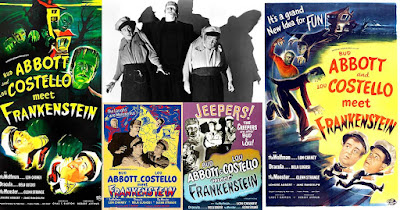
Now there are some personal caveats here for me as I was reading. I like both the English and Spanish versions of the 1931 Dracula (both reviewed here) so I was a little disappointed to find that the writer does not seem to like this film much at all. And, with an extensive ‘also ran’ index including capsule reviews for such notable entries as the Flash Gordon and Buck Rogers serials (those four reviews found in my index also), I was not happy that that, though it was a 1949 film and therefor outside the field of this book somewhat, one of my favourite Universal monster rallys, Abbott And Costello Meet Frankenstein (reviewed here) was not mentioned more than it was. Especially since it was Lugosi’s second and final time playing Dracula and Glenn Strange’s third time as the Frankenstein monster. 

That being said though, Universal Horrors - The Studio’s Classic Films 1931-1946 is another very thorough and well researched tome that illuminates the classic movies and also gives new leads to some of the less available ones... which some people, especially in the UK, may not have had the opportunity to see. Although the Eureka Masters Of Cinema label have been doing a great service to Universal Horror fans in recent years with the likes of their Blu Ray Boris Karloff collections and their complete Inner Sanctum boxed set. So, yeah, if you are into these classic monster movies then this is certainly a ‘must purchase’ I would say... so I wait with baited breath for a fourth book in this loosely held together series of fascinating and indispensable tomes. Great stuff. 

Sunday, 26 January 2025

Sinister Serials


Killer Serials

Sinister Serials
of Boris Karloff,
Bela Lugosi and
Lon Chaney Jr

By Leonard J Kohl
Midnight Marquee Press Inc
ISBN: 9781887664318


You’ve got to hand it to Leonard J Kohl. Researching this book in the ‘VHS age’ must have been quite a challenge, certainly a little less easy than it would be these days but, this man has done as thorough a job as anyone could do and you have to admire the detective work involved in a tome of this nature.

Sinister Serials of Boris Karloff, Bela Lugosi and Lon Chaney Jr pretty much does what it says on the tin, by examining the often neglected side of cinema, the serials (probably less books written about this part of the American cinematic legacy than any other aspect of the art, I suspect) and then applying it to three great actors who owe their fame to the Universal monster productions and, at least in the extent of two of these actors, who had their talent fostered by Universal, achieving mostly rewarding careers. So the book covers the serial productions of William Henry Pratt, Bela Blasko and Creighton Tull Chaney, better known as Boris Karloff, Bela Lugosi and Lon Chaney Jr.

What it doesn’t do is give much more than just a little of the personal history of each of these, instead choosing to focus just on their serial work, which is something a lot of people won’t know much about, I suspect. I didn’t realise until I read this that these three had made so few serials between them, truth be told. Karloff made twelve, Lugosi made five and Chaney Jr made seven. The book does, however, fill you in on where each actor was in his career at the time they came to make these serials. For Karloff the acting was sometimes his second job, for example... and it also looks at how Karloff and Lugosi both approached Hollywood by treading the boards on stage first. Which is interesting because it wasn’t until Lon Chaney Jr, coming out from his father’s shadow and working in films soon after his dad’s death, starred as Lennie in his well received stage production (and the subsequent movie version) of Steinbeck’s Of Mice And Men, that the studios realised he could handle more interesting acting roles.

Of the three actors in question, it was Karloff who was the only one of the three to star in a few fair silent film serials before he made the transition into the talkies but many of the serials he was in didn’t survive and there is no documentation left either... but the author has tried to work out which ones he was in from evidence like a few surviving film stills. I suspect Karloff may have made more but Kohl has given his best educated guesses, so to speak... and there does seem to be some evidence to back up all of the included claims.

One particular serial in which Karloff had a minor role is certainly one which I would have loved to have seen but, alas, it is among the missing presumed destroyed list (the silver nitrate stock possibly melted down to extract the silver). I found it most interesting that he was included in an American chapter play remake of Louis Feuillade’s 1913 film serial adaptation of Fantômas. I had no idea the Americans were making stuff like this at the time and I have to wonder if the title character has the edge to him he did in both the original novels and the French film serial.

The book only runs for six big chapters (roughly half the length of a talkie serial) but Kohl manages to say a lot within them, even going so far as to give notes on the music used (and reused) in some of them... as well as getting first hand accounts from the sons and daughters of the actors in question, not to mention the heirs of various actors and directors who used to work with them... including the likes of Ford Beebe Jr, which is a name I’m sure a lot of serial enthusiasts would have time for. I also now know why there’s no first serial before Lugosi’s star turn in The Return Of Chandu... it was a sequel to a movie in which Lugosi played a different role entirely, it turns out.

And I think I’ve said most of what needs to be said here. Sinister Serials of Boris Karloff, Bela Lugosi and Lon Chaney Jr is a fun tome and loving homage to the serial phenomenom itself, not to mention the three ‘horror’ personalities of the title. A well researched and enlightening book which every fan of the format will likely embrace. So if you’re a lover of such serials as The Hope Diamond Mystery, King Of The Kongo (technically the first talking serial), Shadow Over Chinatown, SOS Coastguard, The Phantom Creeps, The Three Musketeers (reviewed by me here) and Undersea Kingdom, then I reckon you will want to dip in between the covers of this particular tome sometime soon.

Sunday, 7 August 2022

The Raven (1935)


Surgeon On The Rocks

The Raven
USA 1935
Directed by Lew Landers
Universal/Eureka Masters Of  Cinema
Three Edgar Allan Poe Films of Bela Lugosi
Blu Ray Set Zone B


Warning: As of some spoiler gently spoiling, spoilering at my chamber door.

So it was time for me to revisit, courtesy of Eureka Masters Of Cinema’s Blu Ray edition of three Bela Lugosi films adapted from the works of Edgar Allan Poe... Lugosi and Boris Karloff’s follow up to their successful pairing in The Black Cat (reviewed here). The Raven is, once again, one of the many Edgar Allan Poe works which really can’t be translated into something cinematic all that well and, despite the number of films with the same title made over the decades (which claim to be just that)... well... The Raven is a poem for starters. Which is just another abstract thing which allows movie makers purporting to adapt it to just do their own thing with the mention of the original material before going over to their own narrative. This one, in the opening credits, says that it’s “Suggested by Edgar Allan Poe’s immortal classic” and, yeah, I guess that’s about as honest a credit as you’re going to get for one of these.

The film starts off with a famous dancer, Jean (played by Irene Ware), crashing her car off a cliff edge and then laying comatose in hospital, at deaths door. Her father, Judge Thatcher (played by Samuel S. Hinds... you know, George Bailey’s dad in It’s A Wonderful Life, reviewed here) insists that the genius Doctor Vollin, played by Bela Lugosi, is brought out of retirement against his will, to save the life of his daughter. He does and, although Jean is due to marry Jerry (played by Lester Matthews), Vollin becomes infatuated with her, despite the disapproval of her father (and with her not realising he is serious in his pursuit of a younger woman).

Then, a criminal on the run, Bateman (played by Boris Karloff, somehow sneaking top billing and billed only as Karloff) tries to force Vollin to alter his appearance. Vollin does so, by cutting the nerves on the back of Bateman's neck, leaving him with a grotesque appearance of a slipping rubber eyeball and slack mouth in what is, frankly, the most laughable makeup I’ve ever seen by the master of the craft, Jack Pearce. In order for Vollin to change Bateman’s appearance to something more appealing, he blackmails him into helping him ‘take care’ of Jean, Jerry and the Judge in a dinner party at his secluded house. There, he tries to kill all his guests with torture devices which he has constructed himself, said to be inspired by the work of Poe but, by this time Bateman himself has fallen for the charms of the girl and helps everyone to escape, crushing the mad Vollin in a chamber with slow closing walls.

It’s a fairly mean spirited film, it has to be said. Not exactly a horror film at all but this didn’t stop the BBFC in the UK using it as an excuse to not allow anymore horror films to be imported into the country for a while. Karloff plays a kind of anti-hero character quite well and Lugosi plays the whole ‘mad doctor’ bit to the hilt, squeezing every drop of insanity out of the role. So from an acting point of view, it’s business as usual from Universal with, you know, ‘a good cast that’s worth repeating’ all round.

That being said, even though there’s no real connection to the story by Edgar Allan Poe, it really does try quite hard to justify it’s title. For instance, when the audience first meets Lugosi’s character, he is sitting by the side of the shadow of his stuffed raven, reciting the words of Edgar Allan Poe’s poem in his own, phonetically learned manner. And it turns out his character has the biggest collection of Poe memorabilia in his house, the envy of other collectors. And, as a surprise to Vollin for saving her life, Jean dances in a ballet sequence based on Poe’s The Raven, with an actor even done up to look like the writer on stage with her at one point.

The last section of the film, dealing with Vollin’s hand built torture chamber and the ‘guests’ he has trapped there has, at its centre piece the slowly descending, pendulum knife from Poe’s The Pit And The Pendulum and, since it so dominates certain scenes of this movie, I have to say I’m surprised that this wasn’t also the title used for this movie. Especially since the last film made with that title prior to this one was all the way back in 1913. So, yeah, not quite sure why that didn’t happen but, well, at least Vollin has a stuffed raven so, yeah, there’s some small tie-in at least. And, at one point, Vollin does try and shoehorn his situation into the famous poem somehow, although it really doesn’t fit things all that well.

And I don’t have much more to say about The Raven, to be honest. The black and white photography, shot design and lighting are all quite stark and interesting, as many films of this era and, if you like the Flash Gordon serials, well a load of the music in this was tracked into the first serial a year later (and reviewed by me here). If you like the old Universal classic monsters, well... aside from not having any real monsters in it and not being a strict horror movie, The Raven is definitely in the same vein and something you should maybe take a look at. Eureka’s new three movie set of this, gathered together with The Black Cat and Murders In The Rue Morgue (reviewed here) is definitely the best I’ve seen these movies looking and, if this is your kind of thing, it's worth the upgrade, for sure.

Sunday, 17 July 2022

The Black Cat (1934)


Werdegastly
Delight


The Black Cat
USA 1934 Directed by Edward G. Ulmer
Universal/Eureka Masters Of  Cinema
Three Films of Bela Lugosi
Blu Ray Set Zone B


While it’s nowhere near the first ‘Edgar Allan Poe’ movie to do so, the 1934 version of The Black Cat certainly continued and upheld the tradition of being almost nothing of consequence to do with Poe’s short tale, despite the opening credits heralding it as being “Suggested by the immortal Edgar Allan Poe classic”... well, you can suggest and you can certainly lead a black cat to milk but, you can’t make it drink. I don’t blame the writers and director here for making something which has barely any relation to the so called source material... they weren’t the first and they surely won’t be the last. You see, if you’ve read Poe’s tales you’ll know that his short stories rarely lend themselves to having any of the kind of substance that would lend well to a cinematic retelling. They’re moody, short slabs of atmosphere and attempting to extract a screen story from them must prove almost impossible for some writers. That being said, one of the Poe inspired versions of The Black Cat put out by Hemisphere in the 1960s (which I’ll review on here this week) is pretty darned close and shows just what can be done with an enthusiastic approach.

This version was the first of eight films to team up Universal’s newest horror superstars, Boris Karloff and Bela Lugosi. The film also features a freshly married couple as protagonists, Joan and Peter, played by Julie Bishop and David Manners. Manners himself, of course, already had experience playing the leading, male romantic interest opposite both Lugosi (in Dracula, reviewed here) and Karloff (in The Mummy, reviewed here). After a coach wreck on their wedding night, en route to their honeymoon, the two newly weds find themselves pitched up, along with Lugosi’s Dr. Werdegast, in a fine looking mansion built on the grounds of an old fortress where Werdegast and the man who built it, architect Poelzig (played by Karloff), both served in the first war, 15 years prior. The two have a score to settle but the young couple keep them polite before Poelzig makes his play to sacrifice young Joan in a satanic ritual with his friends and add her perfectly preserved body to the ones he keeps in his cellar... along with Werdegast’s dead wife who he killed, while also having married Werdegast’s daughter. Yeah, it’s all very strange since she can only be 15 - 17 years old (as opposed to Karloff’s 47 years at the time) but the 'grudge keeping' Werdegast, who is mostly portrayed in a sympathetic and heroic way here, doesn’t find out any of this until the three of them are forced by circumstance (Joan is injured in the crash) to stay the night.

I was always blown away by the music on this thing since it was tracked in a few years later and reused for the second of the Flash Gordon serials, Flash Gordon’s Trip To Mars, including the striking title music by Heinz Roemheld. The film is a very short 65 minutes but it’s a delight, with the director making use of the wonderful house by using ample vertical lines built into the design of the interiors to contribute to some lovely  shot compositions, compartmentalising his actors in their own, allocated portion of the frame space. Later, in a satanic cult scene, he makes full use of a wonderful diagonal, double cross set of beams to further enhance his beautiful black and white photography.

Everyone does a great job here in terms of performance too, with Lugosi playing slightly off type (for him, he would soon become more associated with villanous roles) although, his heroism is somewhat compromised when his character makes good on his promise to skin Poelzig alive, which we see him doing in silhouette in a sequence which suffered many censor cuts in various countries. There’s also an interesting moment, when Werdegast’s man servant is shot, that we see blood coming out of his mouth... I’m not sure if this was the start of that particular cinematic cliché but blood was in short supply in terms of being show in movies at that time (unless it’s a pre-code thing and I’ve just not seen enough of them... certainly it's an element which was less enhanced in the various Universal classic monster movies of the time).

Poelzig, in an iconic looking role from Karloff with his big widow’s peak and stylised features (it’s this version of Karloff which was used as a caricature on the bag design for the second branch of Forbidden Planet, which opened in London in the 1980s, along with James Dean, Marilyn Monroe, Clint Eastwood, Jane Fonda, Mick Jagger, Debbie Harry, David Bowie and Robby The Robot), was partially based on a famous Austrian architect of the same name and, it would seem, partially based on the famous British satanist Aleister Crowley. Indeed, it’s been reported that this is the first film to feature the idea of satanic cults but, honestly, I don’t think so. Surely satanism must have been mentioned, at the very least, in the 1922 classic Häxan... so maybe ‘first American made movie’ might be a more accurate description.

Either way, although Poelzig as played by Karloff is certainly the more charming of the two starring roles, he’s definitely the more villanous in this one. He must be the villain because, at one point, he is seen playing Bach’s Toccata And Fugue In D Minor on a pipe organ so... he must be bad, right? Whether that choice of instrument and specific piece of music was a cliché at the time this was made is unknown to me... but it’s certainly become one over the years, for sure.

Fans of The Monkees’ amazing cinematic excursion Head will be interested to know that this is where the famous “Supernatural perhaps... baloney, perhaps not.” exchange between Lugosi and Manners takes place. The film is grim but never drags and, frankly, the use of various bits of music which would go on to become staples in the three Flash Gordon serials means that, someone like myself is always going to be tapping their toes as the film plays out anyway. So that’s me done with the 1934 version of The Black Cat, which is a film I can’t help but recommend to those who love the old, black and white horror classics. Edgar Allan Poe might disapprove of being associated with this, since the only shout out to him is Werdegast’s fear of the black cat who wanders around Poelzig’s house, but with great, stylised acting to match the great, stylised sets, good music and perverse things going on in the cellar... what more would you require?

Friday, 8 July 2022

Murders In The Rue Morgue


Morgue One

Murders In The Rue Morgue
USA 1932 Directed by Robert Florey
Universal Blu Ray Zone B
As part of the Eureka Masters Of Cinema
three film Lugosi/Poe slipcase edition.


Murders In The Rue Morgue was one of Edgar Allan Poe’s great and much loved tales... and a fairly important one at that. A classic (indeed, the classic) locked room mystery tale, it is considered to be the first ever detective story. Indeed, I seem to remember that it’s quite overtly referenced in the first of Arthur Conan Doyle’s Sherlock Holmes stories. The central character, one C. Auguste Dupin, an amateur detective, appeared first in this short story and then in two further Poe stories... The Mystery of Marie Rogêt and The Purloined Letter... making him, I think, Poe’s only ever recurring character (if I’m wrong on that, please let me know in the comments section below but I don’t remember him having had any other recurring characters... although it’s been a long time since I revisited his works).

The 1932 ‘adaptation’ of the story, and I use that in its loosest term, was almost a consolation prize of sorts. Florey and the central star Bela Lugosi (who was fresh off his iconic role as Dracula, a part he’d played numerous times on stage and finally on screen, reviewed here), were supposed to be making Frankenstein next but, they were removed from the picture when James Whale wanted to make it and so they were assigned this movie instead. It was heavily cut down to 61 minutes after some reshoots and, I assume, the original (and I suspect far stronger) version of the story, is lost to either time, wilful destruction or vinegar syndrome.

This version of the tale really isn’t a version of the tale at all, although it kind of keeps the murder scene of the story but reveals ‘how it was done’ at the same time... with the ‘trained ape’ culprit being seen right from the start here when the hero of the piece, the bizarrely renamed Pierre Dupin (and remade as a medical student to keep him on the trail of the film’s main antagonist), takes his girlfriend to a street carnival and they see the ape man and his master, Dr. Mirakle, played by Bela Lugosi. Mirakle enthusiastically believes in Darwinism and is up to mad experiments which have him killing various ‘ladies who won’t be missed’ in an effort to somehow fuse his pet chimp with human DNA. It’s a far cry from the Poe short and when the chimpanzee/orangutan (depending on if you are close up or long shot... when close ups of a real chimpanzee are cut against long shots of a man dressed in an ape costume) grabs the leading lady (played by Sidney Fox) and makes off with her after a ‘version’ of the original crime scene from the story, quite near the end of the picture... it would probably re-enforce a feeling you might already have. That being that, it's for sure Florey’s version of Murders In The Rue Morgue is more or less a remake of the hugely influential The Cabinet Of Doctor Caligari, with Lugosi’s sinisterly single eyebrowed Mirakle standing in for Caligari and the ape standing in for Cesare The Somnambulist.

Indeed, shots of the town in which it is set, seen through windows earlier in the picture, are slightly twisted, very artificial looking sets and painted backdrops very closely aligned to the German Expressionist movement as depicted by The Cabinet Of Doctor Caligari and, there’s almost an attempt to make things look even weirder, by having a passer-by casually riding a big penny farthing cycle across the set in one shot (although, to be fair, the period is right for this). Also, some of the way the shots are fragmented by verticals and horizontals to section and highlight characters is very interesting. The staginess of one of the sets, where Lugosi’s bound victim is disposed of by a trap door, makes me think of this little sequence as being inspired also, perhaps, from the Grand Guignol theatre performances in France (the film is set, we are told, in Paris of 1845, before those shows were performed but... I definitely see the influence of these here in 1932).

The film has a lot to offer in terms of creativity away from the sets too... although the props do let themselves down a bit when Dupin’s illustrated medical notes are bolstered by facsimiles of exactly the same sheet of paper duplicated to make it look like there are more of them. The camerawork is magnificent including a truly gobsmacking (for 1932) extended sequence where the leading lady is swinging back and forth on a big swing with the camera somehow rigged to the swing and looking slightly down at her, as she stays central in the shot and we perceive the landscape around her (and us) moving around violently. Another great moment is when the fourth murder is being committed. From the outside of the locked door, as the screams are loud and fierce, we see a bunch of people gathered on the stairwell of the apartment building and the camera cuts to very rapid close up reaction shots of various figures in a quite extraordinary moment of what is almost Eisensteinien ‘typage’.... but sped up to almost overload the perceptions and create a very sinister feeling. It’s an amazing couple of seconds.

I last saw this movie as part of a US DVD boxed edition decades ago but, I have to say, the Blu Ray restoration of it here by Eureka Masters Of Cinema is truly stunning. It looks like the thing was shot last week. Such a crisp and blemish free experience... this is absolutely the best way to see this film (and I suspect their accompanying treatments of The Black Cat and The Raven will be similar revelations). The film is presented both in it’s original version, with pretty much no background music (as was in keeping with this period... this lack of an underscore being thrown out as an idea just a year later when King Kong proved that you could successfully still heighten drama through music in a talking picture) and also with a version where Universal has added some more underscore (which I eschewed watching in favour of looking at it properly). There are, however, two very interesting uses of music on the opening and closing titles. The film opens with exactly the same musical opening as The Mummy from the same year, similarly falling back after the opening bars on the Swan Lake music which marked similar Universal Horror branded pictures of the times. The end title music will be especially familiar to people who remember the third episode of Flash Gordon Conquers The Universe (reviewed here), when Dr. Zarkov leads a rescue party for Flash and his colleagues, who have been buried under an avalanche... this is the same piece of scoring used here, although what it’s originally from I have no idea, although I always loved this music as a kid (it’s not from Les Preludes, as was a lot of the music from certain sections of that serial).

And that’s me done on this one. Murders In The Rue Morgue is a film which, like the other two films in this set, owe very little and bear not much relation to the Edgar Allan Poe tales that they purport to be adaptations of, quite prominently, in their marketing. It certainly owes much more to The Cabinet Of Doctor Caligari and it’s great if you love watching movies of Bela Lugosi playing mad scientists (of which he did a fair few, from what I can remember seeing over the years). If you like these films, this new Blu Ray transfer is absolutely amazing and definitely worth the price of admission, to be sure.

Wednesday, 29 December 2021

Abbott and Costello Meet Frankenstein


Wilbur Seeing You
For The Last Time


Abbott and Costello
Meet Frankenstein

USA 1948 Directed by Charles Barton
Universal Blu Ray Zone B


Lon Chaney Jr: I know you'll think I'm crazy, but...
in a half an hour the moon will rise and I'll turn into a wolf.

Lou Costello: You and 20 million other guys!


Abbot and Costello’s movie career was flagging somewhat, from what I can remember. I can’t find my reference for that now but I’m pretty sure the highly successful comedy duo were nearing what would have been a natural break in their careers, possibly for good. And then somebody came up with the idea for Abbot and Costello Meet Frankenstein which, despite Lou not initially liking the script, they at least agreed to try.

So three years after the cessation of Lon Chaney Jr’s contract with Universal, following what everybody thought would be the final film to star three of the classic franchise monsters, House Of Dracula (reviewed here), he was re-employed to make this film, which has Abbott and Costello playing two postal workers, Chic and Wilbur. Chaney would obviously replay his role as Lawrence Talbot, aka The Wolf Man and the film would also see the return of both Count Dracula and the Frankenstein monster. It’s kinda ironic given the title, I suppose, that Abbot and Costello don’t actually get to meet Frankenstein himself, of course, just the monster which became synonymous with this fictional name but, yeah, I guess we can forgive the marketing people on the movie for this grave error, to some extent at least.

Bela Lugosi returned to the role he made famous on stage and also on screen in the 1931 version of Dracula (reviewed here) and, it was a somewhat belated but welcome return for sure. Although he’d played other vampire roles for other studios over the years, such as the truly great movie The Return of The Vampire (reviewed here), this was only his second and final time playing the famous Count, brought to the world from the writings of Bram Stoker.

Also returning for another shot at his role was Glenn Strange, who was playing the Frankenstein monster for the third time, after his turns as the famous character (after Boris Karloff, Lon Chaney Jr. and Bela Lugosi had all had a go at the role) in House Of Frankenstein and House Of Dracula. That being said, when he damaged his ankle on set, Chaney Jr once more doubles up for him in a few shots in the movie, most noticeably the scene where he throws one of the two leading ladies out of a window to her death. It’s interesting to note that, for the first time, Glenn Strange actually gets a few lines in the role, reminding the audience that the monster can, in fact, talk when he puts his mind to it. He could also laugh, I guess because he ruined a lot of takes of certain scenes reacting to the improvisational shenanigans Lou Costello brought to his role when playing scenes opposite him.

The two leading ladies are Lenore Aubert and Jane Randolph, who both feign romantic interest in Wilbur here for different reasons... as a way of getting them to their own personal goals. Randolph is an insurance agent, Joan, trying to track down (as is Chaney’s Lawrence Talbot) the big packages containing Dracula in his coffin and the Frankenstein monster. She thinks Wilbur knows where they are because they are accused of stealing them somehow due to some earlier, well performed tomfoolery in the first third of the picture.

Dracula’s interest, along with that of Lenore Aubert’s character Sandra, is to revive and make a slave of the Frankenstein monster. His actual motivation as to why is left unclear but,as he says, he needs a different brain inside the fleshy casing. The brain of someone who has... “No will of his own. No fiendish intellect to oppose his master.” Which is why Sandra is trying to entice Wilbur to her castle laboratory... it would be fair to say she doesn’t want him for his body, just his brain.

And, it’s a hoot. There are some nice set pieces and, although this wasn’t quite the first film to fuse comedy with horror, it’s certainly the one that shows you how it can be done right and, the simple answer is... to play the comedy straight. That is to say, the three classic monsters are taking the proceedings of the film absolutely seriously. The characters are respected and their playing out a typical Universal horror movie plot. And then you add the comedy around and with them via the two lead actors, Bud and Lou. And it works really well and certainly the audiences thought so. This film completely revived the two comics’ ailing career and saw them continuing on in movies for quite a while. The box office receipts were very healthy on this, especially seeing that the film was the second cheapest picture Universal produced that year but then was their second biggest money maker of the year. That’s a good return and it’s a shame this didn’t also help the ailing careers of the classic monsters, who would not return on screen for Universal for many decades.

It’s been said that the film should not be treated as canon with the other Universal monster movies that came before it and not be seen as, for instance, a direct sequel to House Of Dracula, because of the ridiculous jumps in continuity. After all, the Frankenstein monster and Dracula (played by John Carradine in the previous two installments) had met their end and, also, Lawrence Talbot had been cured of his lycanthropy in the previous film... only to be living with the wolf man’s curse again in this one. My personal take is, especially considering the actors in the roles, that there certainly is continuity for precisely the same reason. I mean, have you looked at the continuity between films for those last few? It’s atrocious and so the lack of logic in the continuation of those characters here is actually very typical of the franchise... so it obviously is part of the whole bunch of them, as far as I’m concerned.

There are lot of good things about the movie. Abbot and Costello work nicely here and are fairly amusing. Costello breaks the fourth wall a few times by mugging at the camera and it kind of makes the audience complicit and engaged with the storyline, to some extent. When he glances directly into the camera to push a point or impress himself by accidentally pulling a table cloth off a chest without disturbing any of the objects on it, it almost feels like you are interacting with the film and it’s a real plus in terms of the.... well, I was going to say credibility of the characters but, maybe I should just say, it’s a real plus in arousing your sympathies and making sure you are rooting for the right characters to come out on top.

There are also several bad things in the film, mostly in terms continuity, it has to be said. One big problem for me is that, in a scene where Lugosi is biting Lenore Aubert’s neck to bring her completely under his spell, we can clearly see him reflected in a mirror. Even in the last movie (and certainly in the first when Lugosi initially played the role) it was always established that a vampire casts no reflection so, yeah, the internal logic of the creatures goes out the window with this final film in the series. Which is a shame but, as I said, the Universal monster movies were not exactly known for their tight consistencies.

So, yes, a big box office hit which, I might go so far as to say, saved the careers of Abbott and Costello but which saw the demise of the monsters although, it would not quite be the last of Universal’s monster movies. There are still a few more reviews for me left to write in terms of the classic Universal monsters. For instance, an uncredited voice appearance of Vincent Price turns up in the punch line to this movie as The Invisible Man and, although Price would not go on to play him for a third time, The Invisible Man would meet Abbot and Costello in an upcoming film. As would, of course, another iteration of The Mummy and, yeah, I will be covering those films too plus, of course, the fifth and last of the classic, big Universal franchise monsters, who would only ever appear opposite Bud and Lou on their TV show. I’m talking of course about the trilogy of movies top lining the Creature From The Black Lagoon, the first of which you will find reviewed here. So, yes, join me soon for some more Universal monster shenanigans.

Monday, 7 June 2021

Frankenstein Meets The Wolf Man


Creature Crossover

Frankenstein Meets
The Wolf Man

USA 1943 Directed by Roy William Neill
Universal Blu Ray Zone B


Well this is a great little movie. Affer the bravery of Universal's previous classic monster picture, The Mummy’s Tomb (reviewed here), where they killed off both male leads from the previous movie within the first 20 or so minutes, here they came up with what was, I think, another first. Correct me if I’m wrong but I believe Frankenstein Meets The Wolf Man was the first time that two sets of characters from different franchises under the same company had crossed over in a movie.

So, yeah... remember when Universal were trying to resurrect their monsters a few years ago to make a Dark Universe so they could ultimately pitch all their monsters together in each other’s films (something I still wished had happened because I thought the Dracula Untold and The Mummy reboots were fine)? And remember when everybody said they were just trying to build an interlocking franchise in the style of Marvel’s Avengers movies? Well I was angry about that accusation then and I still am. If anybody has a right to cross over their franchise characters it’s Universal with their classic monsters. They were doing it before anybody else was, back in 1943 (and for the rest of the 1940s, as you’ll see in some future reviews) and, like I said, I’m pretty sure this was the first time that this kind of cross pollination film was done.

This movie serves as a proper sequel to both The Wolf Man (reviewed here) and The Ghost Of Frankenstein (reviewed here). It starts off with something unusual for these particular films at the time... the credits are over a ‘moving background’ of a hand which fills a smoking test tube, which carries on frothing as the credits continue... instead of the usual static shots one would associate with a Universal horror picture title sequence. Then we get a shot of something which, although constantly mentioned in The Wolf Man, was never actually seen in that film. Namely, a shot of the full moon. And don’t’ worry if you miss it... there’s lots of shots of it, to make up for its absence in the prior picture, throughout Frankenstein Meets The Wolf Man.

So the film starts off four years after The Wolf Man with two tomb robbers in Llanwelly cemetary... “Here rest the dead of Llanwelly” we read on a stone as we look at the establishing shot. The tomb robbers break into the Talbot family vault in the hopes of finding Lawrence Talbot’s coffin and stealing the gold watch he was buried with. They find the correct one easily enough because it bears the legend... “Lawrence Stewart Talbot who died at the youthful age of thirty one R.I.P.” However, instead of a skeleton they find that Talbot has been somehow preserved, with wolfsbane placed over his body. When they remove the wolfsbane, this and the full moon shining through the tomb resurrects Talbot and transforms him back into The Wolf Man... played once again by Lon Chaney Jr (who is billed, as he is in a fair few of these movies now, as just Lon Chaney).

After ripping the throat out of one of them, Larry Talbot’s half living body is found in Cardiff the next morning by police and taken to the hospital. After much questioning by both Patric Knowles as Dr. Mannering and... “Why if it isn’t Mr. ‘Olmes”... that’s right, Dennis Hoey as Inspector Owen (best known for his continuing role as Inspector Lestrade in the Basil Rathbone Sherlock Holmes movies), nobody believes his story so, after more inadvertent murdering, he gnaws his way through a straight-jacket and flees to Europe in search of Maleva, the gypsy woman whose son, played by Bela Lugosi in The Wolf Man, bit Talbot in the previous werewolf film. He finds her and they go looking for Dr. Frankenstein, who Maleva says will know how to cure him by death, since Talbot seems to be invincible now. Maleva is, once again, played by the wonderful  Maria Ouspenskaya.

Cut to... the Frankenstein plot. The Monster has had the brain of Ygor (played by Bela Lugosi in the previous two Frankenstein movies) put into his head and it turns out he’s somehow escaped the fire and is preserved in a block of ice under the ruins. Talbot finds him and breaks him loose. And, yes, Bela Lugosi is the actor who, this time around, is underneath the Frankenstein monster make-up. Meanwhile, Dr. Mannering shows up in Vasaria, having tracked down Talbot to see if he can help him but, instead, becoming fascinated by the secrets of the Frankenstein monster.

Added to this cast of characters and actors we have the gorgeous Ilona Massey from Invisible Agent (reviewed here), taking over in the role played by Evelyn Ankers in The Ghost Of Frankenstein, to play Elsa Frankenstein in this one. We also have a justice of peace kind of character played by Lionel Atwill (who was in a load of these Frankenstein flicks, of course) and a charmingly outspoken pitchfork brigade villager played by Frankenstein movie stalwart and Renfield extraordinaire, the always watchable character actor Dwight Frye. This would be his final movie as he was struck down with a fatal heart attack just a couple of months after shooting, at the age of 44.

And its the usual shenanigans of the standard Universal monster picture with two monsters for the price of one and with the added bonus of Lon Chaney Jr’s continuing ‘doom laden hysteria’ take on Larry Talbot. This guy is on a downer in every film and, even in a song and dance number for a festival he’s attending, he manages to have some kind of aggressive depression fit and tells everybody off for singing at him that they should all live forever. He only wants to die... so leave him alone folks.

The film has some really lovely stuff going for it too. There’s some great use of shadows and the director gets a lot more depth in the shot than is usual for these kinds of movies, using a lot of upright foreground verticals such as stone columns or trees to help create more interesting frames. It’s not as spectacular as, say, Son Of Frankenstein (reviewed here) but this is certainly some quality work and I think this film gets somewhat overlooked in the hierarchy of Universal horrors. Also, the inevitable fight scene between the two monsters at the end of the picture is just that. This film in particular really goes for it... as we see the Frankenstein monster and the Wolf Man tossing each other around like a couple of wrestlers. The confrontation scenes in these kinds of films are often a bit lacking but... not here. Even though it’s only one scene right at the end of the picture.

If you remember the last one... the ‘Lugosi’s brain’ version of the monster is supposed to be blind but he could talk. Well, there were a number of scenes where Lugosi has conversations in the movie but, due to preview audiences laughing themselves silly every time Lugosi’s thick accent would come from the Frankenstein monster, all of those scenes were cut from the movie and we’re left, once again, with a dumb creature. If you look carefully, though, you can still find evidence of those scenes where the story would have suffered if the shot had been cut... where Lugosi’s mouth is moving if you look closely but his audio is eradicated. It would be nice to finally see these scenes restored but, alas, it’s probable that the excised footage has been destroyed because, well, it’s not like Universal hasn’t looked for this stuff.

My only real complaint is with a scene where Dr. Mannering and Inspector Owen are talking in Mannering’s office in Cardiff. We see him reading from a hardback book and then he goes to a shelf, takes out another, similarly hardbound tome but, then replaces it on the shelf with the book he’s reading. What the heck? What kind of filing system is that? How are you supposed to keep everything in a nice order if you just re-house books will nilly on a shelf. Complete madness. Maybe I should have seen that as a sign that he’s going to be up for ‘fixing’ the Frankenstein monster later in the movie because, surely, the mis-filing of books makes for totally ‘mad scientist’ material!

Okay, that’s me done with Frankenstein Meets The Wolfman. I still love this movie and always cherish the chance to watch it in sequence with the other films in this series. The next one in this particular Frankenstein franchise would, of course, feature three classic Universal monsters for the price of one but... you’ll have to wait for my review of House Of Frankenstein before I get onto that.

Thursday, 25 February 2021

The Ghost Of Frankenstein


Surgical Terror

The Ghost Of Frankenstein
USA 1942 Directed by Erle C. Kenton
Universal Blu Ray Zone B


It was never meant to be so but The Ghost Of Frankenstein, these days, acts more as a ‘link in continuity’ kind of movie (just like the atrocious Back To The Future II links two far superior films). It’s the last of the Frankenstein movies which had an A list budget (although it was still significantly slashed from the previous installments) and perhaps a sign that, with the B-movie status bestowed on pretty much all of the Universal monster movies that saw out the rest of the 1940s, the box office returns were perhaps less spectacular. Universal would attempt to do something about that in the very next Frankenstein movie but... I’ll get to that when I review Frankenstein Meets The Wolfman.

This one is an odd one... it’s the only one in which Lon Chaney Jr dons the Frankenstein’s monster make-up in the proper continuity of these films... officially that is. Unofficially he also doubled up a few shots in a couple of the upcoming movies but, this is the one where Chaney Jr (billed here at the end of the credits but without the Jr) started to become the man who had the honour of playing four different Universal signature monsters. This was filmed just over a month after his starring role in The Wolf Man (reviewed here) and he would later go on to play The Mummy and, arguably, Dracula (yeah, it’s a hard call on that one but I’ll get to it when I review that particular movie).

It’s starts being odd straight off, when several characters who were killed in the last one are all clearly fine again here. So two of the council men, murdered by the monster in Son Of Frankenstein (reviewed here), seem none the worse for wear. Alive too is Ygor, once again played by Bela Lugosi, even though Basil Rathbone’s character had shot him dead in the last film. The one excuse given for this spoken is, and I quote, “Ygor does not die that easily!”

Another odd thing is that the film kinda starts off in reverse, in that it plays out what seems like it should be the final scene of a typical Frankenstein movie first, with the villagers following the advice of a cameo appearance by Dwight Frye (who would appear twice in this film but only once with new footage as this uncredited character), by raising pitchforks and lighted torches and blowing up the now deserted Castle Frankenstein with TNT. Unknown to them is the fact that the TNT has helped dislodge some of the hardened sulphur encasing the Frankenstein monster (remember, he was knocked into the put of sulphur by Rathbone in a heroic moment at the end of Son Of Frankenstein) and Ygor rescues the now ‘alive again’ creature, the white of the sulphur covering his body and helping the trailers no end with the footage to sell the idea that the actual ghost of a Frankenstein monster is in this film to justify the title to the audience. It doesn’t but, they do have a proper justification later in the film, as ridiculous as that is (yeah, don’t worry, I’ll get there).

The creature loses his white covering fairly early on but of the things which always worries me about this film is the costume he’s wearing when he comes out of the sulphur. It’s just the typical suit the monster always wears but, if you remember, when the monster went into the sulphur as Boris Karloff, he was wearing a snazzy, furry waistcoat. Does sulphur discriminate and dissolve such cool fashion statements? Only the costume department at Universal knows for sure, I guess.

So, anyway, the basic plot of this is Ygor and the monster go to another village where the hitherto unknown ‘other son of Frankenstein’, “Ludwig Frankenstein MD - Diseases Of The Mind”, has his psychiatric practice. He is played by Cedric Hardwicke, is assisted by the nefarious Dr. Bohmer (Lionel Atwill returns to the franchise here as another character) and lives with his daughter Elsa Frankenstein (presumably named after Elsa Lanchester but played by Evelyn Ankers, straight off of The Wolf Man), who is in love with the local police chief played by Ralph Bellamy (fresh off the same movie). Ygor wants the Doctor to put his brain into the monster and, by a strange twist of fate and treachery, actually gets his wish... so really, in all the appearances of the Frankenstein monster in the rest of the franchise, Ygor’s brain is in it... although this is pretty much ignored after the end of the next movie.

I said Dwight Frye appears twice and he does, as Fritz alongside Colin Clive in flashback footage from the original Frankenstein (reviewed here), as Elsa reads the notes of the original creator. This must be a way of filling up screen time cheaply but it’s kind of a stupid way of doing it because, in order to really justify the title, there’s a scene which probably doesn’t last more than two minutes where Ludwig is visited by the blurry ghost of his father. And he’s blurry because he is also played by Cedric Hardwicke but, frankly, even though he’s blurry, he both looks and sounds nothing like Colin Clive... so why they took the time to remind the audience of Clive’s performance I’ll never know. Well... I guess the answer to that is... they just didnt care. After all, nobody was going to see the film ever again after 1942 right? Commercial television was not around, as yet.

And the film trundles along to its inevitable conclusion and it’s entertaining enough, although not as great as any of its predecessors. It was nice seeing Richard Alexander again as an uncredited villager... people will best remember him, perhaps, for playing the original version of Prince Barin in Flash Gordon (reviewed here) and Flash Gordon’s Trip To Mars (reviewed here... he was replaced by another actor for the third serial)... but there’s not much more to recommend it. In a nice touch of symmetry (and perhaps I’m being kind here), the villagers burn down the institution with Frankenstein and the monster in it. The monster’s optic nerves have failed him because when Atwill’s character switched brains on the doctor, he hadn’t realised he was a different blood type. The creature does know how to talk now, though and, he does so in the voice of Bela Lugosi... something which would be a casualty of post-production on the next film, if memory serves.

And that’s about all I have to say about The Ghost Of Frankenstein, to be honest. A necessary and fairly entertaining watch in the series but this definitely doesn’t reach the heights of the films which came before. Great title... so so movie but, certainly enjoyable at worst. The next film in the Frankenstein series would, of course, see the humble beginnings of the Universal ‘monster rally’ film, being a sequel to both this and The Wolf Man.

Tuesday, 30 June 2020

Son Of Frankenstein


Heir Gloom

Son Of Frankenstein
USA 1939 Directed by Rowland V. Lee
Universal Blu Ray Zone B


Warning: Some spoilerage here.

So this next review of my rewatch of the classic Universal Monsters movies is another of my favourites... and it’s probably not hard for most people to see why. This is easily the best looking black and white movie of the 1930s that I’ve seen and the latest Blu Ray set from Universal certainly shows off the crisp monotone photography to its advantage. I’ll get back to the look of the film in a minute.

Son Of Frankenstein starts off a little differently to how I remembered it, with an opening sequence that highlights Bela Lugosi in the role of the convicted and hung murderer Ygor... who returned to life after being pronounced dead by the coroner some years before. This is followed by a town meeting scene which, if it does anything other than look nice, is all about reminding the audience just who Frankenstein and his creation were. We then cut to Basil Rathbone as the titular character, Baron Wolf von Frankenstein, his wife Elsa (played by Josephine Hutchinson) and his young son Peter (Donnie Dunagan), on a sleeping car train bound for the town where Wolf’s father did his infamous work. For some reason, the village is now called Frankenstein itself which, as we are aware from the mood of the villagers in the earlier part of the film, does nothing good for the tourist trade. This sequence, as they rumble into ‘Banhof Frankenstein’ shows off just how good the dialogue writing is here. Wolf is talking to Elsa about his father’s accursed legacy and he just gets up to the bit where he is about to say the family name...

“... nine out of ten people call that misshapen creature of my father’s experiments...”

when the railway porter shouts out “Frankenstein! Frankenstein!” to announce the stop. It’s a wonderful piece of early dialogue juxtaposition, taking two pieces of dialogue of differing intent and then rubbing them together to push the meaning of the first. It also nicely underlines the mistake of the commonly held assumption that the monster itself is called Frankenstein when, clearly, it is not.

Now lets talk about Rathbone here for a minute because he was at a turning point in his career. He did, however, detest appearing in horror movies although he would appear opposite Boris Karloff again in Jacques Tourneur’s 1963 AIP Edgar Allan Poe cycle entry, The Comedy Of Terrors, of course. His lack of respect of the horror genre might explain why this one is a little bit ‘all over the place’ in certain scenes he performs here but it’s easy to watch and a lot of fun too. I’ve always had a soft spot for Rathbone and you have to remember that this was only a year after he had played the villanous Sir Guy of Gisbourne opposite Errol Flynn in the definitive Robin Hood  movie, The Adventures Of Robin Hood. His very next film after Son Of Frankenstein and released in the same year would be the one which was the first time he played the role which he is probably best well known for to this day... playing Sherlock Holmes opposite Nigel Bruce (as Doctor Watson) in the first of a long series of films and, also, a large number of radio shows starring the pair too.

He is, of course, ably supported in this by some great Universal regulars such as Boris Karloff, reprising his role as the Frankenstein monster. Now, despite the monster being able to speak in the last installment, The Bride Of Frankenstein (reviewed here), here he is once more rendered mute with no real explanation as to why. I love what he’s wearing in this too... instead of the dark jacket he’s wearing what can only be described as a furry tank top and it looks great. This is my favourite fashion look for the Frankenstein monster, for sure. This was the third and final time Karloff would play the role of Frankenstein’s creation but not his final role in a classic Universal Frankenstein movie, as you will see in an upcoming review. His scene with Rathbone as he discovers himself reflected in a mirror is quite long but expertly done as we see the monster pantomime various emotional states while he tries to come to terms with his hideous looks. This is pure cinema although, it has to be said, that when we have assassinations performed by the creature who then stages things to look like an accident with some considered thought, he does at times become the very thing that Karloff was afraid he would become with more exposure in a series of films... a professional killing machine.

Then we have Lionel Atwill, who appears in a number of these Universal monster movies but whose career was ruined just a few years later due to a scandalous sex orgy and rape party which took place at his home. Although he’s going to appear in a few of the films I will be reviewing after this, he died of lung cancer only seven years after Son Of Frankenstein was released. Of course, in this he plays the wonderfully Germanic Inspector Kogh, the one armed police inspector who is trying to find out who is doing all the killings in the village (funny how all the people who died are the same people who condemned Ygor to death). Even without the one armed police inspector in Mel Brooks’ Young Frankenstein being based on him, his handicapped shenanigans in this do often border on the comical... especially when he plays Wolf at darts and sticks them all into his arm to store them as he is taking his turn.

By the way, when did it become normal to have only three darts to throw per player? Not before 1939 I guess because here they are playing with five a piece. The reason for Kogh's handicap however, is far from comical. His history goes that, when he was a young toddler, the Frankenstein monster was busy terrifying the villagers and he ‘tore his arm out by the root.’ Of course, once this information and disability is introduced, you just know it’s going to come back and be revisited on him again and, sure enough, in his final confrontation with the Frankenstein monster in the film, his artificial limb is torn from him by the monster, who tries to use it as a club to keep everybody back.

The basic plot of this is of Wolf trying to restore the long surviving monster in his father’s laboratory while trying to ignore the obvious that Ygor is using him as a killing machine while warding off the questions of the inspector... until he is finally threatened himself and after shooting Ygor dead with three bullets to the chest (although this is not enough of a mortal injury to prevent Lugosi reprising his role through the course of the next Frankenstein movie). He then finds himself trying to rescue his son who the monster has stolen from him in revenge for the killing, ready to throw him into the pit of sulphur which the laboratory was somehow built over. And, again, once you know there’s a pit of sulphur under the lab, it’s no prizes for guessing just how the creature will meet its supposed end in this film, after a bit of swashbuckling action from Rathbone saves the day when he swings from a winch and knocks Karloff into the pit. Then we watch a not so great dummy of the monster sink below the bubbling surface.

But enough of the story... it’s the look of the film which is where the strength of the picture lays. This is the Frankenstein film where the set design and lighting go ‘the full Caligari’ with amazing twisted geometry and dark, distorted blacks which reflect straight back to the German Expressionist form of cinema from which they derive, as fleeing film crews deserted Nazi Germany and pitched up into Hollywoodland. Just amazing angles and things that sit strangely within the beautiful, slanted compositions such as, for example, chairs with amazingly tall backs that only a giant would truly be able to appreciate. These are further highlighted by some beautiful shadow work. You know that scene at the start of the bar fight in Raiders Of The Lost Ark, where Spielberg emphasises people by having their shadows arrive first... well that style was always straight out of the 1920s/30s where that kind of emphasis on the look was common.

For example, there’s a wonderful moment where Rathbone follows Lugosi into a kind of tomb-like approach to the laboratory. Rathbone’s silhouette, completely black, is framed perfectly in the doorway at the centre of the shot with his shadow cast down below him and into the laps of the audience at the foreground of the shot... then Lugosi lights a torch on the wall which instantly allows Rathbone’s full figure to materialise out of the silhouette, while still maintaining the shadow... expert stuff. Another shot where Rathbone’s shadow precedes him up a ladder, through a hatch in the floor before Rathbone follows it up into the shot, is also mesmerising. And even the shadow of a ladder that Rathbone descends from in one scene, has a twisted rung accenting the strange and angular set design. Like I said, it’s one of the best looking and best lit movies of the 1930s you are ever likely to see.

There’s also an interesting addition to the Frankenstein legend in this one. Wolf’s research reveals that, unknown to his father, it wasn’t just the lightning he summoned into the creature which gave life to the creation that Karloff so brilliantly plays on screen. It was, in fact, according to this iteration of Shelley’s creation... cosmic rays. These had already been known about when Victor Hess discovered them in 1912 and my guess is they were still fresh in people’s minds since Hess had won a Nobel Prize in Physics for his discovery only three years before this picture was released. So that’s kind of interesting I think (and yes, I had to look that up when the words were uttered on screen... I had no idea as my first exposure to the term myself was as a kid in a reprint of the first issue of Fantastic Four from 1961).

I’d better mention the music too, while I’m here. This was the first of the classic Universal horrors to feature the music of Frank Skinner (who was often paired with Hans Salter in later movies in the various monster series). It’s a classic score and the one which, despite the strength and influence of Franz Waxman’s score for the previous Frankenstein film, ended up becoming the classic, ‘brand sound’ for the Universal monster movies that followed it. Lots of this was recycled into other horror films by the company over the years and it became quite evocative of a certain kind of genre package, especially after the various films aired on television in the late 1950s when it gathered a lot of recognition and a large following with film music fans. The montage sequence where Wolf cures the ailing monster is almost as splendid as Waxman’s creation music from The Bride Of Frankenstein and the score is even used, in this film, in a metatextual manner in two scenes. In those scenes, Ygor is seen playing a bizarre looking kind of flute/horn and the tune he plays is... Skinner’s main monster theme to the movie. So, again, a nice touch and, perhaps, somewhat ahead of its time.

And there you have it. Not much more to say about Son Of Frankenstein other than... it’s an absolutely brilliant film and worth the time of any true lover of cinema to sit down and study. I can’t over emphasise the sheer spectacle of the mise en scène in this movie... it’s absolutely gorgeous and there’s absolutely no way you can go wrong with a film of this calibre. The last great Frankenstein movie... not the last fun or watchable one, for sure but, in terms of greatness, this one was the absolute peak of perfection for the Universal Horror series and the success of it convinced the company to resurrect its now, almost retired, monsters for a huge amount of sequels throughout the 1940s... all of which I hope to review for you on here some time soon. If you are any fan of not just horror movies but the art of cinema in general then, this one is simply not something you’d want to miss out on. So good.

Tuesday, 31 October 2017

Dracula (1931)


Tod Browning’s Ghoul Days

Dracula
USA 1931
Directed by Tod Browning
Original and also rescored version.

Dracula (Spanish audience version)
USA 1931
Directed by George Melford & Enrique Tovar Ávalos
Blu Ray Zone B


Okay, it's about time I got around to writing about my beloved Universal Horror films for this site. The time seems about right what with Universal launching their shared universe movies which they have rechristened their Dark Universe franchise, albeit with a somewhat shaky start with their new version of The Mummy (reviewed here). Of course, their intended first film in this series was Dracula Untold (reviewed by me soon on this very blog) but the box office on that film meant that it was pretty much a false start for them, though it would be very easy to add the Dracula character from that production into the 'modern times' mix, given the last scenes in that film.

Of course, it's pretty obvious with these first, recent attempts at stand alone movies that the company is wanting to cash in on what I shall call the ‘Marvel Effect’ in terms of box office. The teaming up of established cinematic characters to grab a large, almost unhealthy dose of box office cash. They're certainly not the only company to be doing this (DC's Justice League will be with us in November) but of all the companies going for the gold in this manner at the moment... and this is something I've said before in an earlier review... it’s Universal who can perhaps be forgiven for jumping on the multiple monster bandwagon when you take into account that they already started doing this in the early 1940s (although not, interestingly, with their established Mummy character).

And, though this cross pollinating idea doesn't quite start with their 1931 production of Dracula (pretty much the first horror talkie and a big influence on the output of their competitors at the time)... it actually kinda does, in a way. The monster rallies to come just over a decade later were very much incorporating this character in their cinematic DNA. This marks pretty much the first 'official' version of Dracula on screen... not including the very famous, unauthorised German Expressionist classic Nosferatu, which Bram Stoker’s widow had won a legal case against and for which all the prints were supposed to have been destroyed as a consequence of this legal action (fortunately for us, a couple survived).

The film itself is not based on Stoker's novel as such... and neither are very many of the film versions of it either, it has to be said. Instead it is based on his somewhat simplified stage version which he wrote for his boss Henry Irving. I say “somewhat” because it was filtered through a couple of other writer's versions before it was adapted for Universal... the Hamilton Dean version and the John L. Balderstone version, which he subsequently revised for the screenplay here.

The casting was always supposed to be very different. Various actors had been bandied about for the role until the dream team of director Tod Browning and "man of a thousand faces" Lon Chaney as Dracula were signed. Unfortunately, Chaney died of cancer before the production was due to start shooting and, when there was no one left to cast, Universal snapped up Bela Lugosi... who was really lobbying for the part... for an insultingly small salary. We are fortunate that they chose him though (eventually), because he knew exactly what he was doing with the role since he'd been playing the Count to good reviews in the Balderstone play for an astonishingly large number of performances and, indeed, was instrumental to Universal in acquiring the film rights to the play from Mrs. Stoker in the first place.

Joining him from the phenomenally long run of the stage play were Herbert Bunston as Dr. Seward and the inimitable Edward Van Sloan as Dracula's famous nemesis Van Helsing (easily my favourite screen rendition of Van Helsing and I couldn't imagine this film without his amazing presence as much as I couldn't imagine it without Lugosi's Dracula). Like Lugosi, Van Sloane would play his character for a second outing but, whereas Lugosi had to wait until 1949's Abbot And Costello Meet Frankenstein before he had another crack at his most famous role, Van Sloan would reprise his role of Van Helsing in the first direct sequel to Dracula, the 1936 film Dracula's Daughter. That being said, Van Sloan also turns up in Frankenstein in the same year as this movie and also has a very similar, 'Van Helsingish' role in the 1932 production of The Mummy.

Rounding out the most important members of the cast were Helen Chandler as Mina, Frances Dade as Lucy, David Manners as Jonathan Harker and the absolutely fantastic Dwight Frye as everyone's favourite fly eater, Renfield. Frye's dialogue delivery in this, like that of Lugosi and Van Helsing's, seems almost deliberately slow and stilted, even considering talking pictures had only been going for two years (a silent, intertitled version of Dracula was also released for theatres that hadn't yet had audio equipment put in). This might put off some modern viewers to a certain extent but, if you can get used to the line delivery, it makes for a very rewarding viewing experience totally appropriate to the subject matter and it’s worth giving it a second look to if you couldn't get into it the first time around.

Considering it's the first talking vampire picture (with the lead vampire in question being a very different 'beast' from Stoker's disgusting old man of the novel who was closer, perhaps, to the Nosferatu version of the character) the film never shows the vampires possessing the fangs they are now known for and it never once, in this version shot for English speaking audiences where censorship restrictions were a little more rigid, shows the double puncture marks left in the vampire's victims... although it does, at least, describe them in the dialogue so the audience can get the idea.

There is, of course, no music in this save for the opening titles and the diegetic music (source music from on screen instruments) due to the belief in this period that it would distract from the dialogue. It wasn't until Max Steiner's score for King Kong in 1933 that producers realised the power of the film score in regards to talking pictures (please see my review of King Kong here for the 'strings attached' part of that statement). This, coupled with the unusually pronounced dialogue gives the film a certain eerie quality which it might not otherwise have (and I'll say a little more about 'underscore' in regards to this motion picture in a little while).

In terms of the richness of the visual design of the film, this version has always been viewed as second best when compared to the Spanish language edition shot with a different cast and crew on the same sets and with the same shooting script, through night time shoots when the first production had gone home for the day. I used to adhere to this opinion too but, looking at the two films side by side now, I think they are just very different and the Browning version, shot by cinematographer Karl Freund, is every bit as rich at a visual level, if not more so in some places. I'll get around to talking a bit more about the simultaneously shot Spanish version in a little while.

There's not as much moving camera as in the Spanish version here (as was typical for sound film at this period, the camera was still learning how to be free again and mask the equipment noise) but even where there is fluid camera movement, the Browning version will often cut to a more staged, not quite matching close up version of a character (often Lugosi himself) in much the same way that Sergei Eisenstein used to single out static shots of a character rather than zoom in on them in films such as his classic Battleship Potemkin.

There are many little visual gems in this movie and here are a few of them that I noticed on this viewing:

There's a wonderful scene in the early stages of the film where Dwight Frye's Renfield is standing framed in front of some full length windows in roughly the centre of the screen with his back to us as he looks out. This is intercut with a shot of 'the brides of Dracula' framed in a big open doorway directly opposite that position, echoing the shots both proceeding and succeeding it.

Later on, as Renfield is seen in the hold of the good ship Vesta (actually the Demeter in Stoker's original novel), there is a kind of slightly moving spotlight in the background to give dramatic lighting as he speaks to Dracula in his coffin/crate. This is clearly meant to be the light shining through from an unseen porthole magnified onto the background and utilised for stylistic effect.

There's a particularly beautiful composition in Lucy's bedroom where Lucy and Mina, who is some distance behind Lucy, are sitting in front of a large mirror. In the reverse shot we see Lucy sitting on the left with her back to us, her reflection facing us in the mirror as she talks, slightly taller because of the angle and distance captured in the mirror... and then Mina's relection a little higher still facing us, again due to distance and angle from the reflecting glass. The three bodies in space make an upward diagonal line from left to right, framed by two lamps on either side of the upward frames of the mirror. It’s a pretty amazing composition, as it goes.

In addition to some startling visual designs, there's also the odd moment or two when the editing is just as poetic. My favourite example would be a scene when the main characters are discussing what could have made the two puncture marks on Mina's neck. One of them says, "What could have caused them, Professor?" Suddenly the housekeeper exclaims "Count Dracula!" as if in response to the question but, in actual fact, she's announcing Dracula’s arrival at the house and Lugosi enters in the next shot. It's a nice little touch and it's just these little, electrically charged juxtapositions of interacting elements that make films worth watching in the first place.

The 1998 re-release of the film with a specifically commissioned score composed by Philip Glass is not my preferred choice of viewing, although I have long been an admirer of the music of Glass and, if nothing else, this version serves to illustrate the benefits that having a score can bring to a movie. For instance, the soundtrack detracts greatly from the stilted feel of the dialogue and makes it maybe a little more palatable for audiences not used to such a degree of aural stylisation. Also, the leitmotif quality of the orchestral textures (rather than the melodies, in this instance), clue the audience in to things which the non-scored film was arguably lacking.

As an example of this, there's the shadow of an unrevealed character on a wall intercut in one scene a little before he enters and it’s revealed to be Renfield when he walks on but I don't really think the intention of this shot was to surprise or wrong foot the audience in any way. I suspect it was literally just an insert shot to clue the viewer in to the fact that Renfield has been listening in for a while. The addition of Glass' score makes it a little more implicit that it's Renfield's silhouette because the 'plucking' style of the orchestration which the viewer will have subconsciously associated with the character is used when it appears. This is exactly the kind of thing music in film is good at and Glass demonstrates it very well here.

When I first saw the score performed live against the screen it was in the same orchestration used here, performed as then by the much celebrated Kronos Quartet. However, when I saw it performed a few years later it was reorchestrated for four different instruments (not just strings) and I remember thinking it was a far superior version of Glass' score than the original one issued for home video and on CD. Alas, I've never been able to track down a recording of that version of the Glass Dracula score.

Okay, so the Spanish version, although using the same sets as the English language version, is very differently shot and staged... in some places it's far superior and in others... not so much. It also includes a scene or two not present in the other but, by a similar token, has other key scenes missing. Of the cast of this version, which still uses footage of Lugosi for some long shots to save money, the only three actors really worth looking at are Carlos Villarías as the Count himself, Lupita Tova as Eva (aka Mina) and Pablo Álvarez Ribio as a Renfield who certainly gives Dwight Frye a run for his money but in a much different style (and really, nobody does it better than Frye). The Spanish version of Van Helsing, for example, doesn't possess the same electrical presence as Van Sloane's delivery of the same role, who's stern visual style with the harsh, blonde widow's peak and the thick, milk bottle glasses adds another level of weight to the role which makes his Spanish counterpart seem a much softer, less satisfying variation of the character.

There are a great many differences, far too numerous to mention in an article of this size, in the Spanish movie. Indeed, apart from the same sets and mostly similar dialogue, it's like watching a completely different movie which, in fairness, it is. However, I'll highlight a few of the more interesting comparisons I’ve noticed next.

In the US version you never really see Lugosi rising from his coffin. Instead, the camera moves away and it's implied that’s what’s happened before it either returns or cuts back to a shot of Lugosi standing next to said coffin. Presumably the sight of Dracula groping his way out of his coffin in shot and messing up his immaculate cape was not seen as a desirable element of the film. I can see that. However, all the 'coffin release' shots of the Spanish version are a lot more interestingly handled. Here you see the, usually already half risen, lid of the coffin opening with a mist floating up from within. Then, when the lid is fully raised, Carlos Villarías pops up from behind the coffin lid (which presumably puts no strain on his cloak) and there you have it. Job done and it's much more effective than the English language version in this respect.

There's also much more made of the supernatural manipulation of objects, such as the self opening and closing doors which gave Dwight Frye so much concern in Castle Dracula. In the Spanish version, even the doors on the second coach that carries Renfield to his Transylvanian rendezvous open and close at will with a disturbingly loud groaning. Similarly, there is more emphasis on the title character flying into people’s rooms as a bat before changing into human form. Although you still don’t see the actual transformation, it’s much more heavily reinforced as an idea whereas, in the other one, you may be forgiven for thinking this is not really covered all that well at all.

In the scene where, in the US version, the brides of Dracula go to attack the feinted Renfield but are waved back by Dracula so he can claim him for himself (in a strangely homoerotic subtext found within the trappings of the vampire genre quite often), the Spanish version shows the brides themselves going down to 'vamp Renfield up'.

The differences continue but, some of them are quite odd.

A little more is made of the implied violence as Dracula eats his way through the crew of the Vesta while he journeys to London. However, these sequences include a little less dialogue from Renfield but include a quite incredible, memorable shot of him laughing his head off maniacally as he is framed by the circle of a porthole. A quite menacingly disconcerting shot, as it happens.

That being said, the following scene of Dracula murdering/drinking the Covent Garden flower girl is completely absent from the Spanish version, which is kind of strange. It says a lot about the difference in pacing of more or less the same scenes in the two versions when you consider that the Spanish edition is a full half an hour longer than the US counterpart. However, although the implied violence of this scene has been left out entirely in this version, the twin puncture wounds in the necks of the victims in this are very much a visual presence whereas, as I stated earlier, they were absent in all but dialogue references in the US version. Of course, the costumes on the ladies in question are a lot more racier and low cut than in the US movie so their necks are pretty easily visible all the time (not to mention other bosomy details which their almost transparent attire reveals in certain scenes).

That being said, the scene in Lucy’s bedroom which still does technically take place in a mirror is, while less static, a much more mundane affair in this Spanish version and doesn’t match the visual poetry created in the counterpart scene in Tod Browning’s daytime shoot. Neither is the scene where Renfield crawling across the floor to the unconscious maid as interesting as the version performed by Dwight Frye, which is more dementedly focused as he comes from the back of the shot to the front, rather than what Renfield does in the Spanish version, which just has him crawling in from the right hand side of the frame.

There also seems to be an incredible amount of expository dialogue coming from Van Helsing’s character towards the end of the picture. Much more than the English language version. This is not really a good thing although the ‘hypnotic confrontation’ scene between Van Helsing and Dracula seems a little more elabourate and is intercut with the scene where 'vamped up Eva' is trying to bite Jonathan Harker (or Juan Harker as he is known in this one) and get him to take Van Helsing’s crucifix away from him. Both scenes play out as single scenes in the US daytime shoot version. Likewise, the scene where Van Helsing confronts Dracula with the reflecting box has a much more embellished reaction on the Spanish version of the Count. Bela Lugosi is content to knock the cigarette box out of Van Helsing’s hand but Carlos Villarías uses his cane to smash the box from Van Helsing’s hands here.

Another highlight of the different places the directors took their respective versions to includes the final death scene of Renfield. In the Browning version, he is silently strangled to death and then rolls down the big, circular staircase (which would be reused again in films like Frankenstein) to drop off the last bit out of sight behind a chest. In this version, Renfield is screaming as he is half choked to death before being tossed off the same stairs from the top. He’s also not forgotten by Van Helsing as the movie closes, either... his body is still very much visible and the focus of the Professor's attention in the last moments of the film.

A very important difference, to my mind, would be a scene in the Spanish version which follows the story in which we are treated to a conversation between Van Helsing and Juan that makes it quite clear that the former has driven a stake through the resurrected Lucy’s heart. In the US version, her menacing figure is left undealt with by our heroes. So that’s very interesting because one imagines that these scenes were in the script to be filmed by the other crew... they just chose to omit them, for some reason.

The ‘new’ Universal Legacy Dracula Blu Ray collection contains almost all of the extras from the similarly titled US DVD release of over a decade ago. The films look as spectacular as ever and, in the case of Dracula, have a lot of supporting material including film and Universal Horror historian David J. Skaal’s commentary track for the US version, the alternate Glass soundtrack and the Spanish version of the film... although this last item is as annoying as the previously mentioned set as, if your Blu Ray played doesn’t have a subtitle toggle, there are a lot of shenanigans to be performed to get the English subs up for this. It also doesn’t help that, if you pause it for five minutes and the disc’s screensaver kicks in, it resets the default to stop playing the subtitles when you resume. So that’s not good. However, it is a lovely set with these films looking pretty much better than they ever did before. If you’ve never seen the first authorised versions of Dracula before then this Blu Ray set is a great place to start. Not all the films in the interpenetrating sequence are there (you’ll need the Frankenstein and The Wolfman legacy sets for that) but these are relatively inexpensive sets for the amount of content on them and, unlike the previous Universal Legacy versions, also include Abbot and Costello Meet Frankenstein (and Abbot and Costello Meet The Mummy on the The Mummy legacy set). It’s a great release and it comes highly recommended from this particular audience member, I can tell you that... give them a go while they’re still out there. Besides, where else can you see a Dracula film where the title character actually has Armadillo’s running around his castle? Not that many, that’s for sure.