Showing posts with label cinema. Show all posts

Monday, 21 March 2022

12 Years Of NUTS4R2


Physical Excavations

12 Years Of NUTS4R2

Okay, so it’s Friday night and I just discovered my 12 year blog anniversary is only three days away... not a month or so as I’d thought. So, faced with something of a rush deadline for this post (anniversary posts and additional 100 count posts being something I like to keep as a separate entity from a standard review), I thought I’d talk here about something which has been worrying me as of late... the switch from physical releases to streaming services. And not just for movies too... but for their soundtracks.

Okay, so streaming services got very popular over the pandemic... so did physical services actually, with record sales of Blu Ray and DVD players but, yeah, they're still far from the popularity, with the kiddies, of the streaming services. And I think this is a bad thing, not just from my end as a consumer who wants a movie (or indeed score) in a proper physical release but, also because I think the switch towards streaming is going to harm the art of film making to a certain extent.

I write this as various labels renowned for their physical releases... companies like Criterion, Arrow and even the BFI... have started up streaming services. They often have licences for other labels to stream alongside their own product too... I think the Arrow one has stuff produced by Severin and/or Vinegar Syndrome, for example... so I can half see the appeal. But it worries me that these companies are starting up these services, not only in direct competition with all the usual (some might say ‘evil’) suspects like Netflix, Disney and Amazon Prime... they’re also competing with the option of buying one of their own physical releases over their streaming alternative. Now, as far as quality goes... yeah, HD streaming looks fine but I still think a decent Blu Ray blows it away when it comes to quality. That’s only half of my worry though.

Firstly, labels like Criterion, Arrow, Vinegar Syndrome, Severin, Eureka Masters Of Cinema, 88 Film, Indicator, Second Sight, 101 Films and various other boutique labels are producing high quality product for various film-makers and in terms of physical releases, at present... we’ve really never had it so good. Although, with the current trends, I don’t expect that to last. Reading between the lines on comments I’ve heard from label producers from listening to a few podcasts, there seems to be a sense in the industry that film makers want their films to be released on decent quality Blu Rays with a slew of extras right now because many of them feel this is the last shot at a physical release they’ll have, to get their film looking the best it ever could. A kind of library copy for the future, if you like, showing the film in all it’s glory as opposed to what its possibly shoddy future on streaming is, if indeed it has one. So I believe physical media is the preferred choice for the majority of movie makers in the industry at the moment.

And lets look at those extras. There are various documentaries about a product, some invaluable commentary tracks (mostly the best commentaries are on older films but, yeah, everything becomes an older film at some point, right?) and various other extras which give the purchaser a very good look at not just the movie but the historical context of the film too... via digital press books, trailers, TV spots and even, in the case of many Indicator releases, the 16mm film projector cut down versions for selling commercially to collectors in the 1960s and 1970s. Now, I know some streaming services do carry the odd film with a commentary track or some kind of ‘marketing extra’ but, a lot of them don’t (I would suggest the majority of them don’t but that really is just a guess based on what I’ve read about them)... so we’re heading towards a time, once physical media production and the hardware which can access it has ceased production, where all this extra content could become a thing of the past... or only found as relatively low quality versions on the likes of YouTube but, rarely made specifically for a release anymore, I’d wager. And, hey, I get it! If you’re a casual movie watcher then you probably don’t watch most of this stuff anyway (and I don’t often find the time to explore that many of the extras as I’d like)... but for people who really love and appreciate film, this scenario is a bit of a nightmare, truth be told.

Not to mention the many horror stories I’ve read over the past few years on the likes of Twitter, where people are no longer able to access the film they want on any streaming service and so have gone shopping for the physical release, only to find it’s out of print and fetching silly money on the secondary market. These people have had the range of choice removed for them because they didn’t snag a longer lasting physical copy while they were still able to. They find their favourite film is no longer streaming at the present and, if it’s a relatively obscure film which means a lot to just a handful of people, based on the number of times it was streamed in the past, there’s a good chance it won’t be returning to a streaming platform anytime soon... or indeed, possibly ever. Bye bye favourite movies. 

 Look at what's constantly shown on the former terrestrial TV stations these days, if you don't believe me... where the same old films are repeated over and over within days of each other.

Also... and I think I’ve mentioned this before on this blog over the years... streaming is either going to kill the art of film or, at the very least, dumb it down somewhat... at least in terms of what will get green lit. At the moment, various film makers are loving companies like Netflix and Apple because they are funding films they want to make which they probably couldn’t get the money for at other studios not wanting to take a risk (for now)... Duncan Jones’ Mute springs to mind. But let’s just take that movie as an example of something which got funded which, as it happens, is a really good movie. Well for starters, it’s not available on physical media and, just like most of, say, Disney’s various TV shows, probably never will be. But most people haven’t got the money to subscribe to a load of different channels showing the content which that service has got the license to exclusively. Who has the money for Netflix, Amazon Prime, Apple, Disney Plus, Shudder, HBO etc?

So, sticking with the example, many people haven’t seen Mute (legally... I myself only managed to see it because I caught one of only a few screenings at a cinema one weekend in London, on very limited performances). Most people don’t know what they’re missing and don’t care... but what that leaves us with is a movie which is making ratings numbers just from people who have whatever channel it’s on. It doesn’t have the chance of a proper box office take in both a wide release pattern cinematic venue (where people can usually see content from all the studios and independents without having to turn up at a specific cinema only showing one brand of film) and it doesn’t have the blind ‘I fancy that’ buy of a person walking into a shop or trawling Amazon and getting interested in purchasing a physical copy behind it either. It’s not something which has had a shot at being displayed on people’s shelves in their home for some significant time and, subsequently, nobody is going to remember it 20 years from now.... they’ll remember the films that they have at home in plain view or the ones at their friend’s house.

And Netflix and their competitors, who are all doing very well right now, opening their own studios etc... won’t have a bottomless money pit forever. If they can’t make films which are giving them Avengers or Star Wars or Spider-Man levels of money at the box office, they’re going to eventually stop bankrolling those big budget spectacles (which, like ‘em or not, is arguably one of the things that cinema is all about... I’m sure Georges Méliès would agree with me here) and settle for less risk projects. Given to producers, directors and artists who are willing to settle for less.

So, yeah, the shape of film will change because you can’t keep taking risks on projects which don’t, through their venue, have a shot at getting back a big return short term. And, okay, yay! We might get more independent, low budget movies for people who like to watch characters talking about ideas and love stories and various other lower budget things... which are also what cinema is about. But, unless we can somehow create a receptive culture where a significant chunk of young audiences, which account for the bulk of cinema and, I suspect, streaming revenue (in whatever form that takes) can get into this stuff ... then the audience won’t be there for those movies a lot of the time... they’ll have switched to computer games (which is where the future of cinematic storytelling may be anyway but, yeah, I’m not yanking on that thread here, today). So, films will run the risk of dying out or become the rare, deluxe item that are catering to a smaller percentage once more... just like current physical media enthusiasts. Except, in this scenario, the newer stuff with the smaller budgets and no attention to bonus features will lose out considerably to the cinematic legacy of what made a mark before, rather than what will be the current shiny thing, in whatever form that is. So we will still be talking about Star Wars and James Bond movies, for example, fifty years from now whereas, various other non-historical franchises will possibly crash and burn.

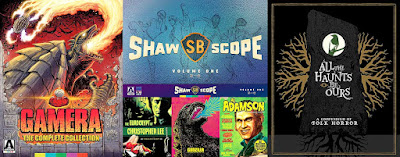
So, anyway, that’s my cheery warning of a thought to film lovers and a shout to buy all the lovely, rescued and restored, bonus features clad physical media releases while you still can. Some of those recent box sets of the last few years such as All The Haunts Be Ours, The Eurocrypt Of Christopher Lee, Shaw Scope, Marlene Dietrich At Paramount, Sam Fuller At Columbia, Cinematic Vengeance, Mae West In Hollywood, Hemisphere Horrors, The Al Adamson Masterpiece Collection... and a whole host of others I could name, are absolutely worth their weight in gold and, if you get the opportunity, you should take advantage of these releases while you still can. Pretty soon their ilk may not be seen again.

Anyway, that’s my 12 year anniversary post written and hopefully some of you will be reading this in a few days time (Monday 21st March 2022). And if you are, thanks so much, once again, for reading and, yeah, there should be some interesting reviews coming up very soon. 

Thanks for dropping by.

Tuesday, 5 October 2021

The Bodies Beneath


Flipping Celluloid

The Bodies Beneath
by William Fowler and Vic Pratt
Strange Attractor Press
ISBN: 9781907222726


The Bodies Beneath, a curious tome by William Fowler and Vic Pratt, was something of a blind buy for me. One of those books you come across as an interesting looking Amazon recommendation when you’re searching for something else and, to be fair, it certainly turned out to be a better, more informative purchase than the book I set out to order (I’m keeping the review of the other tome I bought to myself because it was so dire). That being said, however, I think it’s fair to say that I found the book fairly interesting rather than out and out saying I enjoyed it. Not that this reaction  to the book should in any way negate the value of the tome in question, by any stretch.

The book is subtitled... or at least marketed with the tagline... The Flipside of British Film and Television and this is because the two writers, William Fowler and Vic Pratt, are the two minds behind the BFI’s Flipside screenings of recent, not too long gone days and also the spin off DVD/Blu Ray Flipside label where a wealth of truly interesting treasure has found a modern audience. So, whatever I personally think of the writing in this one, they certainly have proven themselves to be valuable members of the film community in this country (and globally, as it happens) and have done some valuable work for the cause of the moving image.

Their modus operandi here... or at least their justification for both a title parodying an old Andy Milligan movie and a binding rationale for the contents of the book... is that they are unearthing long lost gems of British cinema, TV and short works which have mostly long been hidden (debatable) or inaccessible to the degree that they have vanished almost without trace from contemporary memory.

What this really means is that the writers do dredge up some interesting works along the way as they each write separate reviews of vanished (and not so vanished) gems from the past and combine a few reviews apiece into each, thematically binding chapter. Those chapters being The Tunnel Of Love, Out Of Towners, Kid’s Stuff, True Stories, The War Room, Music And Movement, Fantastic Fictions and Tales Of Terror. Although, it has to be said, I found some of the linking themes unconvincing in some cases and there are many works described here that, of course, would easily cross over into other chapters.

What surprised me is that, amongst the truly obscure stuff such as the Cornish dance documentary Oss Oss Wee Oss, the sadly lost Cricket Match On A Fishing Smack During A Heavy Sea or the depiction of Anthony Newley’s big budget self destructive, not so cleverly disguised fictional autobiographical feature Can Heironynous Merkin Ever Forget Mercy Humppe And Find true happiness?... there’s also quite a few things that are both not forgotten by anyone and quite often easily available with your Amazon click finger. For example, there’s a whole section on Danger Man in the Tunnel Of Love chapter, which is a chapter dealing with sexuality. To be fair, it brings in Patrick McGoohan’s reasons for turning down playing James Bond (he was sought out for the role and offered it before Connery) and how he didn’t allow the frivolous sexuality of those kinds of characters on his shows but... yeah, obscure it isn’t. And, I’m sorry, the writers may think that nobody these days know about Arthur Lucan when one of them is detailing the interesting events which lead to the movie Old Mother Riley Meets The Vampire, where Lucan (Old Mother Riley) co-starred with Bela Lugosi... but I think he’s dead wrong about that. In fact, as I type this, I know that there’s a DVD box set downstairs of Old Mother Riley films ripe for borrowing and exploration if I ever get the time (I was privileged to see Arthur Lucan’s surviving stand in doing the Old Mother Riley act at a seaside theatre once, as a teenager).

There’s some interesting stuff too, of course, which would no doubt still be fairly obscure such as Secret Rites and Legends Of The Witches, if it had not been for the phenomenal efforts of the two writers to get such films resurrected on Blu Ray in recent years (you can read my review of these two gems right here) and also ‘banned by Government from transmission TV’ films like The War Game are certainly things I may keep on my radar for viewing at some point. But there are also a lot of errors in even some of the 'not so obscure' stuff. For instance, on a section about the first of the two live action TinTin films, TinTin and the Golden Fleece... the writers appear to be too young to remember, or even know of, the hugely popular, much loved cartoon show which was later replaced by something quite different and modern... a TV phenomenon which really has vanished and has since become a holy grail object for people of a certain age (not to mention the unreleased 1947 stop motion movie of The Crab With The Golden Claws... which also gets no mention here and is arguably a lot rarer).

I think the thing which rubbed me up the wrong way a little is that one of the writers... and I won’t say which one... seems to be more interested in delivering clever puns and somewhat condescending commentaries about the subject he’s purportedly attempting to lionise (somewhat) rather than giving clear and concise facts and opinions, which is more the territory of the other writer, it seemed to me. Certainly, while I love spending time with people talking about films over a nice whisky and coke, one of these guys would just have had me clamming up whereas, the other person comes across as way more friendly and willing to learn, I think. Of course, the personae coming across in the text is not always a significant overlap into the real life version of a human being so, yeah, I’ll reserve judgement for now.

So, yes, it’s a rag tag gallery of non-sequiter review choices where easily available stuff, such as Colin Baker’s portrayal of The Doctor in the Doctor Who season where the stories were bound together by the overall Trial Of A Time Lord arc, rubs shoulders with Vincent Price’s six episode Cooking Price-Wise series or the much loved movie Electric Dreams but, like I said, I can’t actually say I enjoyed The Bodies Beneath and I am glad to be finished with it, to tell the truth. Having said that, if you are interested in finding out about some relatively obscure gems midst the various dishes on offer here... and if you’re reading this blog with any regularity then you possibly are of that ilk... then I would certainly recommend this one as being something worth picking up for your book shelf because, yeah, a few of the things in here are such that you probably won’t find them referenced anywhere else, I suspect. Not much more to say about this one though... a fascinating and possibly ‘useful in the future’ tome which is worth retaining for when certain titles ‘come up’, so to speak.

Thursday, 21 January 2021

Goodbye, Dragon Inn


Dragging On

Goodbye Dragon Inn
Taiwan 2003 Directed by Ming-liang Tsai
Second Sigh Blu Ray Zone B


Okay... now I can only repeat the ‘plot’ synopsis when I say that Goodbye, Dragon Inn is a film about the very last performance at a cinema. I say that under advisement because, at no time while I was watching this sometimes hypnotic movie was it made clear to me, in any shape or form, that this was supposed to be the final night for the venue. For me, it looked like it was just the last showing at a cinema of any given day and I can only assume that, if this is indeed the case, we would have really needed a subtitle to tell the English audience this because, I’m guessing that detail may well be hidden on a poster on the front of the cinema?

I don’t know but, either way, it’s one of those marvellous films where nothing much happens... or, at least, nothing significant would be perceived to happen by certain kinds of audiences, I would guess. Personally, I think plenty happens... you see a cleaning lady pick up bits of rubbish from the floor for instance... or you see a girl munching on peanuts. So things do happen in the film, for sure... no matter how mundane.

There seem to be three ‘plot’ strands to the film... one following the cleaner/ticket taker going about her business in the cinema while the classic movie Dragon Inn (reviewed here) plays out, in something less than real time. Another strand follows someone who seems to be a gay man ‘cruising’ the customers for someone willing to sleep with him but... I don’t know, I didn’t really understand that stuff at all because everyone involved just seemed hesitant to make anything they are after known and it all just seemed really timid to me. The third, lets call it a ‘point of interest’, is of two of the actors from the original film Dragon Inn sitting in the audience watching it. At the end, as they leave the cinema while we watch the cleaning lady do her rounds and clean the toilets while the projectionist shuts up the building for the evening (or perhaps forever, who knows?), they recognise each other and exchange a couple of lines. That’s about half the original dialogue in the movie there... there’s maybe three or four sentences uttered throughout the entire film although, the claims that the movie has hardly any dialogue also seems to me to be a bit off, since we can hear the dialogue from Dragon Inn playing on the screen for at least a third of the shots.

The film is slowly and deliberately paced and, I guess if you’re only used to certain kinds of film-making then you might be of the opinion that it tends to drag on but, honestly, I felt the pacing was fine on it and I can only assume that half the reviews I quickly scanned on the IMDB, which were polar opposites on the spectrum (it’s a Marmite movie, if you will), were written by movie watchers who have only been fed a strict diet of Hollywood action movies over the years.

Gooodbye, Dragon Inn is totally put together with static shots which the director will hold for long periods of time, allowing actors and animals to walk in or out of a frame at their own pace. For instance, once the film being screened finishes, there is a static shot from the front of the auditorium as we watch the cleaning lady slowly go up and down the aisles cleaning up after the customers before exiting stage left... the static shot with no motion in it is then held for another few minutes or so without interruption (yes, I did check my Blu Ray player to see if it had accidentally frozen the picture).

Sometimes Tsai will give a certain sense of adventurousness to a shot by loading it with depth. For instance, in one shot where the limping, cleaning lady walks onto the screen from behind the camera somewhere, she goes to a door in the top right of the frame, opens it and then leaves it open as she carries on walking to the end of the room she just entered, exiting that room by a similar door in that room in the same area of the screen... the depth of the shot opening out as doors are open like a set of Russian dolls.

The director tends to use extreme vertical framing against different planes within a shot, a bit like in a giallo and, also like in that particular genre of predominantly Italian cinema, he creates more verticals by lighting a lot of the shots with big, bold blocks of colour. That boldness is seriously and, presumably quite deliberately, undercut by the subdued and pastel nature of the blues, greens and pinks which are being pitched against each other (I have to wonder what this film would have looked like if this director had chosen to light and shoot it for black and white film stock).

One interesting moment comes from the multiple musical stings I mentioned in my previous review, which were used to highlight the entrance of various fighting opponents in the film Dragon Inn. At this moment in the original film being projected (which is compressed in time compared to the slowed down temporal mechanics implied by the visuals), the cleaning lady is watching from behind the screen. We see the girl in the original film and then, as each musical sting comes, instead of cutting back to each appearing villain and then back to her, we cut to the face of the cleaning lady and back to her. I’m not sure what the director was trying to achieve with this use of metatextual editing here but, it made me smile at least (and perhaps that was the point).

And there you have it. No music is used in Goodbye, Dragon Inn save for the cues on the soundtrack from Dragon Inn itself, often and obviously playing against the slower shots of the housing film, in stark contrast to the shots with which they are visually juxtaposed. And, while nothing significant happens, you get the feeling that all the humans who populate the movie are wretched and cursed, driftwood from a sunken ship in the flow of life that has been discarded or just plain forgotten. It’s a film which says everything about these people while showing absolutely nothing about them so, if you’re interested in the way the content of a shot and the performance alone can influence the senses as opposed to the use of quick edits (which this is mostly bereft of apart from the musical stinger scene I describe above) or dynamic camera movements, then maybe this film is for you. Personally I found it quite mesmerising in places while other things... like showing a full house at the start and then, when we return to the auditorium after a few minutes have elapsed, showing it bereft of all but a few customers... I didn’t quite understand at all. Definitely an interesting meditation piece though and, one I will probably take another look at some day. 

Tuesday, 9 June 2020

Scala Cinema 1978-1993


Scala’d Lady

Scala Cinema 1978-1993
Slipcase Edition
Written by Jane Giles
FAB Press ISBN: 978-1903254981


I have a confession to make. Although I remember going into the lobby/box office area at least once to check it out back in the day, I don’t think (I may be wrong) that I ever saw an actual film at the famous Scala Cinema near King’s Cross (now, sadly, deceased). That being said, I jumped at the chance to back this Scala Cinema 1978-1993 book on Kickstarter, reprinting all of those distinctive, rough and ready movie timetable posters because of what the Scala meant to me at the time and for the atmosphere it was bound to capture.

You see, I was a college student in London from around the mid 1980s to very early 1990s, first on a general Art and Design Diploma in the Clerkenwell area and then onto my Graphic Design Degree at the London College Of Printing, Elephant And Castle. So I used to pick up those ‘what’s on’ posters all the time and marvel at the world of films which I loved, often showing on these things. I was big on what has come to be known as ‘world cinema’ at the time and the programmers at the Scala would often schedule these in, alongside movies I’d often never heard of at that tender age. I’m sure I wasn’t the only student who used to grab these and then use them to decorate my cubicle at college, both signalling my interest in film to other kids while putting up free advertising for the cinema. These colourful and chaotically designed posters were beautiful things in their own way and, I wish I’d kept more of them. I may have one or two in the loft somewhere but... that’s about it.

Jane Giles, who put this book together and wrote the accompanying text for each and every month of the Scala’s total schedule, was one of the programmers there for a while. She was also, near the end, the one prosecuted when the council finally cottoned on to one of the ‘illegal’ screenings of Stanley Kubrick’s A Clockwork Orange. I guess the younger generation of film enthusiasts don’t realise how good they have it these days. A Clockwork Orange was banned for public consumption until after Kubrick’s death and the only way you could really see it back in the day, asides from the odd cheeky screening at the Scala, was to hop on a train to Camden Town and, more often than not, you would find a guy selling bootleg VHS copies of the film for a tenner a shot (that’s how I first saw it).

But getting back to Jane Giles and her beautiful book...

If it was just the wonderful, full colour reproductions of the fronts and smaller reprints of the backs of the Scala programmes, then the book would be cheap at half price. It’s an attractive tome with a slip case showing a lovely black and white shot of the cinema on one side and a new Graham Humphries poster style artwork commemorating the cinema on the back. The book itself is a monster and has attractive black covers with a gold foil blocked Scala logo on the front and, on the back, a gold blocked portrait of one of the Scala cats (I don’t know which one).  However, it’s not just about the posters and packing, as I soon found out when starting to read it.

It turns out that, not only is Jane Giles a thorough researcher, she’s also a highly entertaining and informative writer and what I thought was going to be the lesser part of the book, her quite voluminous text is actually, on reflection, at least as valuable (possibly more so) than the souvenir and nostalgia rush of the programmes themselves.

The book starts off with a big introduction section where she talks about a lot of things which will spark memories for Londoners. So, for instance, the importance of Time Out magazine to people in the days long before the internet. She also goes through the whole history of the area since the 18th Century and talks about the various buildings and performances in those venues. Additionally, due to its importance to this kind of cinema programming, she talks a bit about The Other Cinema, which I used to go to when it was renamed as the Metro on Rupert Street before... in its final years... it reverted back to being called The Other Cinema again. Saw a lot of good movies there.

And, of course, she goes heavily into the conditions that the cats/staff laboured under and, once the intro is finished, we are into squidzillions of pages of posters set out in double page spreads. On the right hand page is a full colour reproduction of the original poster for a specific month... not quite as large as the originals if memory serves but nevertheless a treat. The left hand page will have a smaller reproduction of the back of the poster, a few stills from films showing that month (or various other ‘items of interest’) and... some accompanying text from Jane.

Which is half of what this book is all about, as far as I’m concerned. She starts off each page with an account... or flavour... of just what was showing that month and this is sometimes accompanied by an explanation of why film x or y might have been included in the programme. She also tells you just what else politically or financially was happening at the cinema that month, makes notes on famous guests and live performances etc and also, and this really brought back the time period for me, tells you what other important events were going on in the UK or the rest of the world in that month. So yeah, Hillsborough disaster, Lockerbie bombing, Hungerford massacre, Steel worker strikes, UFOs in Rendelsham Forest, Thatcherism... it’s all here along with the terrible fire which claimed so many lives at King’s Cross station. It seems one of the late shift cashiers had a lucky escape and I remember a lot of my ‘class mates’ did as well that night. I recall we’d all been staying late to do some life drawing and so we were all travelling home when the fire broke out. I was alright because I was travelling from Farringdon back into Liverpool Street but many of my friends went the other way and I remember stories of lucky escapes the next day. It was a close one but... not for a lot of people that night.

It’s all good stuff and, despite the depressing ponderings of some of those world changing events mentioned above, the book is also full of fun and really captures both the atmosphere of the time (living in London in that period) and, presumably, the heady atmosphere of attending a screening there (not that I’d know that bit, more’s the pity). And some of these double bills, triple bills and all nighters were unbelievably quirky and often didn’t follow any logic... at least that’s the way it seemed to me back then. This was all a part of the cinema’s charm of course. It was certainly postmodern if nothing else... but it was also everything else too.

For instance, you could see a Pigs And Robots Revolt double bill of Blade Runner and Razorback. Or a double bill which somehow connected the 1966 Batman movie with Terry Gilliam’s Brazil. And where else could you watch an all nighter on 22nd March 1980 which would include movies like She Demons and Attack Of The Crab Monsters (one of my favourites, reviewed here) and then follow it up the next day with a screening of Kurosawa’s masterful Dersu Uzala before returning on the Monday for a triple bill of three of The Marx Brother’s early Paramount treasures? Nowhere is where, except maybe for the Everyman at Hampstead but, that’s a different story and quite a different atmosphere, to be sure.

It’s all good stuff and the, actually massive, textual contribution which is the real meat of the book elevates this tome far above and beyond being just another ‘movie book’ for sure. For me, this one is ‘right up there’ with my other favourite and most precious book about an aspect of the cinema, the equally cumbersome to hold and read hardback edition of Tim Lucas’ Mario Bava study, All The Colours Of The Dark. Scala Cinema 1978 - 1993 is that good, a true treasure of a book on movies (and it has my name listed in the back as a financial contributor, to boot... yay, me!). If you’ve been sitting on the fence about purchasing the now dying breed that is the first (and probably only) print run of this book then you really should get on it. It perfectly captures a time and place that many will remember and I certainly wouldn’t want to forget in a hurry. A rich, visual fusion of celluloid themed imagery and some very informative and sometimes even quite moving text. Snap this beauty up while the snapping’s good... I doubt you’ll ever regret it.

You can buy the book from the Fab Press website here www.fabpress.com and from all good book retailers.

Sunday, 30 September 2018

The Greenaway Alphabet


A Pip Off The Old Block

The Greenaway Alphabet

Directed by Saskia Boddeke

2017 Netherlands
Raindance Festival Screening 29th September 2018.


Wow... what an utterly charming film.

The Greenaway Alphabet is a documentary, it is said, about the film-maker/artist Peter Greenaway... although I’m sure that it’s designated as such merely for the convenience of cataloguing the type of film it purports to be (something I suspect, with his affinity for lists and categorisation, Peter Greenaway himself would approve of). What it actually is, in fact, is more an exploration of the artist in relation to his 13-16 year old daughter Pip Greenaway (depending on when various parts of the film were presumably shot or... possibly... when Peter remembers the age of his daughter with any degree of accuracy).

Now, I always liked Greenaway in my teenage years and, very specifically, three films he made in relatively quick succession, all of which will eventually get reviewed on this blog (I have the Blu Ray upgrades, just not a large measure of that man-made phenomenon mistakenly known as time), those being A Zed And Two Noughts, The Belly Of An Architect (my favourite) and Drowning By Numbers (which I well remember seeing at the now defunct but always splendid Lumiere cinema  in St. Martin’s Lane, when it was released into the wild back in 1988). I remember the soundtracks CDs to those films were a common musical background whenever I was working on various art and design projects at College.

Later on, the director’s work slowly disappeared from my life as I didn’t have time to keep up with him but those three films in particular were very much a part of me by then. Interviews with other people and first hand accounts from various collaborators made me begin to think of Greenaway as “a bit of a nutter” in later years but, what this ‘documentary’ does is show us that the man/artist is far from the awkward behemoth some of those collaborators made him out to be and is, instead, a quite interesting and warm human being... as is his daughter Pip, who is seen interacting with him and asking all the right questions to allow her father to reveal himself without the barriers perpetually going up. That is to say... all the wrong questions, which is what makes them so right.

The film is shot, with a lot of love evident in every frame, by his wife and mother of Pip, Saskia Boddeke. She is a multimedia artist in her own right and has collaborated with Mr. Greenaway a fair amount too. The documentary is partially shot, it seemed to me, in a way which might have... only at times... been reminiscent of Peter’s moviemaking with things a bit like the multimedia paintbox of delights movie that is Prospero’s Books. And, of course, the greatest result of their collaboration, their wonderful daughter Pip, is evident in most of the film too.

The film starts off by going through the words and concepts associated with Peter Greenaway as explored by him and his daughter as an alphabet, starting at A, going through to B and, a little way in, deviating from the expectations of the order of the piece by going to a later letter before coming back to one which we covered earlier and then missing out a whole bunch of others. It actually reminded me of the infuriating... but fun... red herring style appearances of some of the 1-100 numbers hidden throughout the frames of Drowning By Numbers but the lovely director Saskia was there at the screening (with Pip in the audience to answer the odd question too) and she explained that it was never her intention to shoot every letter but merely to use this as a starting point, so to speak, to the journey of the film. The title was always going to be The Greenaway Alphabet, however, in memory of the this being ‘a thing’ in the Greenaway household when Pip was growing up.

And I have to say that the film completely surprised me. Not only is it warm and engaging (far more emotionally warm than a typical work by her husband, I would say) but it’s also a lively, visual spectacle too, as the director juxtaposes various images and situations against each other to make sometimes startling visual metaphors, utilising drawing over the images and moving split screen segments to enfold the viewer in an experience which feels, by the end of the movie, something much more than the sum of its parts.

The Q & A at the end of the session was quite interesting and informative about the way different countries reacted to the various screenings. For instance, Saskia pointed out that the mostly British audience for this screening was much more staid and serious than in some countries where the quite wonderful humour of the piece elicited much more emotive reactions... but I guess the sourness of our self expression here is what makes a British audience what it is. So the Q & A was certainly illuminating, although there was an awful moment when one person in the audience suggested that the film was coming from a perspective of  white privilege in the arts. Well, when you have a cast, effectively, of two people... there’s not really much you could do about the racial mix, which I think is what that particular audience member was trying to relate, much to the bafflement of the director (and disenchantment of the rest of the audience, most of whom were probably equally perplexed by this odd question, which seemed almost a non-sequitur in the context of the film we had just watched).

And I don’t have much more to say about The Greenaway Alphabet... not anything I could think of as a valuable criticism, in any case, since the film is just perfect the way it is. I honestly hope this film gets the critical attention and monetary awards it so readily deserves. I would love to have this thing on a nice Blu Ray disc and would hope to watch it again if I ever got an opportunity. It’s almost certainly going to be one of this year’s top ten movies in my end of year list and I would urge any fan of Peter Greenaway... or of art and its importance to the warmth of the family unit... to try and hunt down this film and take a look. A short review for a truly wonderful piece of cinema. This is the only film I saw at this year’s Raindance festival but, honestly, I’m so glad I chose this one. I certainly wasn’t expecting to enjoy it as much as I did... truly remarkable.

Wednesday, 21 March 2018

8 Year Anniversary Post


The Eightful Eight

That’s 8 years.

If you started reading my posts since my first one... that’s how long I’ve been reviewing films on this blog for.

Things have changed a little over the years, though.

When I first started writing this thing, in fairly short reviews for a little while until I started churning out longer articles, I could pretty much review what I liked in terms of the films and books I had laying around. While that’s still technically true now, we are living in an age where, in terms of the moving image at least, there is an abundance of new product... way more than I can personally feel comfortable with.

Quite often these days I just want to sit back and watch a movie I haven’t seen at home but... nope, no time. There’s two to four new cinema releases that week (out of many) and I need to see as many as I can cram into the little time I have left after writing about them rather than spend time on the couch. The blu ray and book piles just keep getting bigger and bigger... because I’m busy neglecting them for watching as much of the new stuff at the cinema that I possibly can. Its just crazy. The last two years in particular have seen, as far as I’m concerned, a lot more movie candidates for spending hours with at the local flea pit than many years before. And even if a majority of them are not all that good... they nearly always look like they’re going to be of some interest to me.

Meanwhile, over in stark contradiction land, we have my other main problem as a blogger these days. Exclusive content distributed by channels like Netflix and Amazon.

I was lucky to see Duncan Jones’ new movie Mute (reviewed here) because, although it’s 'almost' exclusive to Netflix, it did get a few screenings in London and I was lucky enough to catch one of them. Not something I would have been able to check out if I was left to the mercy of the monthly bill for various digital channels.

Films like The Cloverfield Paradox are completely unavailable to me unless I go the bootleg route. You’d think that, since the fourth Cloverfield movie is supposed to hit cinemas this year, the people who made it would want me to see the third one somehow. After all... I’m not going to see the fourth one at the cinema unless I’ve seen the previous instalment. I don’t watch film series' out of sequence. End of.

I also have no chance of seeing Annihilation in this country unless I can snag a copy of the US Blu Ray when it comes out (in the US, the movie had a proper cinema release)... which does nothing to endear me to Netflix either, I can tell you.

Now I can see that, with the kind of audience you’d get on a digital subscription chanel, this practice might be good for the art of film in some ways. After all, the target audience can’t be as narrowly youthful as the cinematic one and that means a wider range of product... albeit, it means that product makes less money back per item (which will also finish them off at some point if they’re not careful). However, it also restricts certain works of art which might have reached an audience via the window of cinema and... that's also a pretty big shop window for Blu Ray and DVD release purchases. This part of the non-crossing over audience are being ignored and, as someone not willing to pay stupid monthly fees for channels like Netflix at the moment (let alone having the time to watch much on there), this is a real kick in the teeth. It also means I can’t review these films for the blog when they come out so... not so great for me.

Yes, I know I’m simultaneously moaning about the abundance of product at the cinema while at the same time pointing out that it’s being excluded in terms of showing specific product but, what can I say, mankind is, perhaps, inherently contradictory.

And that’s me done on this one and I appreciate that this is a very short post but the anniversary took me by surprise again this year. I don’t know why I always think it’s in April.

Once again, I’d like to thank all of you who read this... from dedicated, long term readers to people who have only read a few posts or, you know, only this one... for spending some time here. It’s much appreciated and means a lot to me.

All the best to you.

NUTS4R2
21st March 2018.

Monday, 25 December 2017

Merry Christmas 2017


Merry Christmas to
all of my readers...


It’s been an interesting year and, once again, thanks to everybody who looked at this blog, even if it was only once... it’s always very much appreciated.

I think I’ve proven to myself that there’s absolutely no way I’m going to accurately predict what reviews are coming up in 2018, other than the usual end of year fixtures. Once again, I didn’t even get a fraction of the posts that I wanted to get done up here but, this year in particular, there’s a pretty good reason for this...

I’ll touch on this again in my inevitable End of Year Best Movies listing but I will mention here that, probably the main reason I’ve not got all the films watched and reviewed that I wanted to this year was because my cinema attendance was probably a fair bit greater than usual. Which puzzles me because I’m told that this has been the worst single year for cinema attendance since the 1980s. Well, that may be so but I can confidently say that, as far as I’m concerned, this has been one of the best years for interesting and rich film experiences in cinemas for quite some time. Also, it seems that the Americans have been making some extraordinary product this year too. So, I dunno... maybe when there are really varied and interesting films at cinemas... movies like Wonder Woman, A Ghost Story, Miss Sloane, Brigsby Bear and La La Land... then the kinds of people who do attend cinemas are maybe not necessarily actual fans of fine films. That is to say, maybe they’re there for the buckets of popcorn and an unwavering devotion to the, somewhat stagnant, blockbuster style ‘event movies’ where everything is edited together very abruptly and lots of things explode.

Not that I’m saying these aren't valid expressions of film as art... of course they are (and I love them too)... but maybe the kinds of collective audiences who make up these screenings are so fixated on this kind of, ‘almost exactly the same as any other’ dose of cleverly put together spectacle that they’re missing out on some of the more original and moving product out there. If that’s the case, we are in for a terrible time at the cinemas over the next few years as companies jostle to make an abundance of superhero movies (which are almost the only things which are making any money at the moment) at the cost of everything else. That would be a shame but, on the other hand, if they continue to go down that line then I’m pretty sure the already over saturated market will be delivering some truly worrying box office returns to the companies after a while... and then they’ll start panicking and maybe begin taking a few risks on different styles of cinematic art again... perhaps.

We shall have to wait and see.

Meanwhile, it will be business as usual at the NUTS4R2 blog. Things which I definitely know will be happening are the review of today's Doctor Who Christmas Special within the next day or so... plus the Best Movies of 2017 and, at some point in the next month, the Best Score CDs of 2017. And, of course, my Annual Cryptic Movie Quiz is up and running right here so, if you find yourself at a loose end over the next week, maybe give that a go.

Either way, though, have a very Merry Christmas and I hope this yuletide holiday brings you a brief respite from the strange horrors of the world right now. Have a great time.

Tuesday, 5 December 2017

Filmish


24 Panels Per Second

Filmish 

by Edward Ross
Self Made Hero ISBN: 987-1-910593-03-5


Let me just say right from the start that, although I have some pernickety criticisms of this tome, stemming from my personal passion and familiarity with some of the concepts expressed here, this is actually a great book and it’s certainly not intended to be a negative review. I hope it doesn’t come across as that but I thought I should clear that up right from the start.

One of my biggest worries before delving into Filmish, which is a comic strip in graphic novel form on certain aspects of the art of cinema, was that it would be too close to one of the dream projects I’ve been wanting to produce for years… that being a potted history of the cinema and the language of cinema through the medium of the comic book. As it happens, I needn’t have worried because, while there are some overlaps with what I have been wanting to do, the approach offered by the author here is a very personalised one and he doesn’t go about it in quite the same way that I would have (phew… there’s still room for my project in the world someday, maybe).

The book is presented in seven chapters and utilises a a crisp, clean and quite simplistic black and white line drawing style. It’s interesting because, although the majority of cinematic samples the writer uses to illustrate the points he wants to make are pretty popular, the style of the illustrations pare down the people depicted in a way that doesn’t always make their likeness that recognisable. That being said, it may be a likeness rights issue for all I know and, because the shots the writer has reproduced are just so lodged in the public consciousness, I'm sure most of the references would not be lost on people.

In the first chapter, The Eye, the author looks at the leap from the dawn of film from when early cinema was about recording and displaying the truth at 24 frames per second to when filmmakers like Melies began to astonish people by showing, in the most extreme ways, that film can be used to take people well beyond the harsh realities of living to be transported to an alternate reality. This is what film as art is all about, I would say.

The chapter then looks at the problems of the legendary ‘male gaze’ and then uses that to lead on to the way the point of view of an individual is not necessarily to be trusted. So, of course, Kurosawa’s adaptation of Rashomon gets a look in at some point. There’s also a nice, unnamed panel which accompanies the criticism of the male gaze which is an interesting side swipe at Michael Bay, if you recognise the shot as being Megan Fox looking at the car engine in Transformers… and it’s the smaller, unspecified visual commentaries such as this which add another nice little level to the author’s narrative.

Chapter 2, The Body, looks at the way the human body, in all its variants, has come under scrutiny as the language of cinema, such as the close up and the zoom, advances to capture it. This brings us right up to date with motion capture performance used as the basis of CGI characters where actors can physically inhabit a role in which they couldn’t practically perform before this technology became available.

There’s also the issue of race and the perception of it by various audiences tackled here, not to mention the way in which Hollywood and other countries use the cliché of the racial stereotype to push various agendas.

Similarly, the author takes a look at disability as a short hand for plot points and the way some films use it to define or highlight the difference of villains, in some cases. Among the examples given are the scarred face of Donald Pleasance’s Blofeld variant in You Only Live Twice, the dwarf revealed at the end of Nicholas Roeg’s version of Don’t Look Now (which is a questionable example for the point being made, I think) and the one eyed assassin played by Daryl Hannah in Quentin Tarantino’s Kill Bill. However, one only has to think of the hands of Dr. No, the teeth of Jaws in two Bond films and the bladed legs of the villainess in Kingsman - The Secret Service, to realise just how prevalent this phenomenon has been, and still is, in modern cinema.

And, of course, no look at The Body in cinema would be complete without a look at the ‘body horror’ genre from such directors as David Cronenberg and that’s exactly what we get here.

The third chapter, entitled Sets And Architecture looks primarily at the way these two elements send out important messages to enhance the tone of a movie… such as the hellish depiction of New York in Scorcese’s Taxi Driver or the classic, grimy decay of Los Angeles, November 2019 in the greatest movie ever made (so that’d be Blade Runner, then).

One of the interesting things which comes up in this chapter and which I’d never really thought about before, was how the main protagonists in the Star Wars movies - the Luke Skywalkwers, Anakin Skywalkers, Jinn Ersos and Reys of this world - are basically depicted as growing up in a rural backwater as opposed to the cutting edge technological environment of the bad guys (although I’m not sure that would stand up for characters like Darth Vader or even Lando Calrissian).

Of course, it also mentions the artificially distorted sets of German Expressionist cinema to create a particular statement although, bearing in mind the fact that the chapter is talking specifically about sets and architecture, I found it strange that one of the examples the writer chose to depict here is my blog namesake, the original Nosferatu (if I can get away with calling a movie adaptation of Dracula which couldn’t get the rights to Bram Stoker’s story and then just went ahead and used it anyway… original). After all, the architecture itself is not really distorted in this film due to it being, if memory serves, one of the few German Expressionist films (quite possibly the only one), to use outside locations for its shoot instead of creating them on a set like in The Cabinet Of Doctor Caligari (which is, obviously, also cited heavily here). I also can’t quite forgive the writer for confusing thrillers like Psycho and Se7en with horror movies. They so aren’t horror movies, people.

The fourth chapter is entitled Time and here the author talks about the way time can be 'captured' and transformed… although he appears to cling to a rigid belief in time as something more than just a way of looking at a perceived, man made measurement of linear consumption. Mind you, he does talk about the reliance of the mechanical process of film to establish that measurement and the inevitable way in which the audience perception of such can be altered through techniques such as editing and the way a linear chronology can be happily thrown out the window so… there’s that

In addition, he throws in a quick look at how the content of certain films can alter the way the story is perceived... such as in movies which use time travel as a central plot device, for example.

Chapter 5, Voice And Language, starts off with a look out how the human voice can be altered to enhance the feeling of what a character is all about. By way of examples he mentions Heath Ledger’s truly astonishing performance of The Joker in The Dark Knight and Linda Blair’s famous portrayal of Regan in The Exorcist (voiced by Mercedes McAmbridge if memory serves).


He also goes on to tackle the case of when the entire character is literally just a voice, such as the neutral, measured tones of the HAL 9000 computer in Kubrick’s 2001 - A Space Odyssey. Interestingly, the written language follows on from the audio of the original here in that the lettering used on the illustrations of HAL 9000 is in a much more neutral and formal typeface than the rest of the book… which is nice.

Next for this chapter is a look at how the voice can take on a life of its own and be the main driver of the film. He uses Coppola’s excellent The Conversation here but he also uses one of the lesser know but pretty cool horror movies of recent years, by way of demonstration. That being the language as lethal killing virus ‘zombie’ movie Pontypool (reviewed by me here).

In Chapter 6, Power And Ideology, Ross starts off by going straight for the throat and highlighting John Carpenter's look at the way messages of control are hidden in They Live. He then goes on to cover stuff like soviet propaganda (using all the usual suspects such as Eisentein’s Battleship Potemkin), Chinese nationalism as portrayed covertly in films like Hero and the western as a patriarchal ‘antidote’ to burgeoning feminism.

Included is the almost inevitable section on Reaganist cinema which also makes the point that female characters who don't want to fit into the traditional male stereotype of what they should be are depicted, therefore, as deranged killers such as the antagonist in Fatal Attraction. Another trend which Hollywood doesn’t seem quite ‘done with’ yet.

Another thing covered here are the financial incentives offered by the Pentagon, in exchange for censorship, which  can reward the film maker but with the added string of always showing the military in a good light. Which is nice and informative until the writer makes the big mistake, in my book, of referring to a much loved 1981 movie by the false (no matter how much Lucasfilm want us to adopt this unnecessary retrofitted nomenclature) title of Indiana Jones And The Raiders Of The Lost Ark. I’m sorry but that’s just wrong.

The final chapter on Technology And Technophobia makes the point that, for an industry that’s increasingly reliable on technology pushing the boundaries of what we are able to imagine, a majority of cinema exists by demonising technical progress with killer robots and such like. Even films like the beautiful Japanese ghost story Ringu seem intent to use our technologies against us (in that case, the watching and copying of a VHS tape are used to spread a virulent ‘supernatural terror’ amongst its victims).

It then goes on to explore the pervasive negative portrayal of biological technology too, such as films about organic creation gone wrong like Splice and, well... Jurassic Park. As a counter to this, of sorts, it also briefly talks about films which lionise the concept of consumer friendly technology, especially around the time of the home computer boom of the early 1980s. So there’s that too.

All in all, the clean lines and selective topics scattered throughout Filmish make the book an interesting proposition. I would say that, in some ways, the book is more for the novice in film rather than someone who has at least as much love and passion for film as the author. However, for people who have previously been less inclined to study film as a medium of artistic power, there are a lot of good ‘starting point’ ideas brought up and, thankfully, the writer includes an index of references used throughout to get you looking in the right directions. A good little tome to kick start an interest in the art of cinema and a solid recommendation from me.