Showing posts with label noir. Show all posts

Thursday, 28 May 2020

The Big Lebowski


Bunny Lebowski Is Missing

The Big Lebowski
USA/UK 1998
Written and Directed by The Coen Brothers
Universal Ltd Edition Blu Ray Book Zone B


I remember the first time I saw The Big Lebowski. It was at the end of April 1998 at the Metro Cinema on Rupert Street in London. The cinema is, sadly, now deceased but I remember I was alone and all through the film I was just in awe of what is, frankly, one of the greatest movie comedies ever committed to celluloid... I just had nobody to talk to about it. When I left I realised that the film was one of those rare beasts that is, as I exclaimed to myself at the time, ‘pure cinema’. This is the kind of amazing spectacle that completely justifies the art of film to anybody who would question the validity of the medium. It blew me away and I pretty much dragged a fair few people to see it over the course of the next month. A truly brilliant piece of magic.

I’ve now just got around to watching a limited edition book set I picked up maybe four or five years ago and, although I haven’t had time to watch the supplementary material (as I rarely do), it is packed to the brim with extras. And, more importantly, the film itself really stands the test of time. From it’s opening narrative from the great Sam Elliot to his address directly to the audience at the end of the picture, the film is a pure joy as we follow the exploits of a week or so in the life of Jeff ‘The Dude’ Lebowski, who is set on a mission by his millionaire namesake to be the ‘delivery guy’ for the ransom of The Big Lebowski’s wife Bunny. A job which turns into a convoluted mess of a plot which is an absolute joy to follow as the overly relaxed and accommodating, Fletch-like character becomes inexplicably embroiled in a bizarre double cross of a blackmail plot which is itself exploited by the potential victim of that plot.

I’ve mentioned Fletch above as perhaps being close kin to certain aspects of the character but perhaps only because of the similarity of the tropes of the genre The Coens are following here. This is pure Raymond Chandler/Dashiel Hammet style, hard boiled detective noir but shot through with a slobby but 'adrenalin rush' jab of broad humour and some nicely surrealistic moments... uniting in a work which is an experience first, a film second.

Played expertly by Jeff Bridges, Lebowski is aided or, frankly, more abetted by his companions Walter and Donnie, played brilliantly by John Goodman and Steve Buscemi. During his adventures he meets more and more bizarre characters played by the likes of Julianne Moore, Philip Seymour Hoffman, Tara Reade (as Bunny, who was also perfect in the remarkable Josie And The Pussycats), Peter Stormare and John Turturro, who reprised his role earlier this year as ‘Jesus’ in his film The Jesus Rolls.

The plot is not something I’m going to dig into here... it’s a standard mystery with various reveals but it’s totally not important... the film is completely character driven and though it certainly needs a story to tie the whole thing together (just as Lebowski needs his rug to tie his room together) it is the brilliance of the characters, the people who perform then and the witty script which really maketh the movie here. Being as it’s by Joel and Ethan Coen, who I still find a bit hit and miss on their projects, the whole thing looks great too... and no wonder when they’ve got cinematographer Roger Deakins on board. I especially liked the very sharp focus, brightly coloured and contrasted stuff he shoots the second dream sequence, the Gutterballs porn parody, with. It looks fantastic and brings that whole sense of ‘epic’ to the silliness of the premise. This is a work of genius here, make no mistake.

I also love the way the dialogue kind of keeps refuelling itself from scene to scene too. I think the first two or three times I saw this it took a while to sink in but, the more you see it, the more you realise that a lot of Jeff Bridges’ dialogue is culled from things he’s heard other people say in a prior sequence. It’s amazing how somebody will say something to him in one scene and he will then say the exact same phrase he’s picked up to somebody else in a later scene. This kind of eclectic approach to the dialogue is fantastic and, though it’s obviously very rigid in the way it evolves in the writing, Bridges makes it feel so off-the-cuff and natural that... well, as I said, you might not even notice it for a while.

There are a lot of little sly references to other pop culture elements in the film but, with the structure of dialogue and the way the piece folds in on itself by building on its own foundations, some of these do kind of get lost in the mix on first or second viewings and, even if you do spot them, like the various overt shout outs to the TV show Branded (The Dude even sings the theme tune when he’s drunk), they are often fictionalised with, in this case, a fake writer and a ‘way off’ episode count.

Probably my favourite reference, though, is the fact that the nihilists fronted by Peter Stormare, who are among those who give The Dude and his friends such a hard time in the film, were also part of a once famous, fictional ‘euro pop’ group who are so obviously a version of the group Kraftwerk. Even their album cover features a nice parody of exactly the style of 70s/80s artwork the band would use as their front jackets and the name of their group is the name of one of the band’s famous hits, Autobahn.

Oh, saying that I also love the Lenin/Lennon confusion moment with Donnie repeatedly saying... “I am the Walrus.”

And I think I’ll leave it there. I could probably go on to say quite a lot about the movie if I had the time but I don’t want to get into a full blown analysis of every minute of the film on here and, frankly, if you’ve never seen it before, I certainly don’t want to spoil it for you. All I will say is that, despite a mainly needle-dropped soundtrack comprising of songs and only a few minutes of Carter Burwell score, The Big Lebowski is still an absolute masterpiece and, probably still, the greatest movie The Coens ever put together. This is one of those films that deserves another look every seven years or so, for sure. Recommended for absolutely anyone who loves cinema.

Wednesday, 11 July 2018

Hotel Artemis


Tight Rules For The Job

Hotel Artemis
UK/USA Directed by Drew Pearce
UK cinema release print.


Wow. What a great movie.

I'm somewhat dismayed to find the one and two star reviews in abundance on the IMDB for this one. To be fair, these mostly seem to be from bizarre individuals who thought they were going to see some kind of mad John Wick style affair, for some reason but, in all honesty that’s not the kind of impression I took away with me when I first saw the trailer for this thing a couple of weeks ago.

Another thing I definitely didn’t realise from the trailer... but which hits you in some very obvious ways right from the outset of the movie, is that Hotel Artemis is very much a science fiction film in that it’s set in the near future in Los Angeles and, I have to admit, I did get a very slight Blade Runner vibe coming off it, although not quite so outlandish, in some ways, in its predictions.

What it really is, however, is something much older and traditional in its place in the history of cinema, I feel. This is like one of those old 1950s/60s criminal’s ‘hospital safe house’ kinds of movies which would show up in the guise of a film noir or, sometimes, a 1950s western siege kind of affair. In fact, I can very easily envisage the young, late 1970s version of John Carpenter making a very similar style of film to this if he’d had this script.

The film starts off with a bank job which goes wrong for one of the main, more heroic protagonists... Waikiki played by Stirling Brown... when his crew screw things up and his brother gets shot up quite badly. So he takes him to the special floor of the Hotel Artemis. That’s four guest rooms and a mini surgery embodying a ‘patch you up quick’ hospital run by The Nurse, played by Jodie Foster and her assistant Everest, played by David Bautista. It’s an establishment which has very hard, unbreakable rules such as not killing the other patients/guests, no smoking, absolutely no cops and, unless you are a paid up member to the place, you won’t be getting into her establishment and past her little arrival room. I say her establishment... she just runs the operation but it’s actually owned by the most feared crime kingpin in Los Angeles, Niagara, played by Jeff Goldblum. Oh, by the way, only the patient’s code names are used in the Hotel Artemis, named after the room they have been assigned to but, you do find out a few of their names as the movie progresses.

And what a movie it is... Nurse and Everest also have another couple of ‘guests’ staying there on the evening in question. Acapulco, played by Charlie Day and the absolutely drop dead gorgeous, professional assassin Nice, played by Sofia Boutella. This film is about the night where all the rules pretty much get broken and everything goes wrong for Nurse and Everest. Waikiki is in possession of something his brother stole when the job went south which belongs to Goldblum’s character and he will be dead if it’s caught on him (Niagara doesn’t take too kindly to robbery). Also, it becomes pretty clear that one of the other characters has another agenda attached to their stay at the Hotel Artemis. Plus, to make things worse, Goldblum’s son, played by Zachary Quinto, is heading in their direction to smooth the way because his father is injured and needing The Nurse’s services. And did I mention this all takes place when a huge riot over access to water is taking place in the streets of LA?

So yeah, all the early cinematic storytelling clichés are here in abundance but it’s all given a nice, fresh coat of paint by writer/director Drew Pearce on his first feature length movie and it’s a real treat for fans of genre cinema, that’s for sure. And fans of acting too...

Jodie Foster is beyond excellent, giving the confident but anxiety ridden (if she’s ever faced with the possibility of leaving the hotel) character a nice kind of shuffling gait to her run and helping flesh out the flashbacks to her dead son... which will of course, although she doesn’t realise it yet, tie into another character in the hotel. Goldblum, as usual, is great but David Bautista, who is someone I’ve had my eye on for a while, totally knocks it out the park again with a character which is a slight variant on the kind of person he played in Blade Runner 2049. I have a lot of time for this actor and putting him as a kind of double act with veteran actress Jodie Foster is an absolute stroke of genius. And then there’s Sofia Boutella, who impresses me more and more with her combination of smouldering looks coupled with the ability to make hand to hand combat look amazing and lethal without ever seeming empty headed in her approach to the characters she plays. I’m really surprised that Marvel haven’t tapped her yet to lend credibility as one of their super heroines in the current crop of Marvel Cinematic Universe movies, to be honest.

And it’s a really great juggling act of modern movie making. Invoking the feel of those old westerns and hard boiled classics, cross pollinating it with a science fiction setting and then throwing in some well choreographed action scenes into the mix too. I was truly impressed by this movie and would say it’s one of the more interesting of this year’s Hollywood style movies, in all honesty. In fact, I’m toying with the idea of seeing it again in a week or two when it gets a general release over here in the UK (I saw it at a Cineworld preview screening) and, certainly, am looking forward to a Blu Ray purchase when the time comes. It’s also got a really nice score by Cliff Martinez which utilises, if my ears were hearing right, some nice cimbalom melodies, often synonymous with the kind of dark, cold world of the 1960s spy thrillers. Alas, as far as I can tell, this score is only available commercially as a download rather than a proper CD release so, once again the movie music labels have let me down and I don’t get to hear what it’s like as a stand alone listen. Which is a great shame. I wish labels like Lakeshore, who publish the download version of the score, would stop doing this.

At the end of the day, the wonderful compositions and the beautiful, claustrophobic atmosphere evoked in Hotel Artemis make it one of the better cinema experiences I’ve had in a while and I’ve got nothing but good things to say about it. A hard recommendation from me with this one and, if you do go, stick around for a little scene just after the end credits start rolling... there’s possible wriggle room for a sequel if this movie had set the box office alight the way it should have. If you are a lover of cinema, especially sci-fi noir, then don’t let this one pass you by.

Thursday, 7 June 2018

Ladies Of The Night


Working Tales

Ladies Of The Night
by Maggie McNeill
Createspace
ISBN: 978-1494370701


Okay so this is a book I had as a recommendation from Twitter. Not that anyone actually recommended it to me personally but I saw someone or other talking about how good it is (they were right about that) and I looked at it and thought that the cover was really cool. Added to that the fact that the writer, Maggie McNeill is/was a sex worker and that all the stories, more or less, feature characters from a world where sex is sold or bartered as a service was just the icing on the cake. I’ve always thought that working girls were criminally underrated and persecuted in terms of the attitude towards service they provide to the general public at large so, whenever one sticks their head up from behind the parapet and does something additional with their talents, I’m always interested.

Now, I was a little wary about this volume called Ladies Of The Night because, for the last few years, I’ve not been getting on with the short story format as much as I used to as a kid. I mean, don’t get me wrong, the short stories of, say, Philip K. Dick are almost always absolutely amazing but some of the ghost story anthologies I’ve read lately (and if you’re a regular reader you’ll know my December habits by now) have been pretty underwhelming.... especially when they purport to have some kind of Twilight Zone style twist but rarely end up delivering anything either a) surprising or, b) remotely thought provoking. Then again, I really wanted to own a copy of a book with that printed cover so... yeah, I gave it a go.

As it happens, though, I was pleasantly surprised by both the quality and content of McNeill’s short fiction. She can spin a yarn or, in most cases here, a nicely realised sketch of a concept and, although the majority of the stories hosted here which are, for the most part, taken from the writer’s blog The Honest Courtesan (which you can go to by clicking here) are only a few pages in length, she manages to invoke and weave together some pretty cool ideas and atmospheres in this tome.

I say hosted because a really nice touch with this collection is that McNeill’s written a short introductory passage to each story which gives a little context as to why it came to be written or in what kind of time period it is set. And there are some real corkers in here too with different writing strengths coming through in various stories. For example, the extra long opening tale Pandora is all about the atmosphere of dreams and the ways that the curious world of sleep can dominate and bleed into the everyday. Whereas another tale may be more about the way in which the attitudes and perceptions of the professional choice of the central protagonist are highlighted with, often, a much more idealistic conclusion in the understanding of some of the heroine’s decisions portrayed than comes about in a real life scenario.

Now, while the stories mostly involve ‘ladies of the night’ in various incarnations, it would be true to say that this collection isn’t exactly erotic in nature. Instead, like good science fiction, the writer uses that milieu to explore ideas which are not necessarily specifically about that... it’s just a useful metaphor to be able to tinker with certain themes.

Indeed, almost all of the tales here could also be labelled as either science fiction, fantasy or supernatural in content. There’s even a brilliant, recurring character in three of the tales called Aella, who is an amazonian heroine in the style of the kinds of characters you’d find in Robert E. Howard’s Hyborian tales such as the likes of Conan of Cimmeria and Red Sonja.

In the first of these three Aella shorts, A Decent Boldness, Aella finds herself far from home and her actions to rescue a girl find her offered a hefty wage to be security in a brothel. She learns the ropes and it makes the point, quite succinctly, that a more than decent wage can be made from the encouragement of the sins of the punter.

The second tale, A Haughty Spirit, is set four years later as she and her friend/lover are on a long journey back to her tribe of Amazons and I loved the tactics that she uses to rescue her friend from the chieftain of a hostile tribe.

The third of the Aella tales. Glorious Gifts, offers a more practical approach to things perceived by others as affairs of the heart. This places our heroine in a possible dilemma that is, in some ways, a metaphor for how our stupid governments treat the idea of sex work (if I read it right).

These are all great as, indeed, the majority of the stories in this volume are and I found it refreshing that, asides from the theme of sex as an item of transaction, the events and situations are from a wide variety of fictional times and places. In here you will meet sex robots, vampire hunters (and, of course, vampires), detectives, superheroes, aliens, ghosts, mirror portals, Gods, faeries and even, in one memorable instance, a tale which examines an underlying problem of a certain, unnamed, time travelling Gallifreyan in a very interesting manner. So, yeah, as a longtime watcher of Doctor Who, I was very pleased with this one.

The other thing about this collection is that... for the most part... the little twists at the end of each tale are actually something which you might well not see coming. I was surprised, in a good way, a few times and, as my regular readers will know, this is a talent that I value highly. I’m very rarely surprised but this collection has some nice little ‘stings in the tales’, so to speak. They more often than not come in the very last paragraph or line of the story too... which is maybe even harder to do. My absolute favourite one in this collection is called The Specialist and it is a tale told by a working girl who has developed a service where she caters for a very specific kind of client. I’m not going to spoil that for you here though but, you know, worth a read. Like a number of the stories in the book, this one starts off with a character looking backwards at certain events until we catch up to the present, usually right at the end of the story.

And that’s all that I have to say about this one, I think. Maggie McNeill’s Ladies Of The Night is a truly interesting, entertaining and thought provoking collection of short stories. Well written and none of them outstay their welcome. Really enjoyed this one and am very much looking forward to purchasing and reading her second collection of short stories, Forms Of Things Unknown, when I am able to. In the meantime, if you are a fan of short fiction, this one might be right up your street.

Friday, 19 August 2016

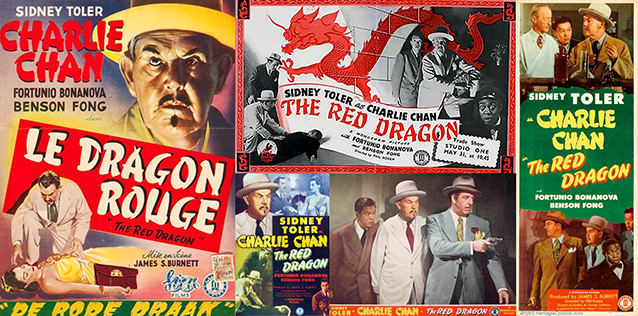
The Red Dragon


Justice Ink

The Red Dragon
USA 1945 Directed by Phil Rosen
Monogram/Warner Bros DVD Region 1


So it’s been a little while, again, since I reviewed a Charlie Chan film... mostly because of lack of availability of the few movies left in the series that had never been commercially released on a home video platform. Now, a pricey division of Warner Brothers called Warner Archives have finally released the remaining few Chan titles on DVD in a two disc, three movie set... comprising the remaining two Roland Winters titles (don’t worry... I’ll get to those in separate reviews) and this one, The Red Dragon, a missing gap from the Sydney Toler portrayals of the famous detective from Hawaii. Of course, regular readers will probably know my absolute favourite actor to portray Chan was Warner Oland, and there are actually a few of his earliest appearances in the character which are still not available. However, this is because those first few to star him are pretty much missing in action and, unless a bunch of film reels show up in some odd location someday... it looks like they’ll be lost forever. Still, I remember the unbelievable resurrection from the ashes of the, more or less, full original cut of Fritz Lang’s Metropolis a few years back so... you know... never say never.

The film starts off promisingly with an opening credits painting which is the most expressive and interesting I’ve seen used in the series. Depicting Toler’s head and shoulders in the bottom left and a big dragon taking up the rest of the frame where the credits overlay. It’s pretty great but, alas, even with late series regular Phil Rosen returning to directing duties, the quality of the rest of the movie does little to live up to the magnificence of this title card. However, from a film historian’s perspective, as opposed to just kicking back and enjoying the movie, this has its little bonuses too. I must ask a film historian to verify this, next time I see one.

So, yeah, there’s good and there’s bad and I’ll get to the worst thing first because it’s the very thing that reveals the silver lining in this one...

The acting is really terrible. Seriously, it’s so wooden at times it creeks and although these films don’t always have the best players, they’re usually better than this. Now, it may, to an extent, be something to do with the staging of the action because... well, there’s an awful lot of chance encounters which lead to conversations to drive along the plot. For instance, man comes out of lift, bumps into other man who happens to be waiting for the lift, and the two talk, standing statically, for the next minute or two. This is a really flat and less than dynamic way to fill the audience in on the plot details, it has to be said. But so is the line delivery of the majority of the actors, so I’m not letting them off the hook here, either.

The good thing though, from a historical viewpoint, is that the main regular cast are all very natural and comfortable and run rings around the rest of the players. Take Toler himself, for instance. You really do get a sense of just what a consummate and professional actor he was here. When you see how stilted almost everyone else is in this, you get the chance to compare him and realise just how good he was at bringing the Charlie Chan character to life. I got a real appreciation of Toler above and beyond the usual assumption that he will play the role as best he can, with this one.

Benson Fong returns here as number three son and, although he acquits himself quite well, he’s not given too much more to do than look puzzled and interested at his ‘Pop’s’ conclusions and deductions here. He also has the usual two hander comic relief moments but this time, instead of Mantan Moreland playing his ‘funny black man’ role as chauffer Birmingham Brown, Fong gets to partner up with Willie Best as Birmingham’s cousin Chatanooga Brown, who played in at least three Chan films and played Chatanooga at least twice. The difference between Best and Moreland is not too great, however. He comes across as a maybe slightly younger, slimmer version of Moreland himself, given exactly the same kinds of lines and scaredy cat actions to follow but without the occasional added wit of Mantan Moreland’s two man stand up comedy routine that the writers occasionally drew from and threw into the mix. Best is fine, however and, though his lines are pretty forgettable in this, he doesn’t let the side down when it comes to playing the part of the Chan family chauffer here. Of course, Moreland would return to the series again later.

We also have a lady who was joggling at my memory as I was watching her all the way through the film. She’s not exactly outstanding in this but I knew the face and I somehow managed to miss her name in the credits. Turns out she’s Carol Hughes, who Flash Gordon fans will recognise as being the second of the on-screen Dale Ardens, appearing in the third of the three initial Buster Crabbe serials, Flash Gordon Conquers The Universe, for Universal. This means that both of the serial actresses who played Dale Arden have appeared in a Charlie Chan film and both opposite Sydney Toler’s version of the character. Jean Rogers, who played Dale in both Flash Gordon and Flash Gordon’s Trip To Mars starred in an earlier picture in the series, Charlie Chan in Panama. I know what you’re thinking... A Chan, A Plan, A Canal, Panama but... no, it doesn’t quite work like that.

The film is kinda hum drum in a lot of ways but it does, at least, have a genuine mystery at it’s heart and Charlie Chan flies to assist a character who has a history of solving cases with him but whom, in terms of actor and character, I could find no trace of within the history of the Chan movies. In this case, the first murder is committed in a room full of witnesses, as the victim gets a bullet for his troubles. It’s quite comical to watch him as he, in his final moments he takes the time to type a dying clue on his nearby typewriter. The trick is, though, that although one shot is heard, two bullets have been fired, on slugs which have never been rifled down to be fired from a firearm. And what is the significance of The Red Dragon Chinese ink at the scene of the first crime, which gives the movie its name? Is it something to do with the papers which tell of the mysterious, newly discovered,  ‘missing element’ that can cause even more widespread atomic damage than the recently exploded atom bomb?

Only Charlie Chan can work out the answers to this Chinese puzzle, which, of course, he does in the short running time of the film. The mystery behind the double shot bullets with no visible firearms is a bit of a dreary one but the idea of that particular challenge is a good one. The only other outstanding thing I noted in this viewing was that, once the killer has been unmasked, so to speak, by Chan on a staircase, he breaks free from the police and has a go at Chan himself. It’s unusual for Chan to get in on the action in these kinds of movies... that’s why he always has either number one, two or three son with him... because they’re young enough to get into fist fights. Here, Toler deftly grabs the leg of the killer and throws him downstairs. So a little unusual but welcome bit of mild action shenanigans for Chan in this one.

And that’s me done here. The Red Dragon is nowhere near one of the greats in terms of the Chan movies but people who like these films will no doubt want to check this one out. I’ve always liked the Charlie Chan movies and so this new Warners set is an unmissable release as far as I’m concerned. If you’re into the Chan then make haste and purchase honourable DVD collection before bird is no longer early enough for worm!