Showing posts with label Stephen King. Show all posts

Monday, 15 September 2025

The Long Walk


No Golden Wonders

The Long Walk
Directed by Francis Lawrence
USA 2025
Lionsgate
UK cinema release print


Warning: I originally intended to write this review without spoilers but, so many thick headed websites have completely failed to catch on to anything but the lowest common denominator, surface interpretation of the ending that I’m going to have to address it here in a special spoiler section at the end... so don’t read past that if you don’t want to know. Watch the movie first and then, maybe, come back to me. 

I first read The Long Walk in a collection of four novels called The Bachman Books back in 1985. I would have been 17 years old and I remember thinking to myself that, now that Richard Bachman had just been outed as being a pen name of Stephen King, then somebody’s bound to make this one into a movie soon, right? It was a nice little story and I knew it would surely lend itself to a decent, cinematic interpretation.

Well, it looks like I had to wait 40 years for that to happen but it’s finally here. And I was already going to see this but, about a month ago, I was fortunate enough to be sitting in a screening of a movie at FrightFest (I forget which one), when they did a sneak preview of the first reel of this movie. Basically the first 22 minutes or so... up to and including the first ‘kill’ of the movie. Bad for the movie this preview played with because, it blew the other movie out of the water. So I was definitely up for seeing this as soon as it hit my local cinema.

And, yes, the wait was worth it because director Francis Lawrence has brought one of the year’s best movies to the screen. It deviates very slightly from what I can remember of the novel but, it makes a beautiful companion piece and the ending, which people seem to be almost deliberately misinterpreting on professional websites, is absolutely brilliant. I mean, come on guys... sometimes a film isn’t about what’s immediately on the surface. I’ll get to that in a minute.

Okay, so the basic premise of The Long Walk is this. In a dystopian future, young male adults all sign up for The Long Walk once a year and, by lottery, 50 people are selected. It’s a public demonstration of giving a devastated population a regard for a good work ethic and to give people a chance of hope, if they happen to survive. They then have to walk for as long as they can, not letting their speed drop below three miles an hour over a number of days. If they drop the speed they are given a ten second warning, then two more whereby, if they still can’t carry on at that speed (due to thier foot being broken or some other issue, plus of course exhaustion), they are shot in the head. When there is only one survivor left, the walk stops and they are given a huge, life changing cash prize and are granted one wish. 

The film follows the walkers (not the crisps) as they talk and discuss and just walk for almost two hours of movie, periodically getting shot dead and going through all kinds of harsh weather without once being allowed to rest. 

There are two male leads in this. Cooper Hoffman (son of Philip Seymour) plays Raymond Garraty, contestant number 47 and the always brilliant David Jonsson plays Peter McVries, contestant number 23, with the film focussing on their growing friendship and revealing background on their characters as the walk progresses. Egged on by the human representation of the villainy of the piece, The Major, played chillingly by the great Mark Hamill.

And it’s brilliant and, maybe not quite brutal as many critics have called it but certainly a little gruelling (and occasionally gory, such as a scene involving some tank tracks from the vehicles which constantly follow the walkers, carrying the military who are going to pop out and shoot them dead when the time comes). The whole thing is very suspenseful and I can’t help but think that Alfred Hitchcock would even have appreciated this one, to an extent. 

All this and a really great score by composer Jeremiah Fraites which helps build the tension nicely, using almost minimalist ostinatos interspersed with beautiful, poignant melodies at key points... so of course there’s no proper CD release of this at time of writing. And then there’s the ending...

Okay, this is spoilers now, don’t read past here until you’ve seen the movie...

The final two left in the walk by the end of the tale are Garraty and McVries, who have built a solid friendship and are moved by each other’s stories of why they want to win the money and the wish for and what they would do with said wish once they get it. Garraty wants to ask for one of the carbines the military are carrying as his wish, so he can shoot The Major dead there and then because of something which has happened to him in his past. So McVries deliberately stops so Garraty can win but, Garraty goes back for him and gets him moving again, with the two of them both on their final warning (next stop is instant death)... and once Garraty gets McVries interested in carrying on, he lets him get ahead and just stops so that McVries can win... without him at first realising what has happened. So he makes Garraty’s wish come true, gets the carbine and kills The Major for him. Then, with the crowd of spectators and all the military just suddenly vanished for no apparent reason, he just carries on walking into the sunset (so to speak). And people have been reporting this as some kind of demonstration that Garraty is the one actually left standing. 

Because that’s what they see without thinking about why they are seeing the ending done in this poetic, almost dream like manner, I guess. 

Um... nope. 

I don’t think McVries survived at all. It’s made pretty clear that if he kills the major, he’ll be shot dead by the military looking on in front of the huge crowd of walk supporters gathered to see the finish. And then they just all are suddenly not there? No, I think it’s obvious by this point that McVries is already dead and this is what happened in his dead mind’s view of events. I think that he either didn’t get successfully saved by Garraty when he tried to sacrifice himself or... maybe he did but as soon as he killed The Major he was shot dead too. He may not realise it yet but, either way, he’s dead. It’s the only explanation for the way the last shot of the movie plays out, I reckon.

Does this make The Long Walk this year’s Saint Maud (reviewed here) in terms of ending interpretations... well, yeah, maybe. I don’t know why people aren
t picking up on this stuff because, to me it’s obvious but, either way, there are no happy endings here. The film is a relentless machine of suspense and so earns my respect and admiration, with that dream state ending just being the cherry on top of the cake, as far as I’m concerned. 

And if that isn’t a recommendation for The Long Walk then I don’t know what is. This one is absolutely phenomenal and I hope it does huge at the box office (although my local Cineworld stupidly showed it in the smallest screen they had... that’s just silly). Definitely catch this one with a cinema full of people... you will, eventually, hear more than just a pin drop. 

Monday, 24 February 2025

The Monkey


Hey! Hey!

The Monkey
Directed by Osgood Perkins
USA/UK/Canada 2025
Atomic Monster
UK Cinema release print


Warning: Some spoilerage.

I’m not the most avid admirer of Osgood Perkins (son of the famous Anthony Perkins) but I’m definitely warming to him. I kinda liked (with reservations) his movie February aka The Blackcoat’s Daughter (I really should get around to putting up the review I wrote of it during Covid Lockdown sometime soon) but I really don’t think he lands his endings well. Longlegs (reviewed here), for example, was a great build up leading to a less than satisfying ending and, I think the same accusation could be levelled at February, to be sure.

The Monkey, though... The Monkey I really liked. Now this is based on and is an expansion of a short story I read by Stephen King back in 1985, of the same name and featured in that year’s collection Skeleton Crew. I don’t remember much about it other than the toy monkey in it was the old cymbal banging kind which, because of rights issues with Disney (which also has an irony to it, if you look at the origins of why Disney have the rights in the first place... I’ll let you follow that rabbit hole for yourselves), has been changed to a drumming monkey in this iteration of the story. For the better, I would say... much is made of the way the titular automaton starts up and preps for its drumrolls of death in little montages which build tension here.

The film tells the story of two twins, Hal and Bill, played by Christian Convery as their younger selves* and Theo James as the ‘grown up’ variants. The toy monkey in their life, which they can’t get rid of no matter how much they try to destroy it or bury it, kills people. Once you wind the key it plays a rendition of ‘I Do Like To Be Beside The Seaside’ while drumming away and, when the last drum beat falls, a chain reaction of unfortunate events leads to a bizarre and, certainly in the case of this film, gory death. Their mother, who meets her demise when they are just kids, is played by the brilliant Tatiana Maslany, who was wonderful as She Hulk - Attorney At Law (reviewed by me here).

Now, when one of the estranged brothers is trying to say goodbye to his estranged son (played by Colin O'Brien) in a road trip before he’s adopted by his mum’s latest boyfriend, the monkey is back in his life and he has to survive a wave of unlikely and, honestly, quite funny deaths while keeping his son safe somehow. It all leads back to his brother and, of course, that damned monkey.

And it’s so much fun. Honestly, it’s one of those films where the goriness of the grimness is so elabourate and over the top that you can’t help but laugh at it. And with the addition of Theo James’ deadpan reactions to the situations he finds himself in... it’s a pretty entertaining picture. For example, as he tries to warn a woman not to dive into a swimming pool which he’s just realised has been accidentally electrified by gazillions of volts, he has to dodge her severed leg as she completely explodes as she hits the water. So what I’m saying is that, although its dealing with death in some big, sweeping ways (such as taking out a whole town in one swoop), it’s doing it in a deliberately comic book fashion which is designed to help you see the funny side right away.

Now, being based on a Stephen King story, a lot of the film is set in Maine so, naturally, there are a few King references as you go through the movie... name drops and so on. Some people will probably like that although, the ones I spotted myself were maybe a little clumsy and I could have done without one of the characters being named after a much more famous character in King’s canon.

But that’s pretty much my only criticism of this one. I mean, I even loved the typography on the end credits which took me back to a 1950s/1960s vibe... I just loved it. Oh... and if you are thinking of staying in your seat for the credits, you will be rewarded with a post credit scene which is a first teaser trailer for Osgood Perkins next movie, Keeper, which is currently scheduled to release this year (I think). So yeah, that’s me done on The Monkey... a dripping slice of ‘splatter comedy’ which will have you laughing at the elabourate set ups for each gory demise. Absolutely brilliant. 

*A special mention goes to the set dressers for having a print of the Boris Vallejo cover art from the 1980 Ace Tempo paperback book Flash Gordon Book 3 - Crisis On Citadel II.

Wednesday, 23 October 2024

Salem's Lot


The Stake’s Progress

Salem's Lot
USA 2024
Directed by Gary Dauberman
New Line Cinema


By my reckoning this must be the fifth time that Stephen King’s Salem’s Lot (which should actually be, surely, ‘salem’s Lot, since it’s short for Jerusalem’s Lot) has been either adapted, sequalised or been inspiration for a TV or movie adaptation. Of those I’ve only seen three, including this one. So the original mini series with David Soul as Ben Mears (which I revisited and reviewed here) which I so loved in my childhood, the big screen sequel A Return To Salem’s Lot (which I’ve never seen, though I probably should because Sam Fuller is in it), another TV version of Salem’s Lot in 2004 (which, again, due to my memory of the classic version I saw when I was around 11 years old, I gave a hard pass... may come back to it), the brilliant, stealth prequel show Chapelwaite (based in part on King’s own prequel, Jerusalem’s Lot and reviewed by me here) and now this one.

This one is... well, it’s easy to say this one is not as good as the original TV mini series... so easy, in fact, that I’ll certainly say that now... it’s not as good. But that certainly doesn’t invalidate it as a movie and both versions I’ve seen tend to stray from King’s original novel somewhat. This time around it’s Lewis Pullman playing returning writer Ben Mears and he’s well matched by a great cast including Makenzie Leigh, Alfre Woodard, Jordan Preston Carter, Bill Camp, Pilou Asbæk as Straker (definitely not as good at playing an Englishman arriving from London as James Mason was, for sure... this guy seems to be playing him with a Deep Sourthern US accent if I’m not much mistaken) and Alexander Ward as Mr. Barlow (once again abandoning the book’s description of the lead vampire and returning him, just as in the original mini series, to the look of Count Orlock from Nosferatu).

Now, it has to be said that this doesn’t have the lurking, creeping fear of the original TV show... this one is more of an adrenalised romp which, perhaps is to be expected somewhat (the original show was around four hours long, after all) but, for lovers of B movie vampire pictures, this has a nice, fun atmosphere and it’s also set in the mid-1970s, around the year the original novel was released (which is useful because living in an age of mobile phones would definitely have given the main protagonists more of an edge against the vampires here).

And it has to be said, this film looks absolutely wonderful...

There’s a nice shot from inside a car where the two kids out the window are bookended by the driver’s head on the left and a reflection of his face on the right in the wing mirror, for example. Or a trek through a forest where all the twigs, branches and tree trunks... and the human figures... are all seen in silhouette and in motion while the sky is awash with blue and pink. That just looks great and the film is also full of wonderful transitions such a panning a camera down to a sign with an intricate pattern which then changes into a perfectly matching bird’s eye view of a staircase well in a house. It’s all great stuff, for sure.

And alongside a tonne of pop culture references like horror comics, Aurora model kits (I think the original used these too), posters for films like Trog and Sugar Hill and a whole raft of others, there are also references to keep Stephen King fans happy. Like an early drive through the town revealing a mechanic working on a certain 1957 red Plymouth Fury for example (yeah, we all know what that car’s called, right?). That being said, though, King enthusiasts may be a little disappointed in the final fate of Father Callahan here... no future appearance in The Dark Tower series for this iteration of the character, once again.

And I think that’s me about done with the new version of ‘Salem’s Lot. A well acted and well shot film. Not especially scary but certainly a heck of a lot of fun, for sure. Worth a watch if you like well made vampire movies but don’t expect it to be as good as either the original TV mini series, nor the splendid novel on which it was based. There are certainly much worse vampire movies out there though, for sure.

Sunday, 15 October 2023

Chapelwaite


Whole Lotta
‘Salem Going On


Chapelwaite
USA August - October 2021
Ten episodes
MGM


Warning: Mr. Barlow will enjoy some spoilers.

Chapelwaite is a ten part mini series based on an old Stephen King story, which many of you may remember reading in his short story collection Night Shift (I think I read it sometime in 1982). The story it’s based on is Jerusalem’s Lot which, as I’m sure many of you know, was a longish short story prequel to his popular novel Salem’s Lot, set over one hundred years before the events which we all know and loved from both King’s amazing book and, no doubt, from having fond memories of being scared silly as kids, when the TV miniseries of ‘Salem’s Lot aired, starring David Soul (reviewed by me here). Based on is definitely the key phrase here though because, admittedly, when you try and stretch out a short story into ten episodes of approximately 50 minutes per episode, things are going to have to change or, at the very least, be expanded upon.

Such is the case here with some of the characters changed drastically from their source but with some of the incidents in the story being incorporated into the events which take place in the mini series. But, I didn’t find that such a problem, especially since (if memory serves and, if it doesn’t, then forgive me but it’s been 41 years since I last read it) the original story was told in the form of old letters of correspondence, with the fictional writers detailing the story from a first person point of view.

That being said, it’s actually a very strong series. It’s not one of those which attempts to wow you with a new twist or layer week after week, as certain elements are revealed, such as... say, From (reviewed here) or Yellowjackets (reviewed here). It sets out a lot of it’s narrative intent and path right from the start with, to be fair, not that many suprises around the corner. That being said though, it tells its tale in riveting fashion and, while not quite retaining the feel of King as, say, the completely non-King TV series Midnight Mass ironically did  (review coming soon), it’s still a very sturdy tale and it leans heavily on a very good script and a great cast of actors.

After the death of his wife at sea, Whaler Captain Charles Boone, played by the series’ executive producer Adrien Brody, inherits a handsome property in Maine from his cousin, named Chapelwaite... and decides to take his three children...  Honor (played by Jennifer Ens), Loa (played by Sirena Gulamgaus) and Tane (played by Ian Ho)... to live there and start a ship building business. However, there’s a curious malady in town killing people and the Boone family has been blamed for this. Pretty soon, the family curse which we see detailed in the pre-credits of episode one returns to haunt the grown up son (Brody) but, as he and his family, along with writer/governess/love interest Rebecca (played by Emily Hampshire), deal with the taint of his former family, not to mention the racial tensions caused by the skin tones of his children, it becomes clear that a) his cousins are not actually dead but... well... undead... and b) that the curious malady which has taken the small town in its grip is, of course, vampirism.

I won’t say any more of the plot as, like I said, there are not too many surprises but, it’s a sturdy ship of a show and the writing, acting and direction is all great. Actually, because like many shows, several different directors are hired for each episode, there are some minor stylistic differences in the way things are shot. The first episode (and, to some extent, the second), for example, feature a lot of establishing shots taken from a camera very low on the ground and looking up at the content of the frame... almost as a visual echo of the time when Charles Boone was whacked over the head with a shovel as a kid and having to look up and out of the grave his father dug for him. It’s a nice touch but it does seem to get jettisoned very early on in the series. This is not to say the direction is bad, however... just more noticeably different in this show than with others I’ve seen.

But it’s a great tale and, while not necessarily scary, it does have a lot to offer and, scares aside, there’s certainly a lot piled on in the way of tension and suspense. For example, when the family board Chapelwaite up and paint white crosses on its walls in expectation of a siege by a party of vampires and their human minions attempting to get in... the whole of the next episode is shot, almost in real time for a lot of it... and the battle for the house and something which is inside it (which two factions of vampires want, actually) lasts for the whole of episode eight. And it’s all topped off with the musical cherry on the cake via Mark Korven’s lovely score (sadly not available on CD at time of writing this).

One thing which worries me is the future of the show. Chapelwaite has a very definite ending to it... the story seems finished and some big sacrifices are made in the final episode. So it must have been as much as a surprise to the writers when the channel producing it renewed it for a second series.* Now, I really don’t know how they could continue this story in a plausible enough way so that the audience won’t think it’s a poor excuse for a sequel but, who knows, perhaps the only thing the new series will have in common is the house itself... plus various vampires (would be my guess). Either way though, I was really hooked on this one and Chapelwaite doesn’t disappoint on pretty much any level. Check this one out if Stephen King inspired, period vampire tales are your thing.

*Releasing very soon now, it would seem.

Wednesday, 22 April 2020

Room 237


Overlooking The Obvious

Room 237
USA 2012 Directed by Rodney Ascher
101 Films  Blu Ray Zone B


It’s funny, I thought Room 237 was only a couple of years old at the most. I remember there being a lot of fuss about it on Twitter around about that time and so I was somewhat disappointed I didn’t catch a cinema release. I think I finally got this one a couple of months ago in a 101 Films sale or some such thing and, frankly, this wasn’t quite the film I’d hoped it would be. That being said, it’s technically quite well put together if the visual equivalent of ‘needle drop’ is your kind of thing.

The documentary, if you can call it such, explores some of the less usual fan theories about Stanley Kubrick’s 1980 masterpiece, his loose adaptation of Stephen King’s The Shining. Now I was prepared to keep an open mind going in here because I’d heard good things about it and I wanted to see if I could follow some of the lines of thought which make up the basis of these separate theories, from five very different people who I think I shall keep as nameless here so I don’t actually have to ridicule a specific person. So I went in open minded and... honestly... didn’t stay that way for all that long, it has to be said.

The format of the film is probably the most interesting thing about it. None of the people explaining their theories (voices crosscut with one another over the course of the film in chaptered sections) are ever shown. Instead, the director has used found footage from old newsreels and some fairly famous high profile movies like The Brain From Planet Arous, All The President’s Men or The Thief of Bagdad cut against each other to metaphorically illustrate what’s going on in the minds of the people talking. Quite often the footage is further digitally manipulated, such as the many shots of Tom Cruise from Kubrick’s Eyes Wide Shut where he walks by and contemplates posters of The Shining in the street as he passes. Similarly, in the many times footage from The Shining itself is played, at various speeds ranging from very slow to normal to very fast (and even backwards and forwards simultaneously superimposed)... the director will use things like big digital arrows to point out the specific area of the screen which is being talked about from a particular ‘guest’. It’s all quite skillfully put together and that, along with the synthesised musical version of the Dies Irae invoking the Wendy Carlos opening of The Shining, are pretty much the only saving graces of this movie... for me, at least.

Now, it’s interesting that one of the people talking in this film says something which actually rings quite true in some respects. Frankly, it’s a very pertinent statement, even if it half feels like it’s being used in defence of what the person is saying because they suspect they might sound like they’re being unreasonable in their conclusions. It is this...

“Author intent is only part of the story of any work of art.”

Yeah, absolutely. I can get behind that statement. The identity of the artist and their cultural, religious and political upbringing are obviously going to seep into an artist’s work, whether they are conscious of this or not. Totally get this and believe it completely... a wise statement. However, there are extremes of conclusions that people can make which are, frankly, outside of the remit of even this simple, scattergun statement and, frankly, when all is said and done and the arguments for and against whichever theory is being explored have run their course, I was forced to conclude, as I had suspected within the first ten to fifteen minutes of this movie, that all of the people being interviewed for this film are, in fact, total nutters.

And it’s a shame because I love The Shining and I wanted to learn something new about it. Not 'new and completely, balls to the wall, fruit loop crazy' which, quite a lot of this is. I mean, the placement of cans of baking soda with an Indian head on them and other cumulative imagery from the movie do not, honestly, make for a movie which is actually about man’s betrayal of the Native American Indian and their mistreatment. Similarly, the numerology all pointing to sevens and forty two.... such as the numerals of the famous Overlook Hotel room number multiplied out - 2 X 3 X 7 giving us the ‘magic number’... do not constitute yet another in a line of similarly misconstrued ‘clues’ laid down by Kubrick that the film is about the Holocaust and Nazi Germany in 1942 etc. Neither does Barry Nelson’s hips lining up with the side of an in-tray and looking momentarily like a pseudo erection while he’s shaking Jack Nicholson’s hand turn us on to the fact that The Shining is a movie about sex and the sex demons that live in Room 237. Nor does the disappearance of a sticker of Dopey from Snow White And The Seven Dwarfs signify that Danny, after his first vision, is no longer ‘a dope’ and understands everything that is going on around him. Seriously people, this is some advanced level of insanity creeping in behind the normal sounding voices of the people narrating this.

For a while there it gets like people are actually making sense in the film... especially when you compare the levels of craziness of each new theory. For example, when you follow with the camera, the path into the room where Jack has his interview, the woman narrating seems absolutely right that the window showing the view outside really could not exist... it’s in the middle of the building. So yeah, points to her here and also to the person who notices that the two shots of Danny and the ball on the carpet don’t match in terms of pattern... so they were obviously filmed in different places is what that means, not that something sinister has occurred.

Similarly, the ‘apparently false’ fact that the Earth is 237 miles from the moon plus the fact that Danny is wearing a moon landing sweater when he walks to Room 237 does sound like it almost could be a metaphor for a trip to the moon but, honestly, it doesn’t mean that Stanley Kubrick faked the moon landings for the government and I don’t believe, as this guy does, that the whole of the film is Kubrick trying to signify to mankind that he did it. Of course, it doesn’t help that Kubrick himself gave an interview which I heard once that he'd faked the moon landings but, you know, he was a bit of a wind up merchant when it came to people aiming crazy theories at him, I suspect.

Actually, that’s one of the things that bothered me most about the people in these interviews. The ‘author intent’ get out clause I quoted above does not excuse the fact that they are quite often picking up on some, admittedly insane and disturbingly lax continuity errors... such as the disappearing ‘Dopey’ or a chair going completely missing behind Jack Nicholson’s head in one shot between cuts or the changing carpet pattern... and making so much more of them than they need to. Do I think Kubrick... an admittedly meticulous director... was doing this on purpose. No, I do not. I just think he liked some parts of takes better than parts of others and edited them all together from multiple sources to get the best and most consistent performance out of the actors... and there’s nothing much more to it than that.

So, there you go. Room 237 is, ultimately a somewhat intriguing film in the odd ‘clue’ to the overall ‘mystery’ of The Shining (a mystery which I’m sure doesn’t exist outside of the heads of these people) but, I have to say that, even though there were a few shiny coins laying among the pebbles, it’s a pretty dull affair. The excellent execution of the way the ‘evidence’ is unpeeled and portrayed by the filmmakers doesn’t detract from the less than mesmerising stretches of tedium as various enthusiastic but quite possibly unhinged individuals try to convince you that their insane theory, which they obviously totally believe is so obvious once they’ve explained it, is anything like an arrival at some form of truth. Proceed with caution.

Thursday, 7 November 2019

Doctor Sleep


Look Before You Sleep

Doctor Sleep
2019 USA Directed by Mike Flanagan
UK cinema release print.


Warning: Contains spoilers for the original novel of Doctor Sleep.

Doctor Sleep is a pretty good film but I’m really surprised that Stephen King himself, the author of this sequel to his earlier book The Shining, has endorsed it. It’s not a secret that King hated Stanley Kubrick’s movie adaptation of The Shining (reviewed by me here) because of the way it differed from the novel and there are two reasons why I would have thought that King would have been equally damning of this new movie adaptation of Doctor Sleep. One is that the last third of the movie is nothing like the last third of the original book (which I reviewed here). It takes so many more liberties with the text than Kubrick did on his adaptation of The Shining and the ending is completely changed. That in itself would have been something he would be quite critical of, I’d have thought but you also have to factor in that director Mike Flanagan (who directed the wonderful Absentia, which I reviewed here) has deliberately synched it in visually, in a lot of it, to Kubrick’s version of The Shining... which King hated. So, yeah, puzzled but happy, at least, that the famous horror novelist is finally recognising a good movie, albeit a slightly flawed version of his original novel here.

So lets get to it then.

The film will give fans of Kubrick’s original chills right from the opening Warner Brothers logo, as the Newton Brothers recreate the first few bars of Wendy Carlos and Rachel Elkind’s opening title variation of the Deus Irae from The Shining before they go into their own thing. The film starts off not long after the original and we get some scenes showing Danny and his mother after the events of that film. These two don’t look as much like the original actors as you might like but they’ve done their best to make them look like variations of what they might look like at that point in time. Then the movie picks up speed and jumps to Ewan McGregor playing a grown up version of the first film’s/novel’s central child protagonist Danny Torrance, first in the scene where he wakes up in a woman’s bed in full ‘morning after’ mode and, then, as he ends up in New Hampshire and is helped back into both employment and into the local alcoholics anonymous group by his new friend Billy (played here by Cliff Curtis). We also get background on the group of antagonists called The Knott, headed up by Rebecca Ferguson as Rose The Hat.

The film then jumps forward another eight years and carries on with the story of the novel for a good way, building up the tension in The Knott but precluding them systematically dying from measles due to contaminated steam (steam is basically their name for the essence found inside people who ‘shine’). So we get them noticing the young girl protagonist Abra (who has a powerful version of ‘the shining’ in her and who is played by Kyliegh Curran here) and we get Abra’s psychic relationship with Danny reaching the point that, after she psychically witnesses the slow murder and absorption of a kid at the hands of The Knott, she seeks Danny out in real life and the two ultimately hatch a plan to put a stop to The Knott before The Knott can find and kill them too.

Then, around about the point where The Knott spring a trap set by Danny, Abra and Billy, the film deviates massively from the original novel in a lot of ways. Although the last battle takes place in the grounds of the Overlook Hotel it’s only Rose in that final battle and not a big battle royale with a large portion of The Knott. Also, in the book the Overlook is no longer there and The Knott have their campsite in the ruins. In the movie, Danny and Abra lure Rose to the still standing Overlook Hotel for their final showdown. There are other characters that make more appearances than they did in the novel too and, frankly, the number of survivors of ‘the good guys’ and the specific people still left standing at the end is completely different. It is like watching a new story from this point on.

It all looks and sounds fabulous though. The performances by McGregor, Ferguson and Curran are brilliant and Curtis give solid support as Billy. In fact, there really isn’t a bad performance in this movie. Even Alex Essoe, who takes over from Shelley Duvall as Danny’s mum Wendy, does a good job here... especially since she doesn’t look all that like the original actress (the same could perhaps be said of whoever they’ve got playing Jack Torrance in lieu of Jack Nicholson here... I can’t find out who plays him in this as the Internet seems somehow shrouded in mystery about him right now).

The last third features a lot more Stanley Kubrick references (pitching in with the references at the opening of the film) and it’s a fun time if you’re an admirer of the Kubrick picture. Some of the sets and shot set ups have been recreated (and that’s down to the sound design too) but, nice as they are to look at, it’s all a bit of a strange mix up. For instance, in the novel, Jack Torrance makes an appearance right at the end in a rescue/redemption moment. Here that’s gone and the scene and necessity for his appearance is also not here... instead, Flanagan tries to shoehorn the character into a much bigger role and... honestly, it doesn’t work that well here, I think. Also, the character’s effect on Danny and the subsequent chase scene is... well it’s a bit laboured, it seems to me.

However, the party guests, the brief reappearance of the twins and other things are done pretty well.  One cameo and set up for the new denouement which people who haven’t read King’s The Shining may find puzzling is also strangely mixed in here and, like I said, if you have only seen Stanley’s take on the story, then it might seem like a really clumsy 'deus ex machina' moment. I’m talking about the boiler in the Overlook Hotel... I’m not going to say much about it here other than to remind readers that, in the original novel The Shining, it played a huge role... and I’m saying that bearing in mind that I haven’t read the novel since the late 1970s/early 1980s but, yeah, even I can remember the boiler room being a big thing in the book. So, yeah, Flanagan and co bring that back in to the mix but, like I said, it’s going to seem like a really sloppy addition if you haven't read The Shining.

The cinematography is all good though and the music from the Newton Brothers gets back nearer to the soundscape of The Shining soundtrack once you get into the last third. Honestly, there’s a series of shots which come just after the film really starts deviating from the book and I was kinda expecting them to happen and I was thinking, I hope they remember to properly use Carlos and Elkind’s Deus Irae here again... yeah, they do and although the sequence of shots is much, much shorter than the original ones the director is parodying (and shot at night in this instance), it does feel good when this little moment comes.

And that’s me done on this one I think. I hate the new ending as I thought the one in the book was perfect and, frankly, if King ever gets it into his head to write a third novel in that sequence, the movie studios are going to surely find it hard to adapt it after the big U-Turn ending this film takes. That being said, in spite of all these terrible changes plus the overuse of a character who would have been much better left as the brief but weighty appearance he has in the novel, I still thoroughly enjoyed the ride on this one and will certainly be grabbing the Blu Ray when this one gets released. UK fans of the score may want to know that there’s a CDR release of it on US Amazon which they’ll ship to the UK, if you want to hear the music properly rather than attempt to listen to a disappointing and compressed electronic download. Looking forward to giving that one a spin when it finally arrives in the mail. Anyway, Doctor Sleep is definitely something you should see if you liked the Kubrick version of The Shining but please don’t expect something close to the book... there are some wild deviations here.

Thursday, 31 October 2019

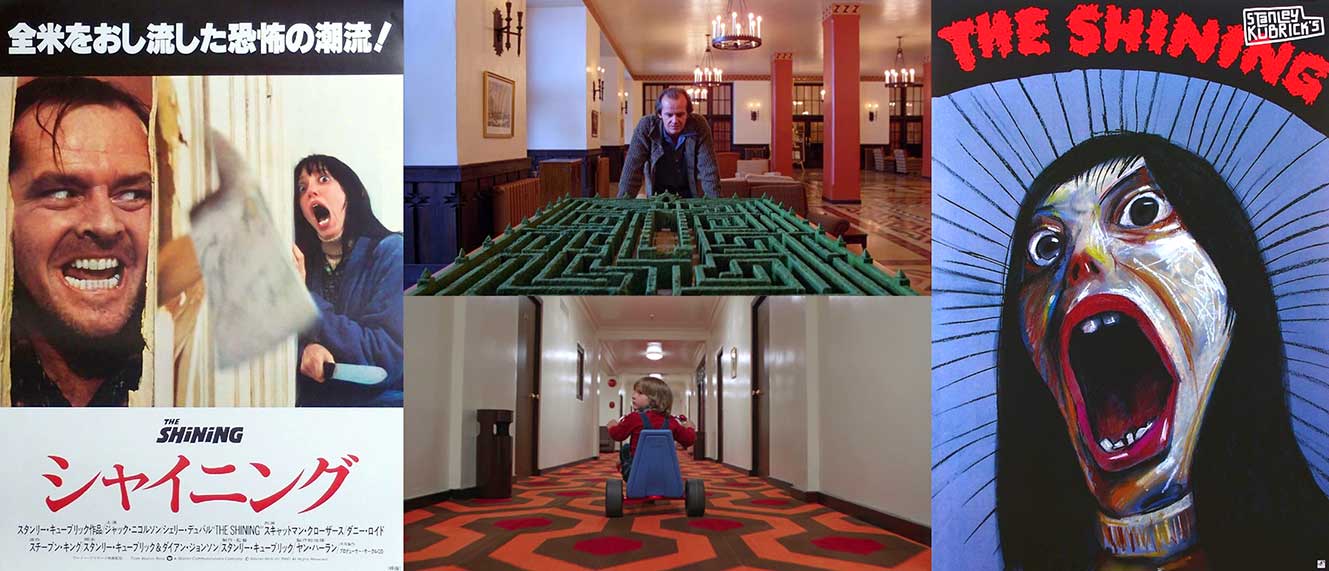
The Shining


Axe-simile

The Shining - Extended Edition
(aka, The Full Cut and not the
stupidly short European version)

UK/US 1980 Directed by Stanley Kubrick
HMV Exclusive Dual Edition
Blu Ray Zone B DVD Region 2


There’s surely no doubt in the minds of many, I’m sure (asides from Stephen King’s once much publicised disappointment with this movie version), that Stanley Kubrick’s The Shining is easily one of the most interesting horror movies ever made. The first few times you watch it, too, it’s kinda quite creepy... that perhaps diminishes somewhat over time and subsequent rewatches but what you are left with, even if it does have less impact through familiarity, is an amazingly beautiful looking movie which never really ages all that much.

The reason I’m revisiting this classic after more than a decade now, of course, is that the first screen adaptation of Stephen King’s fairly recent follow up novel, Doctor Sleep (I reviewed that here) is literally days from release (in fact, I think it comes out in the UK on the night I am intending to post this review). So I figured it was time for another look because, from the looks of the trailer (and I’m puzzled by this a little since King apparently loves this new movie), the director of Doctor Sleep has used a lot of the imagery from Kubrick’s version of The Shining in the new film.

As for Stanley Kubrick’s The Shining itself though... even from the opening camera work which follows a long journey of the vehicle driven by the as yet unseen central character Jack Torrance (played here quite maniacally throughout by Jack Nicholson), you are pulled into the story. One of the strengths of this opening, I suspect, is the way the speed of the photography of these sequences (the out-takes of which were famously plundered for the final scene in the original first release of Ridley Scott’s Blade Runner, reviewed here) is slowed down in terms of the soundtrack, which highlights Wendy Carlos and Rachel Elkind’s absolutely phenomenal variation on the Deus Irae... a truly eerie and unsettling take on the much used musical theme.

The film is a definite slow build for the most part... with little points being made slowly but methodically to lead up to the scenes where the Overlook Hotel and its ghostly inhabitants, overwhelm Jack Torrance and compel him to try and murder his wife and child... Wendy and Danny, played here by Shelley Duvall and young Danny Lloyd (who is being played as an adult by Ewan McGregor in the upcoming movie version of Doctor Sleep). I think I’d possibly agree with Stephen King’s assessment that Jack Nicholson seems a little too manic right off the bat (no pun intended) but that does nothing to diminish the fact that he’s extremely watchable in this. As is Shelley Duvall, who does an amazing job here along with newcomer Danny Lloyd in a role which could have gone way wrong for the film if the performance had been anything less than what it turned out to be. They are joined by the likes of Barry Nelson (the first screen James Bond), the always watchable Scatman Crothers and Dr. Eldon Tyrell himself, Joe Turkel, in the role of Lloyd the bartender... who plays the character absolutely deadpan and in an effectively chilling, minimalistic way.

The film features many Kubrick signatures and watching this one always reminds me of one of his other masterpieces, 2001 - A Space Odyssey, which I reviewed here. So the shots of Danny tri-cycling his way around the hotel in fluid camera movement cross cut against other things going on in the building, for example, always puts me in mind of those long interior shots of Frank Pool keeping in shape in the former movie. Similarly, the little... almost subliminal... cuts to various shots such as the twin sisters, the mutilated corpses of the sisters and the reaction shots of characters such as Danny (when he’s flipping out in full ‘shine’ mode) which are always silent whenever Kubrick does this (in that they have no diegetic sound and are merely using the sonic backdrop of the shots into which they are spliced) reminds me of both the reaction shots of David Bowman in the high speed journey via the monolith at the end of 2001 and the reaction shots of Patrick Magee in A Clockwork Orange. And, of course, you have those long held shots focusing on the face of a staring character from time to time, most notably in The Shining when Jack Torrance really starts to wig out and you just realise the dark, rotting heart of the Overlook Hotel has finally seeped inside of him and become the dominating force in any already lost spiritual battle in his soul.

Another thing which ties it to 2001 is the chaptering. This film also consists of, quite a few, chapter stops and in this film they are, in order of their appearance... The Interview, Closing Day, A Month Later, Tuesday, Thursday, Saturday, Monday, Wednesday, 8am and 4pm. Like in 2001 they can be used to make a dramatic ending to a sequence, such as the unwavering stare of Jack Nicholson brought to you on a very slow zoom suddenly abruptly cutting to a title card... but they also function in this film, or at least I believe this is the case, to speed the rhythm of the story by giving us period markers going from an interview held a while before Torrance actually gets his job as caretaker of the out of season Overlook, to the closing day when he takes over and it’s abandoned to him and his family for the winter season... and then whittling down the times until you eventually get chapters talking about specific parts of just one day. It’s a kind of subconscious, accelerating spiral, I think, in terms of both the pacing of the action and also, of course, the internal state of Jack’s mind as he approaches full on serial killer mode in the film’s final sequences. It’s an interesting device and, for all I know, it’s just been employed to smooth over some awkward transition scenes that didn’t cut together properly but, whatever the reason for them, they function very well in this capacity.

Of course, one of the main ingredients in just how sinister this film feels is due to the music. I’ve already mentioned Carlos and Elkind but there’s also the use of Béla Bartók, Krzysztof Penderecki and, like 2001 before it, one of my favourite composers, György Ligeti. If you want a film to sound unbearably disturbing then many tracks by these composers are good for just that and, frankly, they often have the same effect on the human psyche when you’re not juxtaposing them with any imagery.

As usual with Kubrick, there are constant, beautifully designed frames throughout. Some may find the artifice involved in getting some of these, in some cases, almost symmetrical designs with very contrasting, almost primary colours a little off putting or overwhelming but, frankly, the gorgeous and constant eye candy of a Kubrick film is something I always find a sheer delight. So, yeah, he’ll have Wendy and Danny dressed in warm browns and reds for their walk through the green hedge maze to make them pop and, yes, he’ll have the majority of Jack Torrance’s encounter with the naked lady in Room 237 framed in it’s own little arched rectangle in the centre of the screen... but it all looks great as far as I’m concerned. And it’s a film, like many Kubrick films, full of iconic imagery. You all know the famous carpet pattern, for example and, of course, the wonderful shots of the elevators gushing blood and filling up the corridor. 

The Shining is always going to be a hard recommend from me and will probably always be somewhere in my top ten horror films of all time. The HMV Exclusive (to the UK) dual edition of the so called ‘extended cut’ (aka, the version they’ve always shown on TV in this country, just not at the cinema) looks absolutely gorgeous. I honestly didn’t know films could look this good on my Blu Ray player, it’s phenomenal. That being said, the film is presented in its original theatrical widescreen aspect ratio as opposed to the 1.37:1 aspect ratio that it was shot in (and which Kubrick himself insisted the film should be shown in) but I’m more than happy to see it as it was when screened at the cinemas on its first run... although a 4:3 presentation with more image information at the top and bottom (open matte) might have been preferable. Still a great one to look at though... especially if you want to see what your Blu Ray can really show you in terms of quality. It’s never looked so good.

Thursday, 31 August 2017

The Dark Tower


Have Gun, Will Unravel

The Dark Tower
2017 USA Directed by Nikolaj Arcel
UK cinema release print.


I actually wasn’t going to bother going to see The Dark Tower, to be honest, with you. Much as I like Idris Elba and the way his character loaded his guns in the most ridiculous, impossible way ever in the trailer, I was  annoyed by the appropriation of Ennio Morricone’s famous watch chimes from For A Few Dollars More (they don’t actually make it into the movie itself, just the marketing) and the negative critical attention the movie got kind of kept me disinterested on the first week of its release. However, a co-worker at my esteemed place of employment suggested to me that, actually, it’s a pretty good movie so I figured that, if I got a chance, I’d try to make some time for it after all (so thanks very much to Tracey S for the ‘heads up’).

Now, I’m pretty glad I saw this one in the end because, frankly, it’s not nearly as bad as the negative reviews are making out and probably doesn’t deserve the poor box office it seems to have had (which in a year where cinema attendances have apparently dropped over 50% to reach their lowest numbers in decades, doesn’t seem like that bad a sin, to be fair, when compared to the performance of the majority of big studio films of 2017). That being said, it’s not without it’s problems and these are not little things so I’ll get them out of the way now.

Now, one of the criticisms that the film is supposed to have is that this really isn’t an adaptation of any in the series of the Stephen King novels it is alleged to be based on. More of a prequel or sequel by all accounts. Now, although I used to love reading Stephen King in the early to mid 1980s when the first of these novels was released, I never bothered with this one because it was in what I quaintly used to call a ‘rip off’ edition... because the page count was very low and so the company who released the paperback here in the UK made the book slightly oversized and charged way more money than a regular novel twice the length to compensate for it. Even in my early teens I could tell a bad deal when I saw one so I didn’t waste what little pocket money I had getting this one. What this means, of course, is that I can’t tell you how great an adaptation or interpretation of the original source material this movie is but, by all accounts it’s not very close so I can understand the negative passion unleashed by fans of the novels at the way this movie has been handled. My sympathies to them on that one.

Not being able to weigh in on that one myself, then, the biggest problem I had with the film was the incredibly appalling continuity. The main child protagonist of the film, Jake, played ably by Tom Taylor, drops his bag of trusty drawings at one point to lock himself in a bathroom and then escape through the window before being chased out of his neighbourhood. When he escapes, finds his destination and travels to an alternative world through a portal, he suddenly has his bag with him again. What? And then, suddenly, within ten minutes, it’s gone again as he seems to lose it between two shots with no apparent explanation. At first I thought the film’s other main protagonist, The Gunslinger played by Idris Elba, was carrying it before remembering that he also had a bag like that left by the remains of his camp fire when Jake stumbles into him. So... yeah... magically teleporting bag is not the best continuity in the world. Now I understand that this may have been the fault of hard editing choices in the final cut but, even so, the continuity leaps are quite glaring here and enough to pop you right out of the movie.

So there you go... that’s my only real stumbling block with the movie. As for the rest of it...

Well, it’s a nice action movie with a very retro feel for us oldsters. It really does feel like a movie which might have been made in the early to mid-1980s (when the novels came out) and if you’re into that kind of feel then all well and good. It kinda reminded me a bit of Back To The Future Part III crossed with The Dark Crystal and... yeah... depending on your age or tolerance for flights of fantasy, then you’ll either embrace this film or shun it. Personally I had a great time with the melding of that kind of, almost innocent, sensibility mixed together with the kind of modern action sequences which have that 'Jason Statham in The Transporter' kind of ridiculousness to it... which I also loved. Seriously, when you see the way The Gunslinger manages to constantly reload his dual six shooters in the blink of an eye or throw revolver chambers up in the air and catch them in his guns, you’ll know exactly what I’m talking about. It certainly stretches the boundaries of credibility and challenges the audience's skills at suspending their disbelief but, you know, in a way that’s what cinema is all about... to show us something we can’t necessarily see in real life (like all great art). So I really have no complaints about that.

The performances are good from all the lead players and that’s especially to be said for the primary bad guy, The Man In Black, played with relish and the usual amount of almost effortless talent by the always watchable Matthew McConaughey. There are also some nicely edited together sequences such as the full ‘bullet fired through the night’ sequence which you will have seen in the trailer in a truncated form but which works better here due to the build up as certain key locations and objects are viewed by the camera before being revisited in the edit of the actual 'gunshot moment' itself. It’s good stuff and, although the film never really manages to raise itself up from being a B-movie kind of affair, it’s a nicely put together B-movie and can easily go toe to toe with a lot of A-list pictures which don’t have the same kind of understanding of the way a sequence is put together (despite the glaring continuity issues in this movie).

There’s also a nicely epic, over the top but very listenable score by Tom Holkenborg (aka Junkie XL) which gives some of the action sequences the required boost when called for. This guy is becoming quite an accomplished film composer and I’m warming to him a lot of late.

If there are some Stephen King enthusiasts in the audience who are not alienated by the deviations from the source material, then there are a heck of a lot of King references dotted throughout the film for them to enjoy. King tends to link all of his books together by having them take place in local locations or referencing events from other books as throwaway comments by characters and the film does the same thing here. For instance, Jake has the ‘shine’ associated with King’s famous novel (and subsequent Stanley Kubrick film) The Shining and a poster pin-up of Rita Hayworth from King’s short story The Rita Hayworth And Shawshank Redemption (filmed as The Shawshank Redemption) is quite prominent in one scene.

At the end of the day, The Dark Tower is not the best movie out there, especially in a year which, even with record box office lows, has given us some very rich cinematic art. It is, however, very entertaining and certainly doesn’t get boring for its ‘not quite an hour and a half’ running time. Certainly, if you’re put off by the negative word of mouth for the movie but you’re not that fussed at how closely it follows the original series of novels then you may want to give this one a look after all. It’s not an entirely unoriginal movie and it even has a few edgier moments that other Hollywood movies might have shied away from. Give it a go if you’re looking for a bit of light hearted popcorn fodder that you won’t have to think too much about. You could do a lot worse.

Thursday, 20 February 2014

Doctor Sleep (aka The Shining 2)


Sleep Throat

Doctor Sleep (aka The Shining 2)
by Stephen King
Hodder & Stoughton
ISBN: 978-1444761160

It’s been a couple of decades since I last read a Stephen King novel (that one was Insomnia... and it was brilliant) and longer than that, even, since I used to regularly read him.

Part of that is because, when I discovered him at around the age of fourteen, I was pretty much a “binge reader”. I’d find a writer I liked and then read pretty much everything that was available by that person at that time and then move on to somebody else. When I started out, King only had 11 novels out under his own name and, at that time, his pen names were still an unlocked secret. The first novel I read by him was because I was at that age when all boys wanted to read about just two things... horror and sex. Everybody in the playground was reading something with a curious mixture of the two and, in terms of the sexual content, horror was an easy “in” because most of us kids weren’t into buying proper porn... that stuff needed to be hidden away.

That’s not to say that Stephen King was any kind of sex fix (nah... we left that to James Herbert) but this is the reason why writers like King, Herbert, Koontz and inevitably, the more exploitative writers like Shaun Hutson and, goodness me, Guy N. Smith, were lapped up heavily by us kids wanting to read about unpleasant or at least vaguely spooky phenomena.

King was pretty much the first horror writer I read, other than maybe Edgar Allan Poe and H.P. Lovecraft, and the novel I started on was one which had just come out and had an amazingly attractive cover. That novel was Christine, about a haunted 1958 Plymouth Fury that had a mind of its own and started to possess its new owner. I already knew who King was because, like many people my age, I’d loved the TV adaptation of Salem’s Lot (reviewed here) and after I read Christine, I went on to Salem’s Lot and then... pretty much all the others which were available at the time while simultaneously exploring the other writers I mentioned above. Luckily for me, I didn’t read his debut novel Carrie until I’d read quite a few of his others first. I say luckily because my reaction to Carrie was that it was a terrible novel and if I’d read that first I wouldn’t have discovered King’s genius... and he is a bit of a genius, to be honest.

King’s work was never that visceral or gory, although he’d occasionally have something unpleasant to say and would phrase it in a way that cut through the layers and got under your skin quickly enough. I can’t even, honestly, say I found any of his books scary either... Lovecraft was one of the very few who could occasionally give me pause to think in that area. But what I saw right away was that he’s a damn good writer. His work with the characters and pacing is far above the others, something I discovered soon enough when I began reading some of those people I mentioned above (even so, if you think I can resist reading books with titles like Night Of The Crabs or The Sucking Pit, then you’re off your trolley).

One of the books I read in that initial binge was The Shining, of course. It was a pretty great book although, I have to admit, I did prefer the Stanley Kubrik interpretation of it on film.. let’s not get in to that argument here though, right?

When I expressed a desire to read King’s new sequel to his classic horror opus, a good friend of mine bought me a copy for my birthday back in January and, as I knew I would, I rediscovered just how good a writer Stephen King is all over again. Gonna have to look up some of that back catalogue for the ones I missed soon, I reckon.

Doctor Sleep is mainly set in the present day, although it takes a while to get here because King treats us to the intervening years of the central character Danny (the little boy from The Shining) as he grows up and slips inevitably into the spiral of alcoholism that was the legacy left him from his father (a father famously played by Jack Nicholson in Kubrik’s movie version). We see him go from low to new low to hope and then onto something a little better etc until we come to the present day. We also meet some important supporting characters plus a little girl called Abra, who we see growing up and kinda cross cut with Danny’s progression as a human being. Abra and Danny have a connection... but I don’t want to say too much about that here... no spoiler warnings.

King has always been about characters and, like some of his books, there is also a tangible villain of the piece in this one... as opposed to a woken up force of nature. In fact, there’s a whole bunch of villains who call themselves The True Knott and who will cross paths with the main protagonists and have an impact on their lives in many ways. But, like I said, King is all about character. So these are not just mere two dimensional villains, quickly fleshed out to present some kind of vague threat. As Danny and Abra mature and move forward towards their respective destiny, we also see the villains fleshed out and progressing with them. We understand what they want to take from our main protagonists but we also feel what’s at stake for them. We feel their own pain and can see why it is necessary for the antagonists to take the path they are taking. It’s all a question of survival and although these people are quite nasty and unsympathetic, King fleshes them out enough so you can at least understand where they are coming from. And, of course, once the writer has you hooked like that, you are invested in the stakes and caring all the more for what happens to the central heroes.

Now I have to say that, I did pick up fairly early on in the book where King was going to go with his denouement. He’s always, and I figured this out even when I first read Christine back in the early 1980s, used a certain amount of foreshadowing in his work. He’ll end a section saying something like... “It was the last conversation character X and character Y would ever have” or some such. It keeps you turning those pages and, although I’ve always thought he kinda overused the technique, I can’t argue against the fact that his use of this particular writing tool makes for a very gripping read. Lots of writers do this kind of thing nowadays... including my two annual Christmas reads, Patricia Cornwell and Kathy Reichs.

In this one, however, it wasn’t the foreshadowing so much as the internal logic and the legacy, or should that be baggage, of Danny thrown over from his experiences in The Shining that tipped my hat pretty early on as to roughly how the ending was going to play out. But you know what? Two things about that...

First is... it doesn’t matter. King is such a great writer that it becomes all about the journey and not necessarily about the destination. The destination can still be great even if a little predictable and it’s not all about that but more about what you learn about the truth of humanity through the trials of his characters than anything else. After all, if you’re into sex, for example, you’re not going to bother not going through with it even if you’ve predicted you wont have a “quality” orgasm at some point, are you? If you are, then don’t call me!

The other thing is, it’s not the ending which is so great in this, it’s the epilogue, or wind up, or secondary ending, that really makes this book worth while in terms of the novel as a whole. I didn’t see the stuff in the very last scene coming, where Danny once more fulfils his role as the title character, Doctor Sleep. It’s about a simple act of kindness but the implicit message behind that particular act is one of, not even redemption... that point has already been reached... it’s an act that reminds you that you are not, and never will be, the enemy. You rise above even the most inconsequential negative elements in this world if that’s at all possible. It affirms something about the life you live and the way you want to live it... and I thought this was a perfect “end game” moment for King right there.

In his afterword, King talks about how and why he came to write this sequel to a book he wrote well over 30 years ago and he comes across a little like he’s worrying how people will react to it after the original has always been considered a bit of a classic and how it might not live up to what people may expect from the inevitable comparison. All I would say to Mr. King is this. You’ve written another in a series of very fine books. If this doesn’t go down as another classic, then it certainly deserves to and probably, in time, it will. It’s a more than worthy sequel to The Shining and, personally, I enjoyed it far more than the first novel.

And as for any one still reading to the end of this review... if you’re into the work of Stephen King and haven’t given Doctor Sleep a go yet, all I can say is that it is a truly excellent and compelling read which will have you constantly page turning and which will hopefully leave you with a very satisfactory sense of conclusion. This one’s definitely a hard recommend from me.

Thursday, 31 October 2013

'Salem's Lot


Barlow Sugar

'Salem's Lot
1979 USA
Directed by Tobe Hooper
Warner Brothers DVD Region 2

There’s an image which has stuck in my memory over the years but it rarely haunts my dreams the way it did as a child. A big double window made of various panes, looking out into the night through this window and the fog rolls in. Out of the fog, a small boy floats towards the window, his eyes black rimmed and glowing. He starts to tap/scratch on the window... he needs entrance and, of course, everybody knows a vampire has to be invited in.

This scene is something I saw in either 1979 or 1981, if you believe the UK TV release date from the IMDB (which I don’t as it happens, pretty sure it aired both in 1979 and 1981 over here). It’s one of many images which made a distinct impression in my mind when I was just 11 years old (or 13 depending on whether you believe etc), as I watched, over two consecutive nights I think it was, the two episode mini series ‘Salem’s Lot. I already liked (and had bad dreams from) various horror movies as a growing lad (most notably with the series of Quatermass remakes by Hammer) and I was doubly curious because it also had David Soul in it, who had just finished his very successful four year run as one half of what the BBC television announcer would weekly proclaim as, “those rough, tough but likable cops” Starsky and Hutch. Soul played Ken Hutchinson, the weedy one, but it was still kind of interesting to see how he would be acting in something else.

What can I say? Not only is he pretty brilliant in this (and I don’t even want to think about the TV mini-series remake of Casablanca he was in where he played Bogart’s role, thanks very much) but ‘Salem’s Lot is actually a quite brave and interesting piece of US horror television, following in the footsteps, perhaps, of the two extremely successful TV movies The Night Stalker and The Night Strangler and the one season TV show they spawned, Kolchak: The Night Stalker. 

It’s been a long while. 34 years (or 32, depending on, yeah you know that bit already) and I have to say, it’s really stood the test of time. I do think that this is the stand-out career highlight for director Tobe Hooper, director of the original version of The Texas Chainsaw Massacre and, allegedly, pseudo-director of... erm... Steven Spielberg’s Poltergeist. There are things that people of a younger generation might find hard going about this one these days... it had a pace all it’s own and most kiddies these days might not be able to sit still for that... but for people of my generation who were terrified and in love with the show, as I was, well it really isn’t all that dated compared to the original broadcast years ago.

The first episode starts off with a scene which takes place two years after the main narrative of the show and we meet David Soul as Ben and Lance Kerwin as Mark, still running from the events you are about to watch. A little bit of business with a vial of Holy Water which glows blue and then we’re into the jigsaw-like typography of the main credits, as composer Harry Sukman’s unbelievable score quotes the Dies Irae for a little bit before propelling us at high speed through a main title piece which is so startling and memorable that I’m surprised it hasn’t been released as a soundtrack before now. It was, in fact, released as a limited edition, 2 disc CD soundtrack a mere two weeks ago and I expect it will sell out soon (mine arrived a couple of days ago and it's been well played already) but the score is astounding in its moody atmosphere and that title music, I suspect, may have even been inspiration for Danny Elfman’s opening titles for Beeteljuice (and may also have been “inspired” itself by Bernard Herrmann’s Skeleton Duel music from The 7th Voyage Of Sinbad). That’s just my own flight of fancy speculation, of course... but I do believe it. 

Then we get in to the main story as writer Ben returns to his home town of ‘Salem’s Lot in Maine (where the writer of the original novel, Stephen King, sets most of his books and, indeed, lives), once known as Jerusalem’s Lot but shortened over the centuries. He comes to write the story of a house that terrified him as a child. A house where... bad things happen and, by a strange coincidence, where bad things are happening again. And this is where King pays tribute to (or just plain steals and splices in) the original Bram Stoker version of Dracula. With James Mason’s Mr. Straker acting as a Renfield substitute to “Mr. Barlow”, who is a vampire modelled after the Max Schreck performed creature in F. W. Murnau’s original Nosferatu: A Symphony Of Horror (hmmm... Nosferatu... sure I’ve heard that name before somewhere). The local estate agent has secured Mr. Straker and Mr. Barlow a nice antiques shop and, of course, the house that Ben has returned to write about.

And things get predictable but comfortable from this point, as Ben and his friends try to find out what is going on while the vampire slowly starts pulling the town apart. It’s not, in any way, rushed... but it still feels pacey at some points. I believe it was also very influential (I can think of at least one moment in John Carpenter’s The Fog which was done here first, although it's more likely that the specific scene I'm thinking of was first seen by Carpenter in the movie version of The Trollenberg Terror aka The Crawling Eye) and it firmly supports the foundations of the vampire myth in the 20th century while still having a certain amount of fun with it.

It also has some really nice shock and scare moments which were very well documented and talked through over the course of the next few days after its original airing in various school playgrounds around the country. The moment, for example, when a young boy is driven back from the wind, walks towards camera and then a black silhouette pops up from the bottom of the screen in front of him which is guaranteed to make most viewers who are engrossed in this jump out of their skin. Especially when it’s accompanied by a particularly close relative of the 1950s, B-movie monster, musical stinger, courtesy of Mr. Sukman’s thrill ride of a score. A similarly startling but, at this point expected, sit-up-in-the-coffin-and-take-a-bite moment also sticks in the memory. It’s all really great stuff and filled with carefully timed moments such as this, coupled with great acting from the entire cast, but especially all those I’ve mentioned so far and with a big shout out to young Bonnie Bedelia (known more for her role as Bruce Willis’ wife in the first two Die Hard movies) and the always watchable legend who is, one of the greatest overlooked actors in the history of the cinema... Elisha Cook Jr.

There is one irritating thing, though. It’s a glaring continuity error with a set of packing instructions which are stuck to the front of the crate which holds the coffin and body of Mr. Barlow. They seem to appear and reappear at will. You can forget about matching shots in this sequence of the show... but it is fun to play “spot the packing instructions” I have to admit.

Now, something which I would like help with from the memory of the NUTS4R2 reader collective is this. The character Mark has a penchant for horror pop culture. Various model kits and posters/stills of the iconic Universal monsters fill his disproportionately large bedroom (how do characters get that kind of money in the jobs they are in). In the story he is seen fixing part of the old Auroura model kit of the Frankenstein monster. Now I remember a scene where, once it was fixed, he pressed a button on the model several times and its eyes lit up and it made a buzzing sound. It doesn’t, however, seem to appear on this version of the show. Did I remember this right or have I remembered a scene from another movie or TV show from around the same time and grafted it onto my memory of ‘Salem’s Lot as the decades take their toll on my tired brain. I’d be really grateful if somebody could leave a comment or get in touch through twitter and put my mind at rest on that one.

And so that’s about it for this write up. I loved this as a kid and I still do now. This and Christine were the first two Stephen King books I read in my early teens (I read Christine first). I remember when I read ‘Salem’s Lot that the book followed it a good deal but then branched away and did its own thing... that is to say, the TV show changed it around and the writer, director and producers made some decisions about how best things would play out on popular TV is my guess. But it’s a pretty entertaining horror show and very much talked about by people, especially children, at the time. Definitely one to grab hold of and have a look if you’ve not seen it before and are in love with the horror genre. I understand there has been both a sequel and a remake to this in the ensuing years, but I haven’t seen either of those yet. I plan on fixing that sometime soon but, in the meantime, I will say that I can’t imagine any remake or alternate adaptation of this which could be anywhere near as engaging and entertaining as the original... nor have such a kick-ass score as this one. Definitely watch this 1979 version if you’ve got the time.

Monday, 11 March 2013

Parker


Pen-demonium

Parker
USA 2013
Directed by Taylor Hackford
Playing at cinemas now.

Okay. So here’s an always good trivia question for you. What do actress Anna Karina and actors Lee Marvin, Jim Brown, Robert Duvall, Peter Coyote, Mel Gibson and Jason Statham all have in common?

The answer, of course, is that they’ve all played the title character of this movie here... Parker. 

How come? Well...

The writer Donald E. Westlake has published numerous novels under both his own name and also many under a string of pseudonyms. Perhaps his most famous pen name is that of writer Richard Stark, the name he used for a long series of novels about an unstoppable, ruthless but principled professional thief named Parker. Stephen King fans take note that the George Stark pseudonym used by the main protagonist of King’s novel The Dark Half, and the unstoppable monster that stalks him, are heavily inspired by Richard Stark and Parker.

And of course, there have been movies too.

Many movies but, and here’s the thing, due to some kind of contractual or other arrangement, in the many previous movies based on his character - Anna Karina in Godard's Made In U.S.A, Lee Marvin in Point Blank, Jim Brown in The Split, Robert Duvall in The Outfit, Peter Coyote in Slayground and Mel Gibson in Payback - none of these characters have been allowed to be called Parker. Which in some ways, I guess, is handy for a studio because, if you’re going to have different people playing him, it doesn’t tie you into any rival companies films (is my guess).

Meanwhile, Donald E. Westlake died back in 2008 and so, here we have the character back on screen once more in an adaptation of the Stark novel Flashfire but, this time, they can get away with calling the character by the handle he goes by in the books, hence, Parker.

Now it’s at this point that I have to confess that I’ve only ever seen one previous Parker movie (so far), Lee Marvin’s outstanding portrayal opposite Angie Dickinson in John Boorman’s mini masterpiece Point Blank. I’ve also only ever read one of the Parker novels too, I'm afraid... The Hunter, on which both Point Blank and Payback were both based, and that was a long time ago, so I guess what I’m telling you is that I’m not one hundred percent able to tell you if the character (and performance of that character by Jason Statham) in this new movie does the source material properly or not.

What I can say though is... it felt right.

When the movie started I wondered if Parker had maybe been softened down a little but, frankly, even though Statham plays the character in a fairly sympathetic light (aka someone you can get behind and cheer), he still carries with him the subtext of being an unstoppable, or at least wildly tenacious, killing machine who will go to the ends of the earth and endure everything for a principal... to get what he, and his, have been promised.

And I have to say I thoroughly enjoyed it.

Now I have to say the direction of this movie in certain areas felt kinda wearing, in as much as I’m blaming the director really for having a say in both how the shots were designed and framed and also, as it happens, how things were edited together. I saw nothing truly joyful in terms of the visual composition all the way through the film, it has to be said. Similarly the editing seemed a bit choppy to me and I was constantly noticing how various actions in a scene were chopped up into various angles when a master shot or tracking shot could have covered things in one hit and... well... if I was noticing all this stuff when I should have just been kicking back and enjoying the movie, then I guess there’s something wrong there. Well, unless the director wanted to deliberately call my attention to that stuff and pretend he’s Godard... but I’m guessing not.


That being said, though, I have to give the director a lot of credit for doing a lot right in this movie. It did suck me in quite a lot and some of the suspense sequences in this movie, and that’s all a big editing thing to pull off too, really were quite effectively suspenseful and it’s not often you get that working in modern thrillers... so that’s a big tick for him right there. I think what we have on our hands is a good work a day director turning in a movie for a studio which is going to do the business because, at the end of the day, it’s a really good little film.

When it comes to Jason Statham, I’m used to him being really excellent, and he proves to be again in this. He’s also ably supported by Jennifer Lopez, who I’ve long known is a really capable and very underrated little actress, it seems to me. All of the performances in this are good with particular nods of the hat to Emma Booth, who plays Parker’s main squeeze Claire and Michael “Ben Grimm The Thing” Chiklis who plays a pretty decent, and therefore fairly nasty, heavy.

The action sequences in this are pretty good too and one fight in particular came across to me as kind of a cross between the train fist-fight between Sean Connery and Robert Shaw in From Russia With Love and the apartment fight with Matt Damon in The Bourne Identity. Jason Statham is known for being able to do some pretty spectacularly choreographed fight scenes but I have to credit the film-makers here for paring that spectacle down and instead going for something far more brutal and earthy. When people start hitting each other they get hurt and the way the violent elements in this one are put together... you really start to feel it (the sound design helps a lot in these sequences too). So I guess what I’m also saying there is that... maybe the action editing was a little better in those kind of fast paced, short duration, sequences of shots than it was in certain other parts of the movie. I don’t know... I’d have to see it again (which I may well do, as it happens).

It’s also pretty well written and although the film is maybe just a little long, and I was kinda distracted by the way certain scenes were being put together and presented to me, that overall I really enjoyed this one and can easily recommend it to lovers of thrillers (it’s not a gung ho action movie... and better for that) and also as a jumping on point to the world of Parker, if you’ve never seen or read any of his adventures before. Richard Stark, that is “Parker’s pen name”, would hopefully approve of this one. Give it a go.